Archive for the ‘Fly Fishing’ Category

Kind Words, Special Places

September 26, 2013
Photo by Mike Seplelak.

Photo by Mike Sepelak.

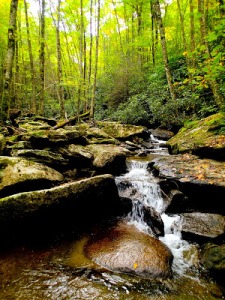
I fished the other day in a special spot, with a good friend.  Today, in his blog, Mike’s Gone Fishin’ … Again” he reflects upon place and, very kindly, friendship.  Mike is not only a gifted writer, he also takes some great  pictures.  Check out his latest blog entry here: http://www.mikesgonefishing.com/2013/09/i-forget.html.

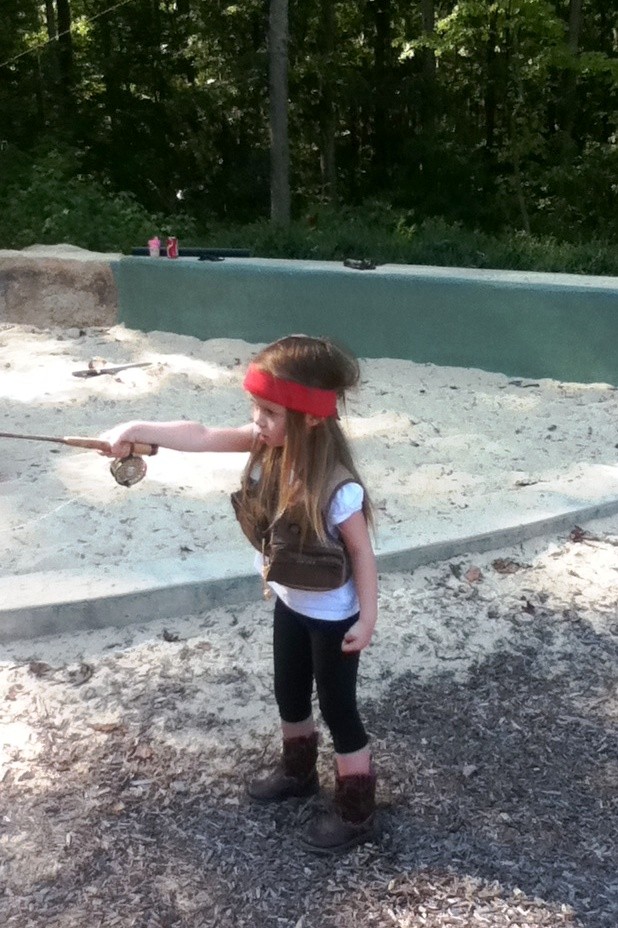
Practice makes Perfect.

September 9, 2013

Pictures 001

Actually, I think she’s already perfect.

Waiting, not impatiently.

August 16, 2013

Waiting


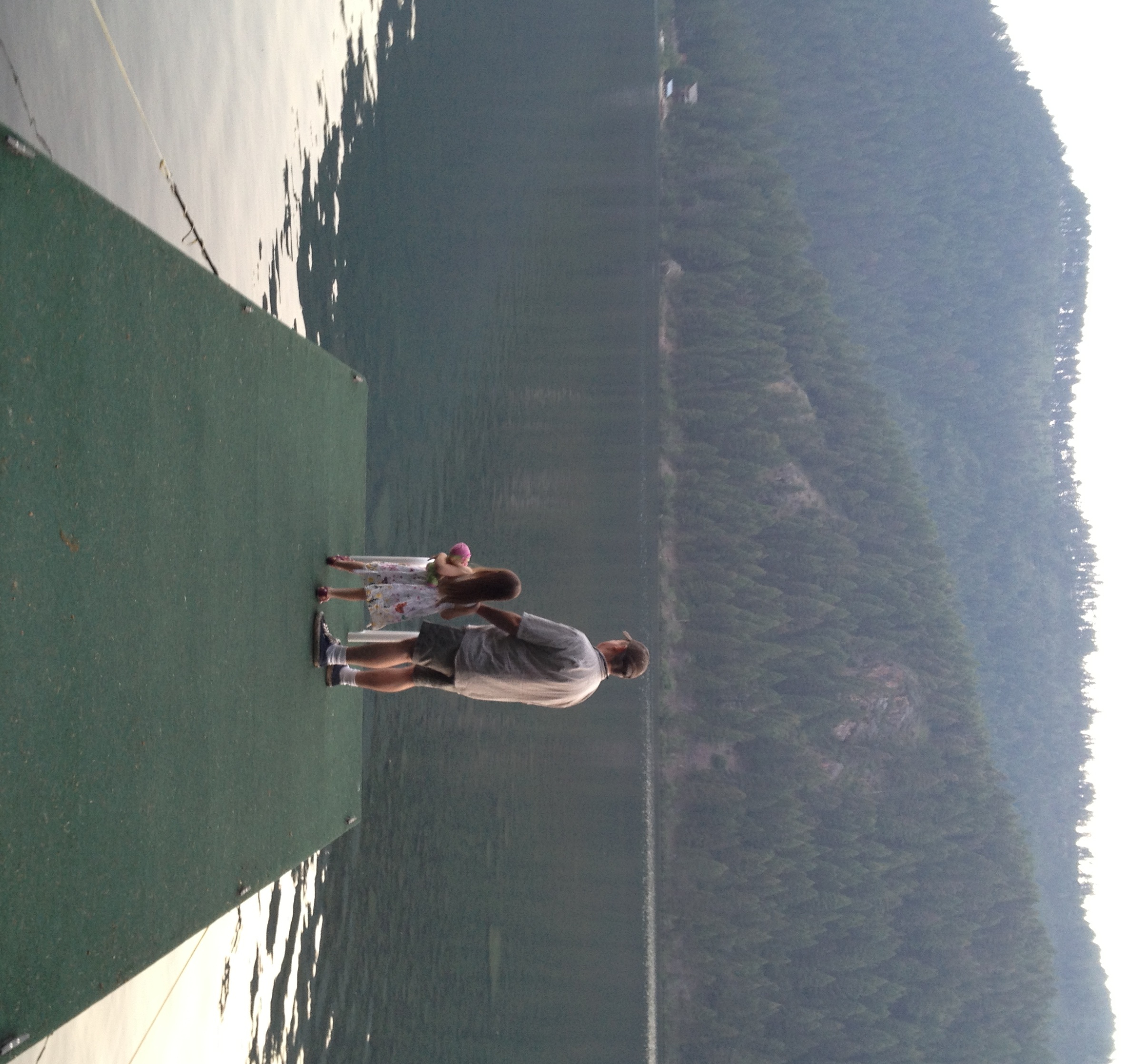
At our family cabin, I spend a lot of time looking out at the lake in the evenings, waiting to spot rising cutthroat trout. In the dog days of summer, the wait can be long. There have been, and still are, times when the wait is difficult, due to my eagerness to fish. However, watching the activity on and around the lake with my daughter, her hand in mine, makes for a very different experience. The wait almost disappears altogether, and the time becomes one of appreciation for what already is.

I’m proud to have a three-year-old daughter who knows such things as the difference between a grizzly bear and a black bear. A daughter who knows the difference between a rod and a pole.  A daughter who knows what patience is and how one can best pass the time, when waiting at such places as our cabin.  I have taught her some of these things.  But she has taught me others.

Roland Barthes, Plastic, and Wheatley Fly Boxes

July 22, 2013
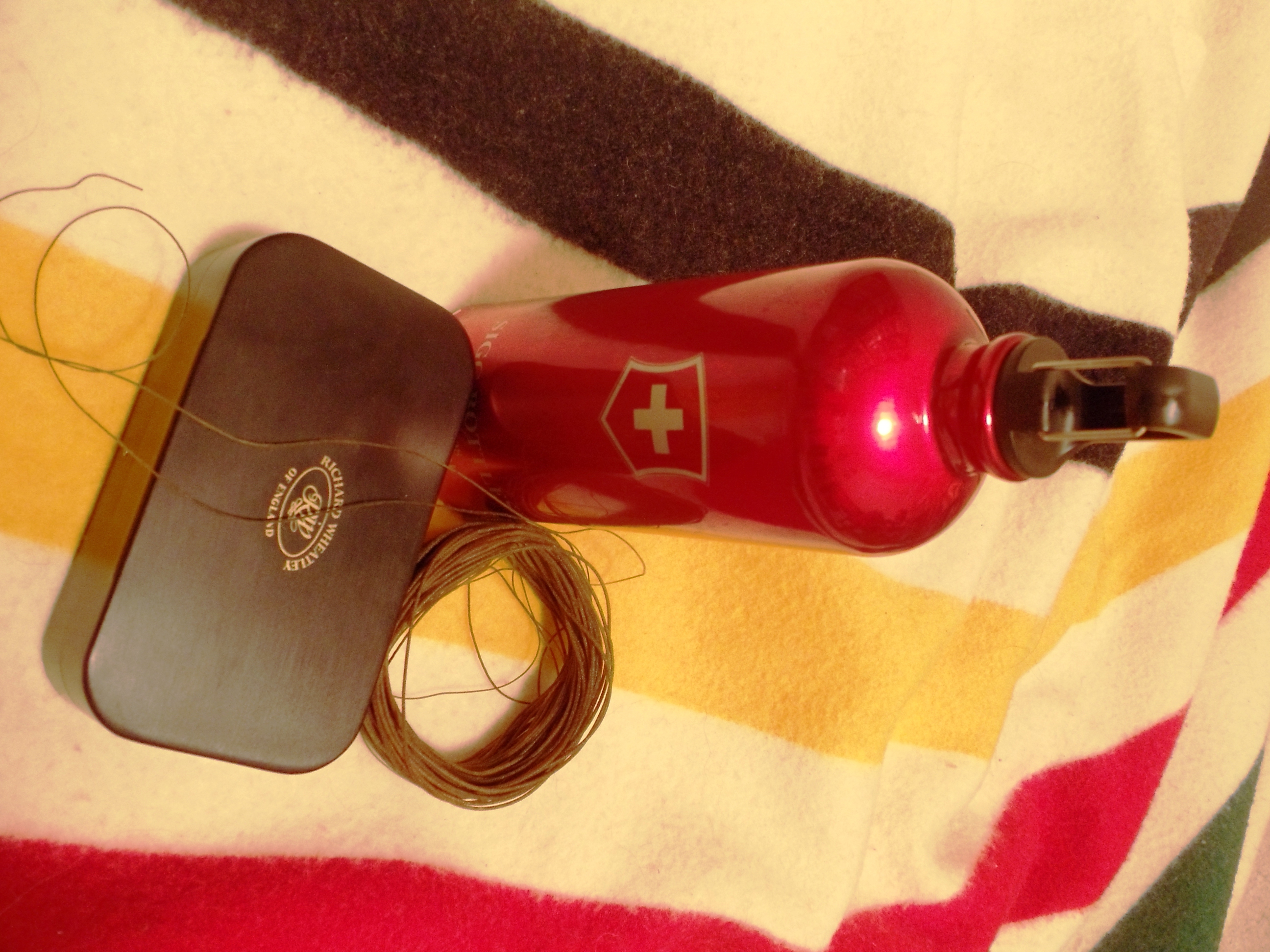
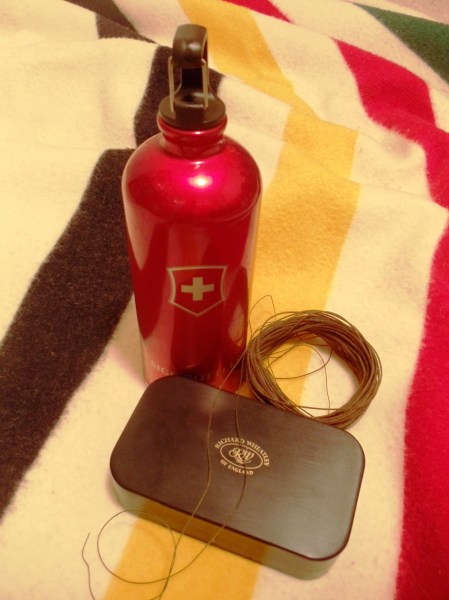
A Wheatley fly box, a Thebault silk fly line, a classic Sigg bottle, and a Pendleton blanket. None of them are plastic. All of them will serve their purpose for a century or more.

A Wheatley fly box, a Thebault silk fly line, a classic Sigg bottle, and a Pendleton blanket. None of them are plastic. All of them will serve their purpose for a century or more.

The influential French thinker Roland Barthes examined what he considered as the ideologies connected to numerous materials in his 1957 text, Mythologies.  The text, translated to English in 1972, served as an important stepping stone in the development of what we now know as postmodern philosophy, which emerged in the 1970’s.   Among other things, Postmodernism contested the “Western” cultural narrative of scientific “progress,” which, among many other things, suggests that humans might move away from a reliance upon natural materials, as they achieve greater ability to manipulate more artifactual materials. Postmodernism has lost much of its influence, in part because it became an odd sort of narrative of progress itself. And the narrative of scientific progress still dominates much of the world. In regards to how this latter persistent narrative still shapes our view of material, just think about the excitement displayed over the development of 3D printing.

In one of the essays included in Mythologies, Barthes wrote critically about the highly artifactual material–what he called an “imitation material”–plastic:

In the hierarchy of the major poetic substances, it figures as a disgraced material, lost between the effusiveness of rubber and the flat hardness of metal; it embodies none of the genuine produce of the mineral world: foam, fibres, strata.  It is a ‘shaped’ substance: whatever its final state, plastic keeps a flocculent appearance, something opaque, creamy, curdled, something powerless ever to achieve the triumphant smoothness of Nature.  But what best reveals it for what it is is the sound it gives, at once hollow and flat; its noise is its undoing, as are its colours, for it seems capable of retaining only the most chemical-looking ones.

I am not a postmodernist.  I am not a post-anything.  But, like Barthes and later philosophers, I am concerned about the dominant narrative of “progress.”  And, simply put, I’m not a fan of plastic.  I should note for flyfishing readers that I am also not one of those elitists who maligns graphite rods by mislabeling them as “plastic.” Clearly, graphite rods do not fit into Barthes’ descriptions of plastic.  I like graphite, glass, and bamboo rods, so long as all of them are things have been crafted or worked with care, rather than simply molded or “shaped.”

Why am I then rambling on about such things, you may ask.  It is because I was recently thinking about how much I enjoy things that are crafted to last–to take hard knocks but to still function for many, many years. Plastic lasts, of course.  But it also breaks, deteriorates, and otherwise ages in ways that make it no longer useful.  What prompted me to think about all of this was my putting some flies into a Wheatley fly box.  These boxes have been made for well over a hundred years, and many of the earliest examples are still perfectly functional.  Dented and scuffed, yes.  But irreparably broken? No.

Part of the narrative of progress seems to involve a movement toward greater convenience and disposability. For many of the same reasons that Roland Barthes criticized the world around him, I reject that narrative.

 

Stuck in the Stacks

July 18, 2013

photo

All of us love to read.  Unfortunately, someone has to write the books, articles, and essays that entertain or challenge us.  These last couple of weeks I have been stuck in a university library, working on a chapter for an academic book.  I’m starting to get a little restless, and my mind keeps wandering to the mountains. But the deadline for the chapter is looming and the streams are swollen with rain water right now.  So, after this brief break, I go back to writing.  I will try to limit the wanderings of my mind by reminding myself I will be home in Montana next week and this chapter will be done soon.

Mon enfant! Will you come travel with me?

June 3, 2013
Szofi and I stuck at JFK after returning from Europe. Picture by Szofi's mommy.

Szofi (“mon enfant”) and I stuck at JFK after returning from Europe. Picture by Szofi’s mommy.

Following are some selected stanzas from “Poem of the Road,” by Walt Whitman.  The version from which these stanzas are excerpted is found in the 1860 edition of Whitman’s Leaves of Grass.  The selected words remind me of the transformative power of travel, companionship, and family.


Allons! the road is before us!

It is safe—I have tried it—my own feet have tried it well.

Allons! be not detain’d!

Let the paper remain on the desk unwritten, and the book on the shelf unopen’d!

Let the tools remain in the workshop! let the money remain unearn’d!

Let the school stand! mind not the cry of the teacher!

Let the preacher preach in his pulpit! let the lawyer plead in the court, and the judge expound the law.

Mon enfant! I give you my hand!

I give you my love, more precious than money,

I give you myself, before preaching or law;

Will you give me yourself? will you come travel with me?

Shall we stick by each other as long as we live?

Brothers of the Angle.

May 20, 2013

In other words, for those who have a religious experience, all nature is capable of revealing itself as cosmic sacrality.

Mircea Eliade, Romanian author and  historian of religion, The Sacred and the Profane (Harcourt, 1959), 12. While some of his theories are now questioned, Eliade had an immense influence upon the academic study of religion.

It has been a while since I have posted. I have been distracted by a variety of things, including fishing. For instance, last week I had the pleasure of meeting some people in Romania to fly fish. My thanks go to painter Claudiu Presecan, who helped arrange the trip, and to his gracious family. I extend thanks, also, to rod maker Paul Sas for fishing and keeping good company with Claudiu and me. Claudiu and Paul are fine men — great fishers and thoughtful human beings — and I look forward to spending more time with them in the future. I am also grateful to some of their fellow fly fishers in Transylvania, especially their friend Dan, who allowed us to spend a couple of nights in his cabin. Transylvania is a beautiful place.  Its people and wild salmonids are as well.

Transylvania.

Transylvania.

Transylvania.

Transylvania.

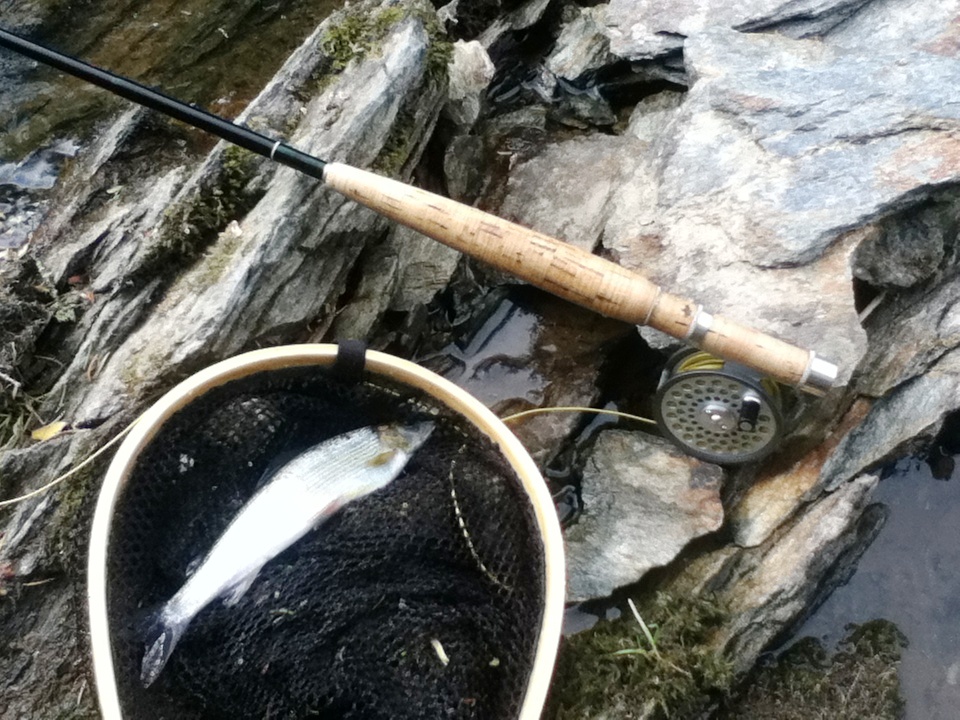
Wild grayling.

Wild grayling.

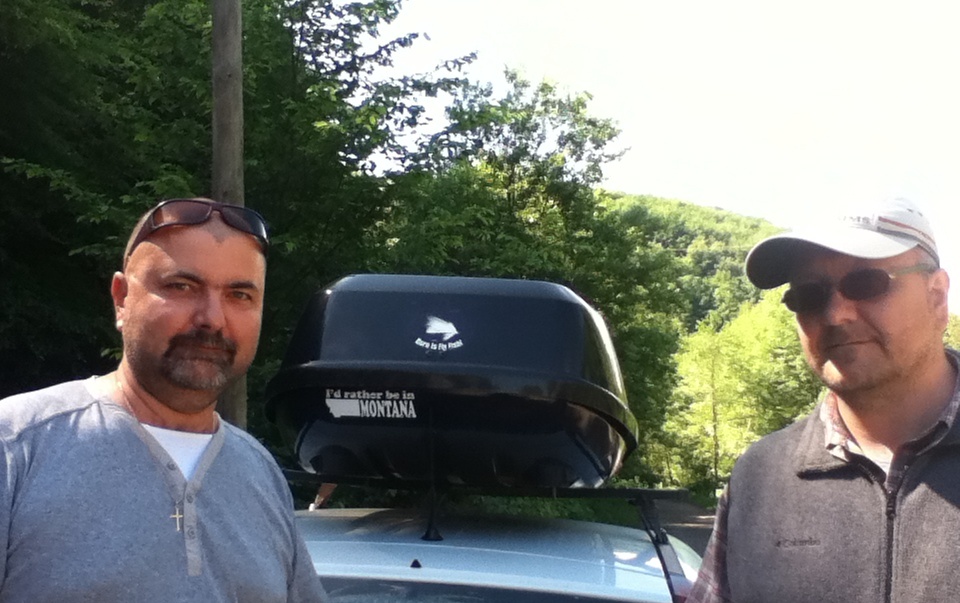
Claudiu and Paul

Claudiu and Paul.

I’ll write more about recent events soon.  At 5:00 tomorrow morning however, I will meet another friend here in Magyarorszag (Hungary) for a second days of fishing for asp on the Danube.

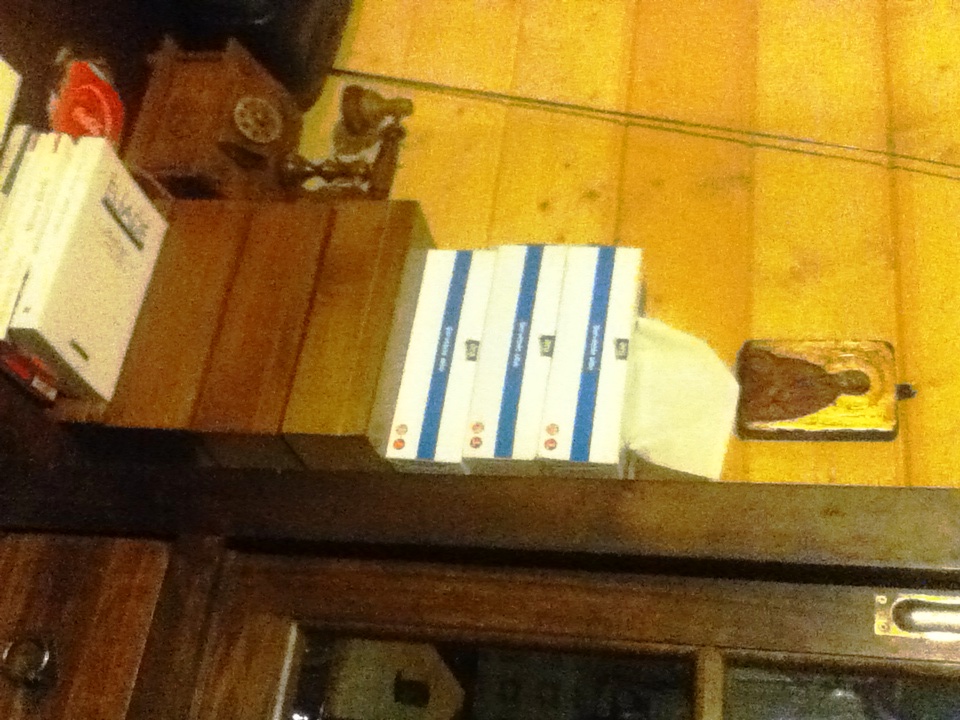
A fly rod, an icon, and a stack of books, by Mircea Eliade and Ioan Culianu, at the fishing cabin.

A fly rod, an icon, and a stack of books by Eliade and Culianu at the fishing cabin.

Local and Handmade (You don’t Hear it often Enough): Drawbaugh Outdoors Landing Nets

April 29, 2013

IMG-20130406-00049

IMG-20130406-00048

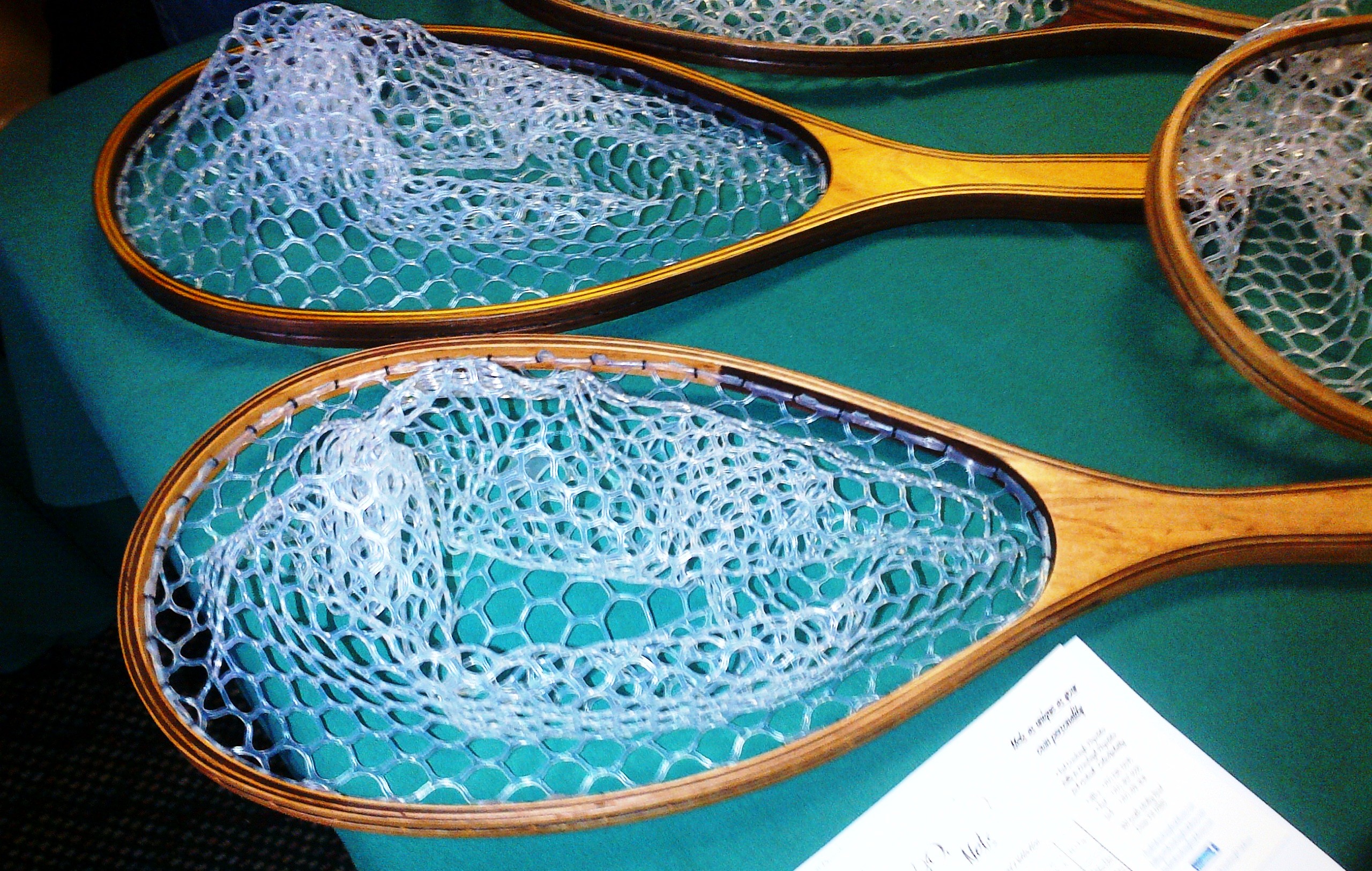
I recently went to the grand opening of the Pennsylvanian Fly Fishing Museum. There, I came across some wonderful landing nets from Drawbaugh Outdoors, based in Dover, PA. These beautiful nets are made by Chad and Billie Jo Drawbaugh (pictured), who are assisted in marketing and other matters by Jack Gotwalt.

The most obvious characteristics of D.O. Nets are their beauty and quality.  The picture above, which I took on my cellphone, does not do justice to them.  No doubt, if you contact Jack, Billie Jo, or Chad, they will be happy to provide you with better photos of their products. In such photos, you will see that D.O. nets are carefully constructed in pleasing and practical forms.

The fine construction of D.O. Nets contrasts greatly with that of many cheaper wooden and bamboo nets available today.  Looking at these latter nets, you can see with your own eye that they are often glued and varnished imperfectly.  Such problems in construction are no small thing; a few years back I picked up a cheap, wooden net after traveling to a fishing destination via plane.  During my trip, I stumbled and very briefly placed some of my weight upon the net. It broke and splintered in a break that was comparable to an explosion. I’m grateful that a portion of the splintered net didn’t pierce my upper arm, especially since I was fishing alone, in a remote area, in grizzly country. Of course, imperfect construction can lead to much more subtle problems, such as premature delamination (I say “premature” because even the finest nets should be treated with at least some care).

I am as impressed by the materials used in D.O. Nets as I am by their construction.  Chad and Billie Jo can make a net of whatever suitable woods that a customer prefers. Many fly fishers interested in handmade tackle prefer exotic woods.  I can understand this preference.  To me, though, fly fishing is largely about place.  It’s about getting to know a particular place–a particular ecosystem. This knowledge is necessary to successful fishing.  But appreciating a particular place is what makes it pleasurable.  Thus, I am most interested in tackle that reflects my relationship to the places I fish.  In other words, I prefer domestic and often local materials.  Drawbaugh Outdoors makes their standard nets of such woods.

My profession is not one that typically brings great wealth, to put it mildly. As a man of modest means, I am very mindful of what I pay for fly fishing related items. It’s true, of course, that quality products are generally more expensive than inferior ones.  And it’s also true that quality products will last much longer than inferior ones. Fortunately, D.O. Nets are both high quality and fairly priced.  And while I have yet to purchase my own, I am willing to bet that D.O. nets will serve you every bit as well or better than a more expensive one.  And, if you’re like me — if you are mindful of your relationship to place — the materials used in the nets might bring you some added pleasure too.

You can contact Drawbaugh Outdoors at 717-580-5595 or at info@drawbaughoutdoors.com.  You can also find them on facebook at http://www.facebook.com/DrawbaughOutdoors.  If you’re in the market for a landing net that is both beautiful and practical, get a hold of Billie Jo, Chad, or Jack.  They can provide you with a net that is suitable for landing anything from native brook trout to wild salmon and steelhead.  They offer both nylon and rubber “catch-and-release” netting material.

Springtime and Wildness in Appalachia

April 1, 2013
IMG-20130330-00038

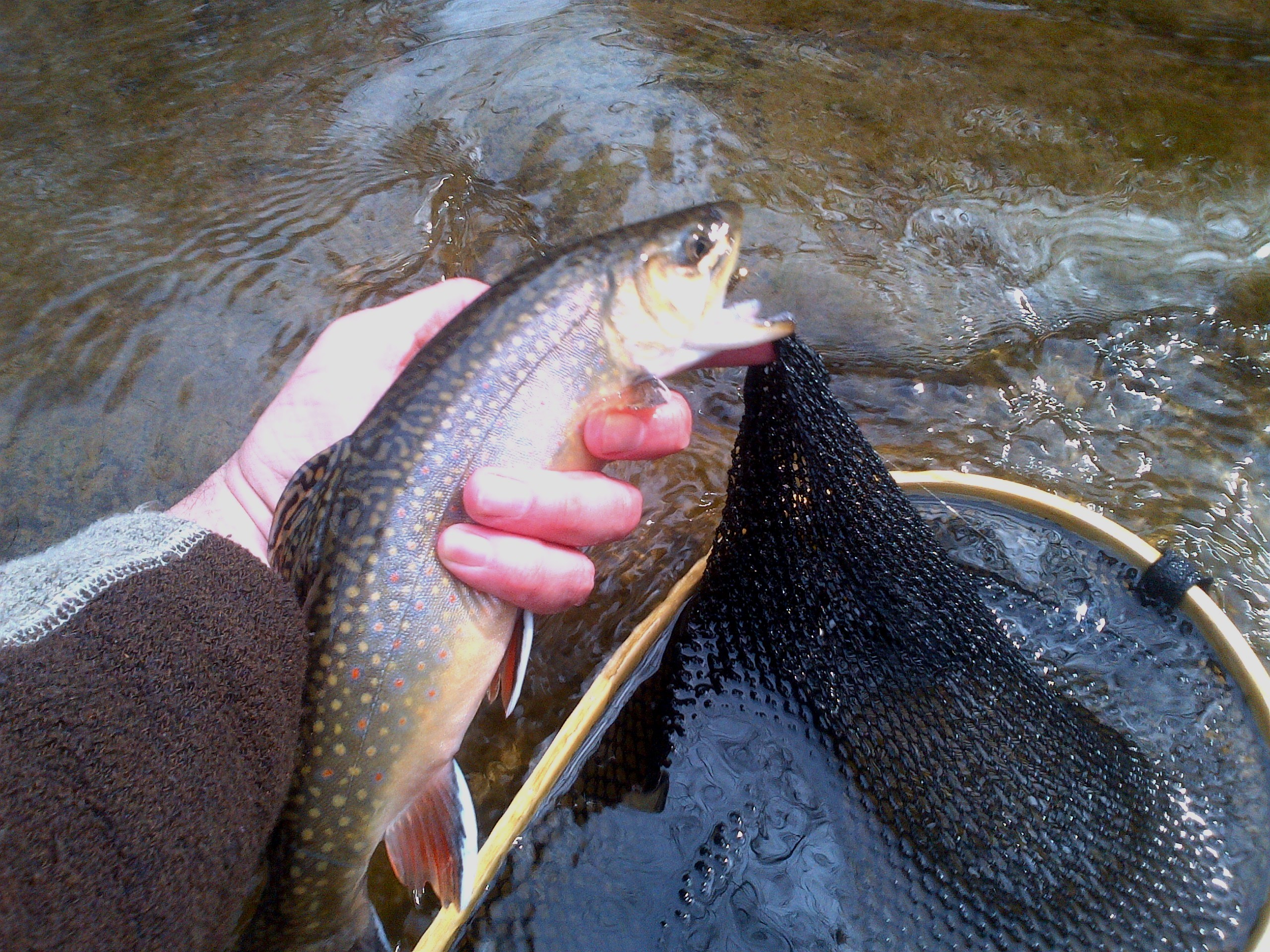
Wild, native Appalachian brook trout, caught last week (on a fly I first learned about while living in Arizona).

A tame animal is already invested with a certain falsity by its tameness. By becoming what we want it to be, it takes a disguise which we have decided to impose upon it.

Even a wild animal, merely “observed,” is not seen as it really is, but rather in the light of our investigation (color changed by fluorescent lighting).

But people who watch birds and animals are already wise in their way.

I want not only to observe but to know living things, and this implies a dimension of primordial familiarity which is simple and primitive and religious and poor.

This is the reality I need, the vestige of God in His Creatures.

Fr. Thomas Merton, O.C.S.O.  When the Trees say Nothing, edited by Kathleen Deignam (Notre Dame: Sorin Books, 2003), 45.  From Merton’s diaries, written at The Trappist Abbey of our Lady of Gethsemani, Kentucky.

IMG-20130330-00037

Black bear paw print at my favorite Southern Appalachian Stream. It’s an encouraging fact that black bears and brook trout still persist among all the other human and non-human immigrants to the American Southeast.

Chasing “mamiiksi” near Raven’s Home

March 15, 2013

DSC02430

I visit Southern Alberta, in Canada, regularly.  My family has roots in the area, primarily on the other side of the Alberta/Montana border, in Glacier National Park and on the Blackfeet Reservation. Also, my academic work has brought me to this area many times over the years to visit with Blackfoot religious leaders and practitioners, primarily among the North Piikani Blackfoot band. These days, my visits are also personally motivated.  I have many friends here, and there is some pretty great fishing too.

In the Blackfoot language, the word for fish (plural) is mamiiksi. There are a lot of them in Blackfoot Country, though  their abundance does not mean that they are easily caught. In addition to the wiliness and strength of the mamiiksi, anglers must deal with some truly brutal winds and generally unpredictable weather.

DSC02401

I managed to make a couple of very quick trips to my favorite rivers in Southern Alberta this week.  I did so in between bouts of bad weather and grading different stacks of midterm exams and papers.  I had hoped to get out again today, but the temperature dropped thirty degrees.  Still, my short times at the rivers were enjoyable.

IMG-20130313-00019

My priority during these visits to Alberta is to enjoy the company of friends and to learn from them.   Much of what I have learned actually complements my fishing excursions.  This is because, for me, fly fishing is about experiencing a place and its inhabitants, not just catching fish.

One of my favorite rivers in the area — the river in which I hooked an 18-inch rainbow (pictured above) with a size 20 thread midge yesterday — is the Crowsnest River.  This river flows through an area that is particularly sacred to the Blackfeet.  It’s best not to talk in detail about such places, but let me just say that it is associated with Omahkai’stoo or Raven (literally, “big crow”). Thus, in a sense, the entire area is Raven’s back yard.  He happens to have jurisdiction over winter, as well.  But the rivers are not his. They are the dominion of the “Underwater People.” Fortunately for me, the Underwater People were willing to share some mamiiksi with me during this trip.

DSC02415

I thank my wife for allowing me these trips that are so important to me, professionally and personally.  Of course, I thank my many human friends here, and the non-human persons too, for being such wonderful hosts.  But, it isn’t all roses (FYI, the province calls Southern Alberta “Wild Rose Country”).

Last night, I was leaving a store when a young Piikani man approached me and said, “You look like a nice, kind cowboy.”  He then asked me for some money to get back to the reserve, up the road.  Of course, I’ve been hit up for money by people all around the world.  But this guy had a really pained look in his eyes.  He wasn’t a regular drunk; he was a guy who was wrapping up a particularly bad bender.  He probably knew that he had caused a lot of people a lot of pain in the past few days.  He apologized for asking for money from me with tears in his eyes.  I saw him again this morning, as I had a coffee with a Piikani friend.  The young man came over and greeted my friend in the Blackfoot language, before saying that he needed some help.  My friend asked him what sort of help he needed.  For a moment, I thought that the young man had made an important decision to improve his life.  You see, my friend is a traditional religious elder. Unfortunately, the young man just wanted some more money. Anyway, I hope he made it home. And I hope he is working hard to mend the many things he probably broke during his bender.

In many ways, I consider this area and neighboring northwestern Montana — where I grew up and where my family lives — home. For now, though, life circumstances dictate that I am a visitor. And as much I love it here, I am eager to get back “home” to my beautiful wife, my wonderful daughter, and my fuzzy dog in the East. I’m sure I’ll be back here soon enough, chasing mamiiksi once again very near to Raven’s own home.