
Thinking about summer and saltwater . . . .
May 2, 2016
April 28, 2016
The following poem is by John Stoddart, published by his daughter Anna. She included it in he 1899 collection, Angling Songs, with a Memoir.

A PICTURE.
We listen by the waters blue to voices that we love;
Sweet flowers are twinkling at our side, and willow leaves above;
Before us feeds the fearless trout, emerging from the calm,
And bleats behind the fleecy ewe upon its wandering lamb.
Delicious musings fill the heart, and images of bliss;
Ah! that all pictures of the past were innocent as this,–
That life were like a summer trance beneath a willow wide,
Or the ramble of an angler lone along the river-side.
Book Binder, Fly Fisher
April 4, 2016A former student sent me a Pittsburg Post-Gazette article today, about S.A. Neff, Jr. Mr. Neff is an avid fly fisher, and he is well-known for his custom bindings of angling texts. His work has been exhibited at the American Museum of Fly Fishing and elsewhere. Anyone familiar with antiquarian books will know there is a long history of collectors having favorite texts rebound with high quality covers. Of course, there are also those angling authors, who had certain of their own editions bound in unusually high-quality, hand-worked boards. I have seen Neff’s work before, but I did not know anything about the craftsman himself.

The article sent by my student is titled, “Fish or make books? S.A. Neff Jr. of Sewickley does both (April 3, 2016). Its author, Marylynne Pitz, provides a bit of information about Neff, but describes his book binding and angling texts collection in greater detail. Of his complementary passions–book binding and fly fishing–Pitz writes:
The same hand-eye coordination required in trout fishing has served the 78-year-old well in pursuing his piscatorial passion. Hand-tying a fly takes skill and patience. Creating a leather-bound book or a drop-back box that holds letters requires artistry, craft and a microscopic level of attention to detail.
Pitz also notes there is a documentary about Mr. Neff and announces an upcoming showing (see picture). The film is The Bibliophile as Bookbinder–The Angling Bindings of S.A. Neff, Jr. (2014). I have not seen the film, but I look forward to doing so, now that it is on my horizon. In the meantime, you can read more about Mr. Neff in the Spring 2000 issue of the The American Fly fisher: Journal of the American Museum of Fly Fishing (26, 2: 2-11) and in the January 14 issue of Sports Illustrated. In the former, you will find numerous pictures of his work.
The International Trout Congress
March 24, 2016Last year, I posted information about the first meeting of the International Trout Congress. That meeting had to be postponed, but it is now scheduled for October of this year. Called The World of Trout, the meeting will take place on October 2 through 6 of 2016, in Bozeman, Montana. Following is a description of the meeting from their website (featuring their logo):
Native trout are found in a variety of habitats in North America, Europe, Asia, and parts of Africa. While no trout species were native to the southern hemisphere, trout have been widely introduced, and are now resident throughout its temperate zones as well. This dichotomy of native northerner and exotic southerner provides just one example of the rich fabric that The World of Trout will explore during this 5-day event, bringing together some of the world’s leading thinkers to synthesize knowledge about the species and discuss its future across the globe. At the same time, trout are the passion of non-scientists who spend time angling for them, writing about them and capturing them on canvas and on film. Probably no other species have been written about, painted and photographed more than trout. As technology has changed, trout in the blogosphere, in film festivals, and now captured on social media has allowed everyone to be part of the trout conversation. The World of Trout is organized both as a congress and a celebration.
As a congress, the aim is to assemble an international body for a series of structured lectures and discussions on the relationship between trout and humans. The World of Trout will focus its discussions on themes that include the diversity and role of trout worldwide, conservation issues, and trout in the literature, in the arts, and in the classroom. One unique feature of The World of Trout is “Trout Conversations” where discussions around a “place” that brings together all of the conference themes will be explored. There will be a number of these discussions throughout the event. A partial list of themes to be explored through invited papers, workshops, and informal gatherings included [sic]:
The rich diversity of trout
Trout in the literature…..then and now
What do trout teach us about ourselves?
The role of trout in outdoor and indoor classrooms
Conservation challenges to protecting trout
The economic benefit of trout in communities worldwide
Trout on canvas and in film – expanding artistic expression through multiple media
The role of trout in social and ecological communities
The future of trout in the next 100 years
Developing an international network for trout conservation

The International Trout Congress has issued a “Call for Sessions.” Proposals are due on April 1. Submit yours here.
A “Dog Song”
March 14, 2016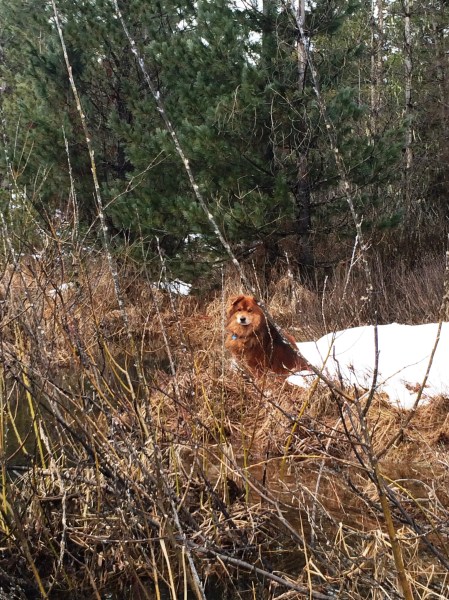
My somewhat faithful fly fishing companion, “Bear.” He displays a look of indifference, after I fell into the stream. In his defense, he has witnessed this many times before.
In Dog Songs: Thirty-five Dog Songs and One Essay (Penguin, 2013), the best-selling poet Mary Oliver captures the sense of wonder that dogs awaken in many of us, and which the other-than-human world in general, still awakens in at least a few of us. Her 1984 collection of poems, American Primitive, won the Pulitzer Prize. And her 1992 collection, New and Selected Poems, won the National Book Award. Dana Jennings of the New York Times describes Oliver as an “old fashioned poet,” inspired by nature (“Scratching a Muse’s Ears,” Oct. 6, 2013). Oliver certainly has her critics, as any poet–especially an unusually popular one–does. Perhaps because I lean toward the “old fashioned” and because I’m a great fan of dogs as well, I enjoy her Dog Songs. Following, is one of them.
The Storm (Bear)
Now through the white orchard my little dog
romps, breaking the new snow
with wild feet.
Running here running there, excited,
hardly able to stop, he leaps, he spins
until the white snow is written upon
in large, exuberant letters,
a long sentence, expressing
the pleasures of the body in this world.
Oh, I could not have said it better
myself.
John Donne on the Lures of Love in Difficult Times
March 2, 2016John Donne was a gifted poet and reluctant religious figure. Donne was born in London, to Roman Catholic parents, in 1572. His family suffered directly from the Church of England’s repression of Catholics. Donne, himself, converted to Anglicanism, and subsequently received financial support for his poetry and even served in Parliament. He became an Anglican priest, at the insistence of King James I. He died n 1631, just as James’ son and successor, Charles I, was experienced increasing resistance from religious and political dissenters, especially the Puritans and other Calvinist Protestants. Charles, of course, was beheaded in 1649, by the then Anglican dominated Parliament.
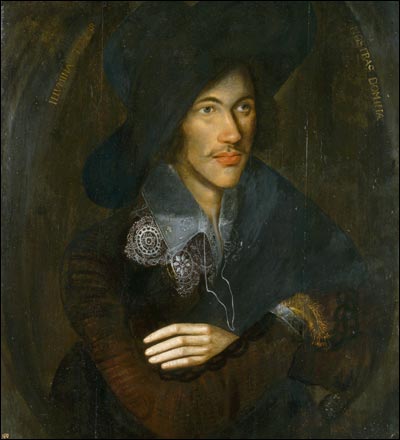
John Donne, c. 1595. Artist unknown.
Donne lived a full life; he was well-educated, he travelled extensively, and he served in the navy. No doubt, these and other experiences, and the forced self-examination of his religious stance, contributed to the quality of his poetry. He is perhaps best known for his Devotions upon Emergent Occasions. “The Bait” is an earlier poem and is written in response to Christopher Marlowe’s “The Passionate Shepherd to His Love” (1599).
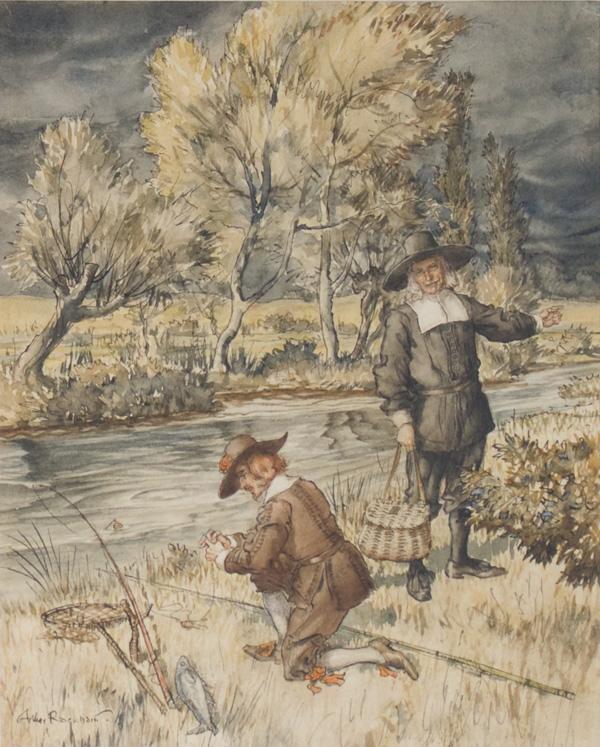
Illustration of Piscator and Venator, by Arthur Rackham. From Rackham’s 1931 illustrated edition of The Compleat Angler.
Donne was clearly a respected author in his lifetime, though his fame was no doubt helped along by Isaac Walton. Most of us know Walton as the author of The Compleat Angler, or The Contemplative Man’s Recreation (1653). However, he also published a biography of Donne in 1640. Moreover, Walton later included “The Bait” in The Complete Angler. In this text, his character Viator says he loves Donne’s verses “because they allude to rivers, and fish, and fishing.” Following is “The Bait.”
The Bait
Come live with me, and be my love,
And we will some new pleasures prove
Of golden sands, and crystal brooks,
With silken lines, and silver hooks.
There will the river whispering run
Warm’d by thy eyes, more than the sun;
And there th’enamour’d fish will stay,
Begging themselves they may betray.
When thou wilt swim in that live bath,
Each fish, which every channel hath,
Will amorously to thee swim,
Gladder to catch thee, than thou him.
If thou, to be so seen, be’st loth,
By sun or moon, thou darken’st both,
And if myself have leave to see,
I need not their light, having thee.
Let others freeze with angling reeds,
And cut their legs with shells and weeds,
Or treacherously poor fish beset,
With strangling snare, or windowy net.
Let coarse bold hands from slimy nest
The bedded fish in banks out-wrest;
Or curious traitors, sleave-silk flies,
Bewitch poor fishes’ wand’ring eyes.
For thee, thou need’st no such deceit,
For thou thyself art thine own bait:
That fish, that is not catch’d thereby,
Alas, is wiser far than I.
Image & Reality in the Outdoor World, or “This is Not a Lover of Nature.”
February 19, 2016On one level or another, most of us are concerned with our image. This is natural, since it is through our image that others initially determine who we are. If we want to convey to others that we have certain interests or live according to certain principles, we may consciously or unconsciously wear clothing, use body language, or even speak in ways that represent those interests or principles. This is not a bad thing. In fact, it is socially expedient, in that it often allows us to quickly identify our peers.
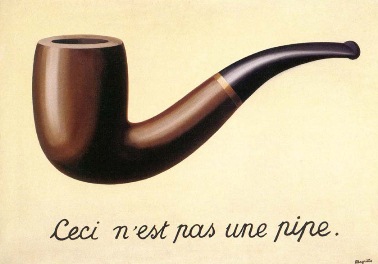
However, our image is only symbolic. It is not who we truly are. More specifically, our image is only a representation (v. an actual presentation) of our inner selves–the selves beneath our clothes, our titles, etc. To put it in academic terms, our image is metaphorical rather than metonymical. Precisely because it is expedient to do so, however, we often forget this. As a consequence, we have to remind ourselves that people or things are not always as they appear on the surface. To this end, we have adages such as, “Don’t judge a book by its cover.” And we have famous works of art such as La trahison des images (“The Treachery of Images”) painting by René Magritte. Through this work, the Belgian surrealist tells us that a picture and the thing it illustrates are not one and the same (“This is not a pipe,” is written below the image of a pipe).
Of course, we are inundated with images these days, thanks to the proliferation of electronic media. As outdoorspersons, we can turn toward innumerable blogs and other internet destinations to see endless pictures and videos of hunters, fishers, and so on. Indeed, one would think that every contemporary fly fisher carries a “dedicated” camera or even a camera person with them on the stream.
Clearly, many of the people posting their pictures and videos online present themselves, via their images, as rugged individualists, lovers of nature and its nonhuman denizens, and so on. They symbolize this through pictures of their silhouette on mountain ridges, their expensive “technical” gear, their beards or braids, and their trophy shots of fish, fowl, or four-legged animals. Sometimes, however, the people posting these pictures are, beneath the surface, very different from their image. For instance, as many of us know, trophy pictures of soon-to-be-released fish often really depict the mistreatment of other beings rather than unity with nature. Certainly, this is the case if the pictured fish is held for more than a few seconds out-of-water.
All of these thoughts are the result of reading a February 18, 2016 Montana Fish, Wildlife, and Parks news release about an “outdoor marketing” and media company. You can read the entire text below. And if you happen to be one of those people, who are more concerned with image than reality, understand this: I would be suspect of even Izaak Walton, if he had taken a portrait painter with him during his fishing excursions. Also, if you are one of the many people out there continually consuming outdoor media via electronic magazines, film festivals, etc., be sure to consider what lies behind the images at which you are looking.
One last note: Don’t kill the Bull Trout in my home waters! If I see you sporting the logo of the media company described below, I’ll be viewing you with disgust.
Following is the news release. You can also read it here. Thanks to the Moldy Chum Facebook page for bringing it to my attention.
“Film Company Individuals Cited for Breaking Bull Trout Regulations and Filming illegally on Federal Lands”
The owners and an associate of an outdoor film Company, Montana Wild, were issued 38 state citations and 11 federal citations, resulting in $5,950 in fines. The citations involved violations of bull trout fishing regulations and unlawful commercial filming activity on USFS lands without valid permits.
In January 2014 Montana Fish, Wildlife & Parks Criminal Investigator Brian Sommers and United States Forest Service Law Enforcement Officer L. Kevin Arnold began a joint investigation into Montana Wild, a Missoula, Montana based company that produces hunting and fishing videos on its website and is owned and operated by Zach and Travis Boughton. Their website states the following: “We specialize in outdoor marketing, social media, cinematography, photography, video editing and a new line of apparel.”
The investigation began when Arnold received information from a USFS District Ranger about a Missoula based company, Montana Wild, that supposedly produced a commercial film about fishing for bull trout in the Bob Marshall Wilderness. Arnold conducted a preliminary investigation of the company’s website and found substantial evidence that they did in fact commercially film on National Forest Lands in the Bob Marshall Wilderness. According to USFS Rules and Regulations commercial filming is not allowed in congressionally designated wilderness areas such as the Bob Marshall Wilderness. On National Forest System lands lying outside of the wilderness, a commercial filming permit is required. Further review of the Montana Wild public website showed there was significant evidence of other non-permitted commercial filming activities on National Forest Lands. There was also a possibility of further violations under Montana Fish, Wildlife, and Parks statutes.
Montana Wild was in fact commercially filming and fishing in the Bob Marshall Wilderness based upon the information and comments found on the videos and photographs on the website. Arnold and Game Warden Perry Brown knew the videos were from the South Fork Flathead River Drainage and its tributaries based upon their experience and knowledge gained from patrolling the Bob Marshall Wilderness. Footage on the website, specifically a teaser clip for an upcoming video to be introduced at the Fly Fishing Film Tour debuting in Missoula, showed individuals fishing for and catching bull Trout in waters that can readily be identified as not being on the main stem of the South Fork Flathead River. According to FWP Fishing regulations the active or intentional fishing for bull trout can only occur in the main stem South Fork Flathead River, and only in the possession of a bull trout catch card.
Arnold contacted Sommers and Brown and advised them of his findings and asked for their assistance in investigating Montana Wild. Sommers obtained Search Warrants for the Montana Wild business and 5 computers, 13 hard drives, 2 cell phones, and other items were seized for analysis during the service of the search warrant. Sommers found over 2200 videos pertaining to the South Fork Flathead/Bob Marshall Wilderness fishing trip that occurred in July 2013; and videos of other trips where they were intentionally fishing for bull trout on the North Fork Blackfoot River and Spotted Bear River. Numerous videos showed the Boughton’s and Anthony Von Ruden intentionally fishing for bull trout in tributaries, such as Youngs Creek, White River, Big Salmon, and Little Salmon Creeks; these streams are closed to fishing for bull trout.
Sommers notes that the fishing violations that took place on the South Fork Flathead River and its tributaries could have devastating impacts on the bull trout populations based on the over handling issue in which some fish were handled for up to 12 minutes or longer after they were in the net. In one instance a bull trout was caught, netted, handled and released (with the hook still attached) only to be fished again for underwater filming, concluding with the fish being netted, handled and released again.
“ The over handling of bull trout that took place by these individuals on this trip will no doubt have negative impacts on the bull trout fishery,” says FWP Region One Fisheries Manager Mark Deleray. Deleray added that South Fork Flathead bull trout comprise one of the strongest and most valuable populations across their range.
The joint agency investigation showed there were also numerous instances of hunting and fishing videos being taken on USFS, Tribal, Private and FWP lands without commercial use permits and these videos were in conjunction with sponsors who were endorsing Montana Wild in exchange for advertising in the videos which would be sold or showed at film tours/festivals/rendezvous.
Sommers, Brown and Arnold invested hundreds of hours into the investigation. The investigation resulted in numerous violations being found. A total of 38 State citations were issued to the Boughtons and Von Ruden in Flathead and Powell Counties for intentionally fishing for bull trout in closed waters; failing to immediately release bull trout; and failing to report a bull trout on the FWP Bull trout Catch Card. A total of 11 Federal violations were cited for unlawful commercial filming activity on USFS lands without valid permits. All three individuals entered into plea agreements with Powell County, which included Flathead County charges, and the Boughton’s forfeited a collateral for the USFS violations. Overall these three individual paid $5,950 in fines.
Warden Captain Lee Anderson stated, “While the regulation preventing someone from intentionally fishing for bull trout can be difficult to prove, it is extremely easy for the angler to follow. Every angler out there knows if they are intentionally fishing for bull trout”. Anderson further stated this investigation was a great example of interagency cooperation. He noted that this type of effort is what it takes to catch individuals who are violating state and federal laws, and the officer’s tireless efforts paid off. The outcome of this case will hopefully benefit bull trout in the South Fork Flathead drainage and other areas in the future.
7th Annual Hemingway Festival
February 10, 2016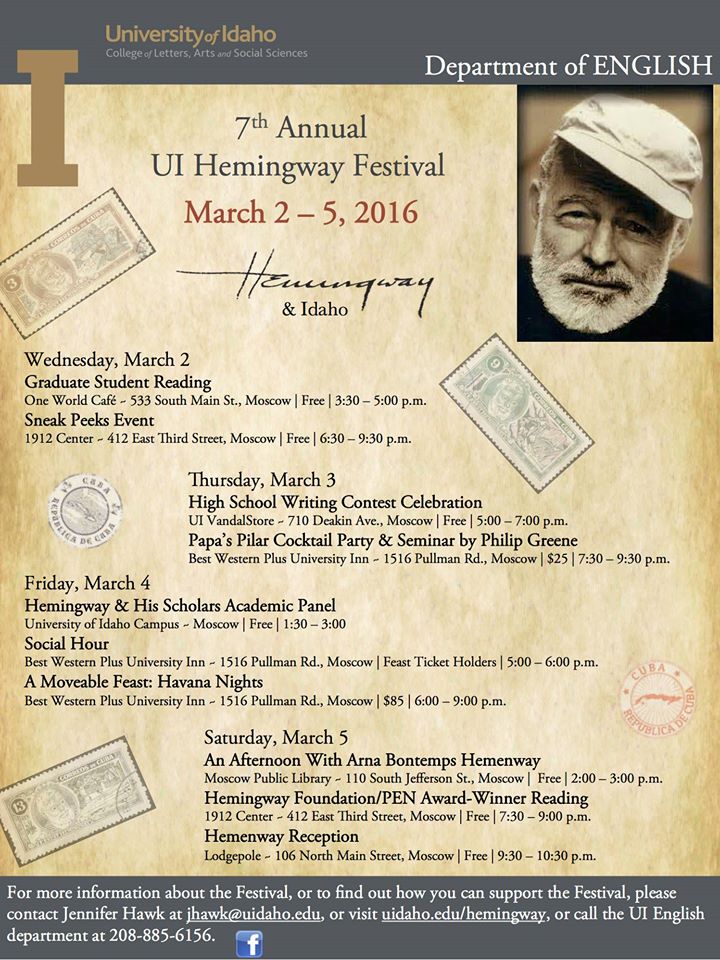
As most of his readers know, Nobel Prize for Literature winner Ernest Hemingway lived in Ketchum, Idaho, just prior to his 1961 death. He visited the Ketchum area over the course of many years, before moving there. In Idaho, he skied, fly fished, hunted birds, and wrote. It is appropriate, then, that the Creative Writing Program at the University of Idaho in Moscow sponsors the Hemingway Review journal, which “specializes in researched scholarship on the work and life of Ernest Hemingway.” UI also holds an annual festival to honor the literary legacy of Ernest Hemingway, as well as the recipient of the Hemingway/PEN award.
This year, the Hemingway Festival will take place from March 2 to March 5. You can purchase tickets here. If you happen to attend, look me up. Living in Moscow (though working in WA), being obsessed with fly fishing, and having read and taught Hemingway’s work, I will be there.
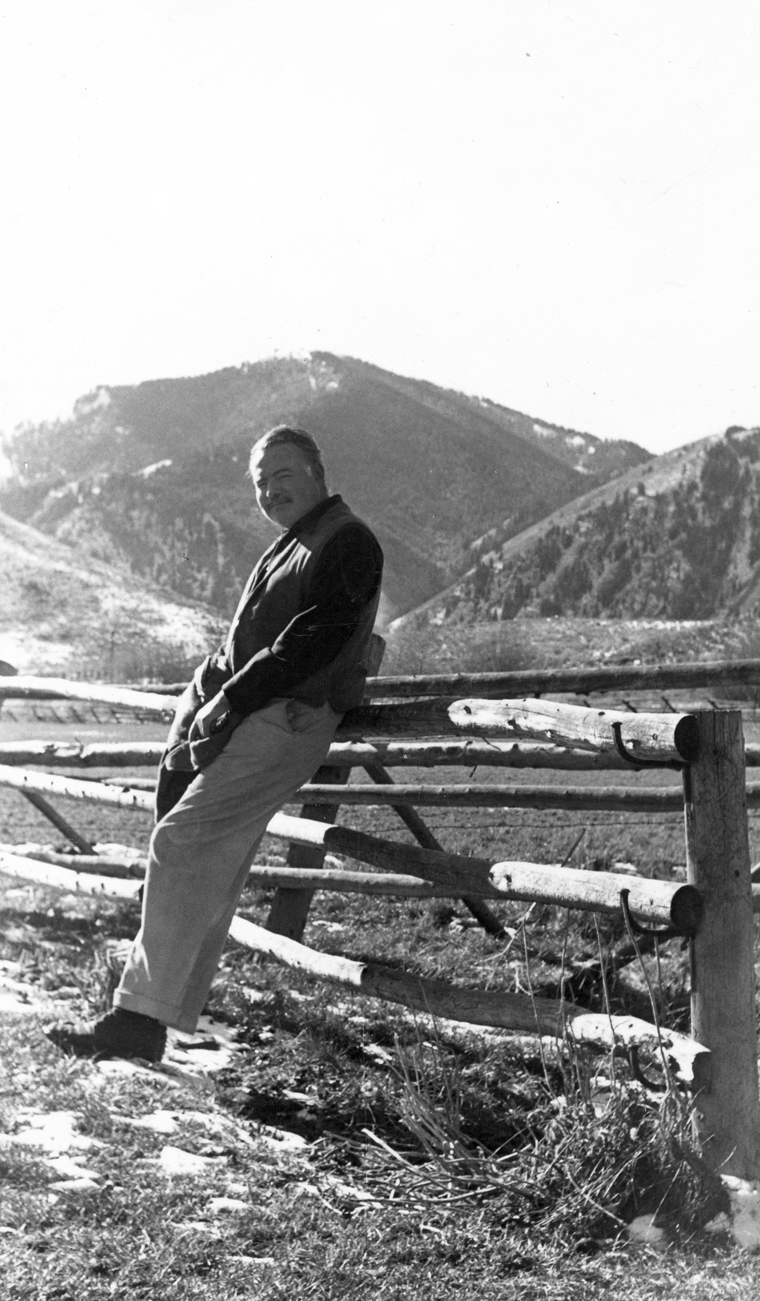
Ernest Hemingway in Idaho, not dated. Photograph in the Ernest Hemingway Photograph Collection, John F. Kennedy Presidential Library and Museum, Boston.
“To my Daughter,” on Burns Night, 2016
January 25, 2016January 25th, when many of us celebrate the Scottish poet Robert Burns, is one of my favorite times of the year; I have indicated as much, in my many previous mentions of the bard. Tonight, as in most recent years, I am spending the holiday at home. Earlier this evening, I read a Burns’ “To a Mouse,” to my daughter.

My daughter indulging her father.
In explaining the poem to my daughter, I also explained my love of Burns. I told my Daughter that he was a modest man, who worked in the fields during certain periods of his life. I also told her that he was the sort who was literally moved to compassion–the state of “suffering with” another–when he realized that his plowing disturbed a mouse.
Of course, in reading “To a Mouse,” to my little one, I did my best to render the poem in modern English. So, I didn’t explain to her that Burns often wrote in his native Scots, and that doing so made many of his oft-oppressed, fellow country-persons proud. And I didn’t explain that his poetry was so forceful that the meaning of his words transcended the boundary of Scots/English to appeal to a huge audience, including those of us who read him over two hundred years later.
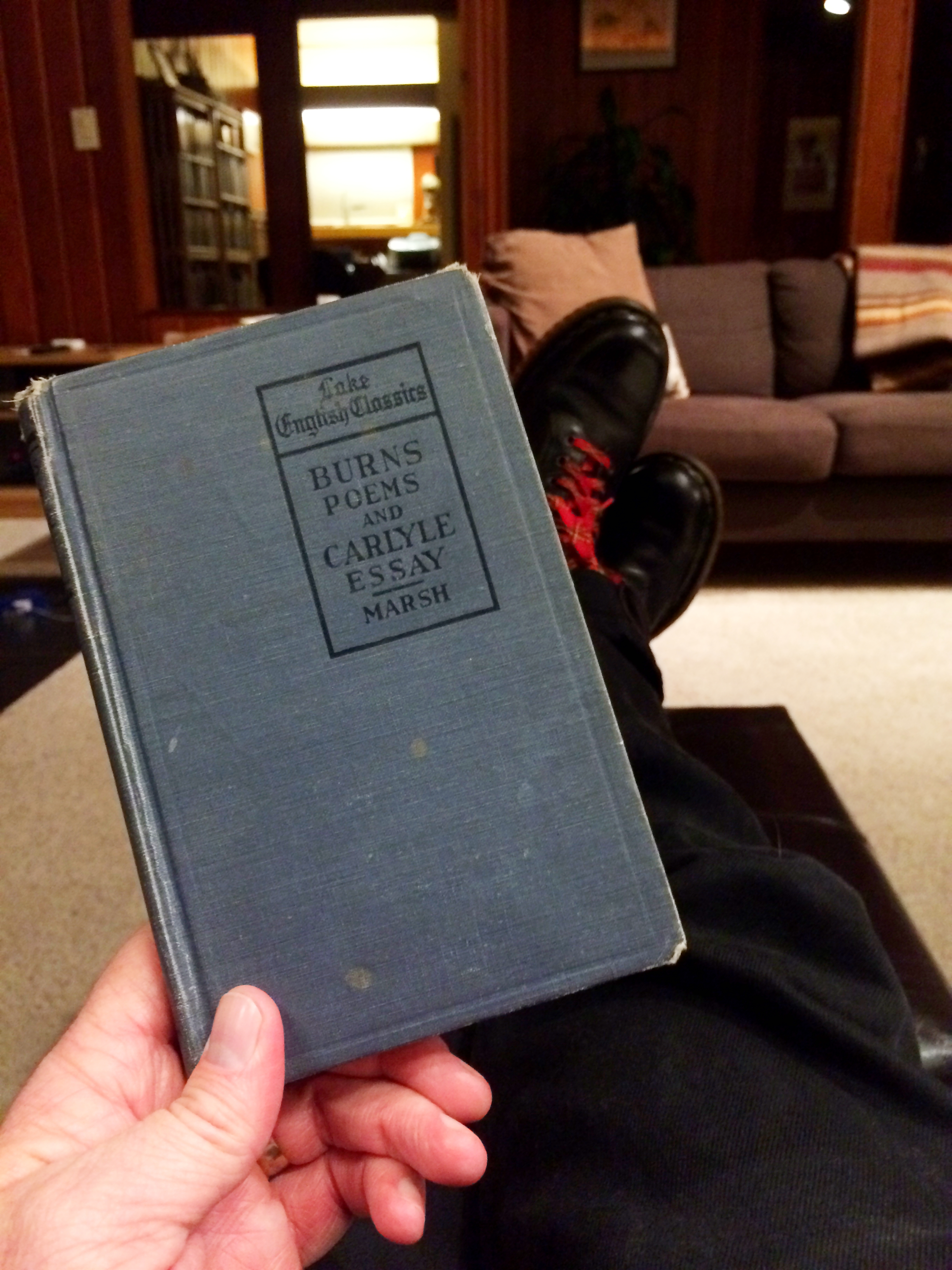
One day, I will explain these things. And I will tell her about the many other poets, artists, musicians, and scholars who have done similar things. And, perhaps, as a means to do so, I will read her Burns’ song, “A Man’s a Man for A’ That” (published in 1795).
“A Man’s a Man for A’ That”
Is there for honesty poverty
That hings his head, an’ a’ that?
The coward slave , we pass him by–
We dare be poor for a’ that!
For a’ that, an’ a’ that,
Our toils obscure an’ a’ that,
The rank is but the guinea’s stamp,
The man’s the gowd for a’ that.
What though on hamely fare we dine,
Wear hoddin grey, an’ a’ that?
Gie fools their silks, and knaves their wine–
A man’s a man for a’ that.
For a’ that, an’ a’ that,
Their tinsel show, an’ a’ that,
The honest man, tho’ e’er sae poor,
Is king o’ men for a’ that.
Ye see yon birkie ca’d a lord,
Wha struts, an’ stares, an’ a’ that;
Tho’ hundreds worship at his word,
He’s but a coof for a’ that.
For a’ that, an’ a’ that,
His ribband, star, an’ a’ that,
The man o’ independent mind,
He looks an’ laughs at a’ that.
A prince can mak a belted knight,
A marquise, duke, an’ a’ that;
But an honest man’s aboon his might–
Guid faith, he maunna fa’ that!
For a’ that, an’ a’ that,
Their dignities an’ a’ that,
The pith o’ sense, an’ pride o’ worth
Are higher rank than a’ that.
Then let us pray that come it may,
(As come it will for a’ that)
That Sense and Worth, o’er a’ the earth,
Shall bear the gree, an’ a’ that.
For a’ that, an’ a’ that,
It’s comin yet for a’ that
That man to man, the world o’er,
Shall brithers be for a’ that.
Jim Harrison’s Calling
January 2, 2016In an interview with the Los Angeles Times’ Dean Kuipers, published on December 18, author and angler Jim Harrison (about whom I have written here) describes being “called” to writing when he was 19-years-old:
I was out on the roof at night in the summer, stars, the Milky Way, and I got just absorbed into poetry,” Harrison recalls. “I thought it was actually my calling that night. And then, when my dad and my sister got killed [in a car accident] a couple years later, I realized that even though I was married there couldn’t be any higher obligation on earth. Because if people you love die what are you going to do?
As uneven and often rough as his writing can be, in my opinion, Harrison has taken his obligation as a writer more seriously than most. This is especially the case with his poetry. Judging by his talk with Kuipers, his new collection of poems, Dead Man’s Float (2016) will be no exception. You can order it directly from the publisher, Copper Canyon Press. And for more of the interview with an unusually introspective Harrison, read “Jim Harrison on spirits, bad poetry and the wonder of nature.”

 The Literary Fly Fisher