Archive for the ‘The Arts’ Category

Jim Harrison’s Green Man

May 11, 2017

Green Man carving, circa 12th c., from Church of St. Mary and St. David in Kilpeck, England. Wikimedia Commons.

Jim Harrison portrait by Andy Anderson, from Dead Man’s Float.

In Jim Harrison‘s final book of poetry, he includes a piece on the Green Man. This figure appears repeatedly over the centuries in European and Euro-American literature and art. His exact origin is unknown and interpretations of his symbolism vary greatly. Historically, from certain Christian perspectives, he represented the base world, Paganism, and the devil itself. From more mystical Christian perspectives, he represented the Holy Spirit and the life God breathed into all that lives. The best known manifestation of the Green Man may be in Arthurian tales, particularly in the 14th c. Middle English “Sir Gawain and the Green Knight” (author unknown), wherein his meaning is as ambiguous as ever. In the 1990’s he was romanticized by poet and so-called “Men’s Movement” founder Robert Bly. Today, he receives positive attention from many neo-Pagans. Regardless, the Green Man is most often associated with “nature,” wildness, and similar concepts. Certainly, this is the association Harrison has in mind. In his poem, titled simply “The Green Man,” the figure embodies knowledge of how one should live in the non-human world. But if we consider the poem in the context of Harrison’s other non-fiction work, we might argue that his Green Man embodies knowledge of how one should live always.
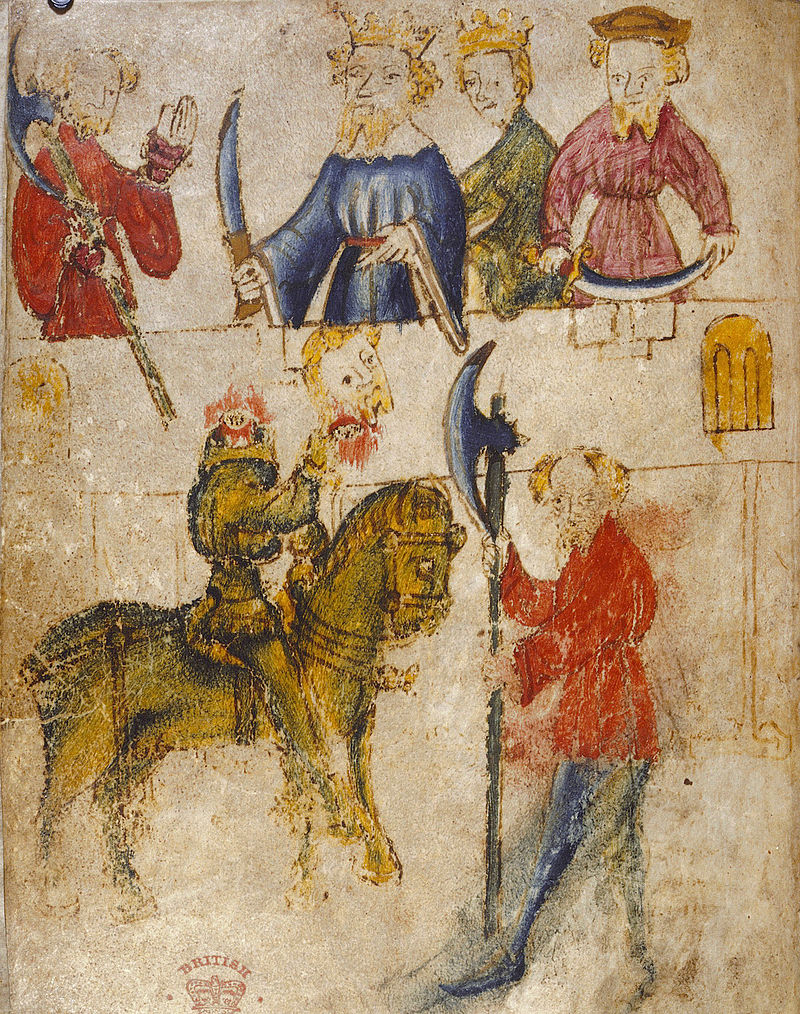
Illustration of the Green Knight (holding his severed head), from the original manuscript containing Sir Gawain and the Green Night. Wikimedia Commons.

“The Green Man”

Since early childhood I believed
in a door in the forest. I looked for it
for more than a half century
and it evaded me. The Green Man
lived there, part tree and part human.
Keeping his distance he told me a lot.
Walk mostly sideways in the wilderness
to confuse those who would track you.
When outside, sleep with your eyes open
And see the coyote pup approach out
of curiosity, the small bear resting
against a stump a hundred yards away,
a warbler standing on your toe singing.
When I lost he howled at me from a tree, “Wrong way.”
I dreamed where he lived, high on the steep
bank of the river concealed under a thick drapery
of tree roots but I skidded on my tummy
down into the river, a sign to give up.
There was a stinking wolf den close by so my dog
wouldn’t stay with me. The Green Man, alone, forever.

Jim Harrison, Dead Man’s Float (Copper Canyon Press, 2016), 54.
Simple Fly Fishing in Japan

April 26, 2017

Yuzo Sebata has been a tenkara fisherman for over fifty years. Tenkara, of course, is a traditional Japanese from of fly fishing, using a long rod with no reel. Fishing Vision, a Japanese Media company, has recently produced a video in which Sebata takes the viewer fishing in the mountains north of Tokyo for iwana trout (Salvelinus leucomaenis) . Sebata also spends some time in the film sharing his views of the natural world. Sebata is well-known and respected in the tenkara world, and you can read more about him at Tenkara USA. Follow the link below to watch the film, Tenkara “Do”: The Greybeard who lives Life with Nature (do = “way,” in Japanese). The film is professional dubbed in English.

https://fishingvision.tv/video/tenkara/tenkara-do.php


Conservation, Redband Trout, and Art

April 17, 2017

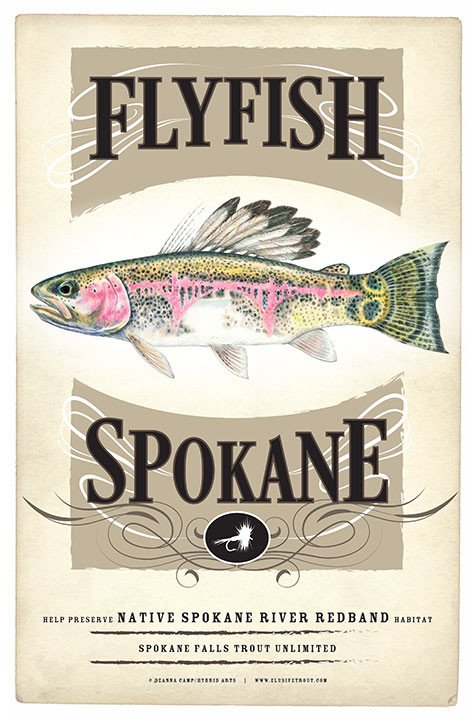
Recently, at Modern Tipi, a Native-American owned store in Spokane, WA, featuring Native artists and Native-themed art, I ran across a beautifully framed picture of a Columbia River redband rainbow trout (Onchohynchus mykiss gardnerii). These redband trout inhabit the Spokane River and other regional waterways. The picture is the central element on a poster produced by Spokane Falls Trout Unlimited to raise awareness and conservation funds for the trout. The stylized picture incorporates Spokane’s famous Monroe Street bridge into the trout’s red band and feathers into its dorsal fin. The feathers are a nod to the local Spokane Tribe of Indians, whom themselves are deeply engaged in regional conservation, often in collaboration with the other tribes comprising the Upper Columbia United Tribes. The artist behind the picture is Deanne Camp. You can find much more of her amazing art online at www.elusivetrout.com. If you are in the area, be sure to visit Modern Tipi, as well. Support your local artists, tribes, and trout.

By the way, you can now follow The Literary Fly Fisher on Facebook. Go here, or click the “follow” button in the menu to the right of this page.

“Flyfish Spokane Poster,” by Deanna Camp, https://www.elusivetrout.com/products/flyfish-spokane-poster

Maclean Family Rods featured in Montana Fishing History Exhibit

March 27, 2017

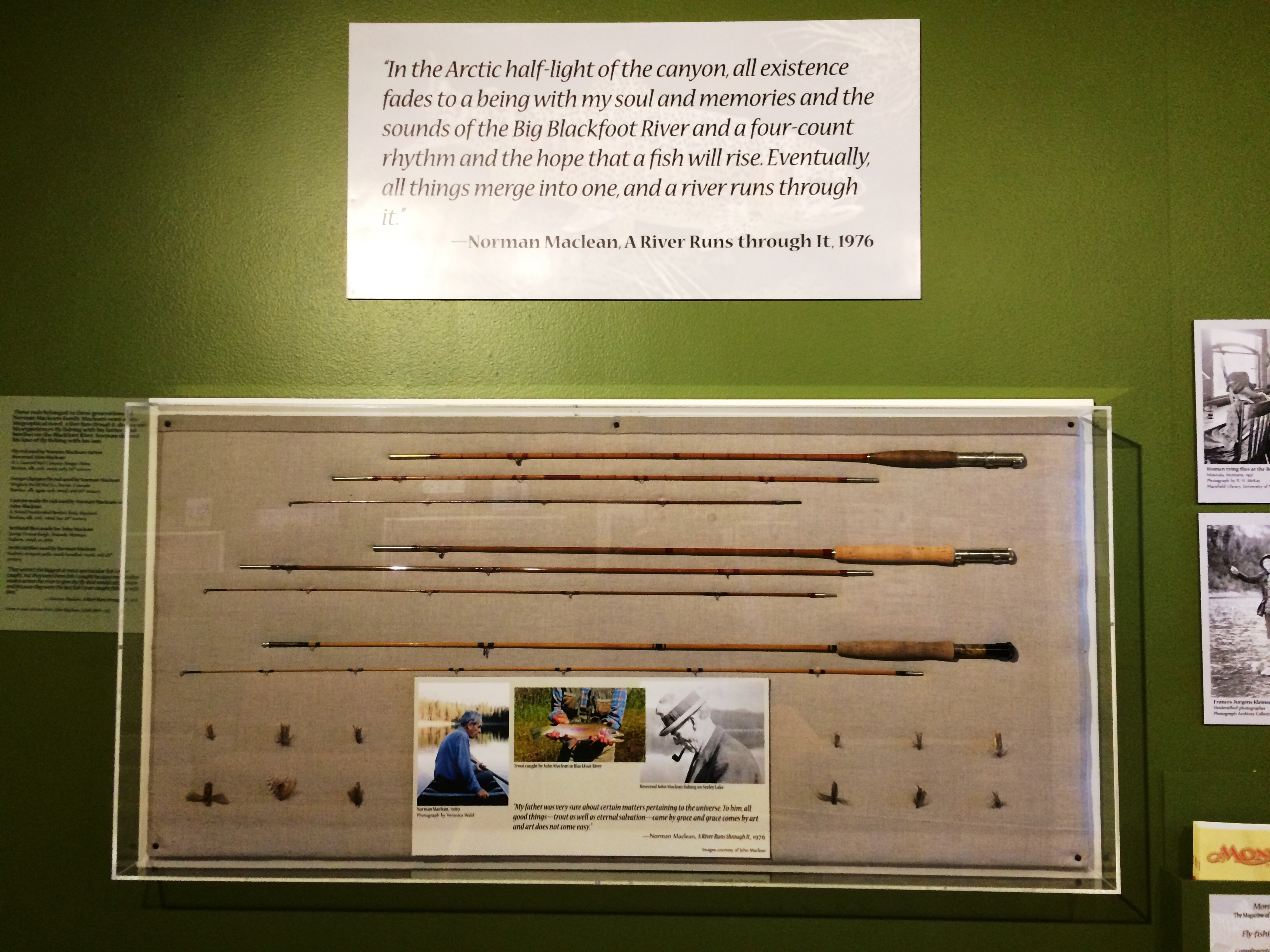
The Montana Historical Society Museum in Helena, MT, currently features a special exhibit titled “Hooked: Fishing in Montana.” The exhibit is located in their hallway gallery and will run until early 2018. Items displayed in the survey of all sorts of fishing practices range from a mid-nineteenth century Nez Perce dugout canoe to fly fishing tackle. Among the latter are numerous items associated with Norman Maclean, author of beloved A River Runs Through It and other Stories (Chicago, 1976). These include a Granger “Champion” bamboo rod fished by Norman, as well as a Leonard rod fished by his father, the Reverend John Maclean. Anyone passionate about the history of what we now call Montana and, of course, anyone passionate about the history of fly fishing, will enjoy the exhibit.

Maclean Family Fly Rods

In general, the MHS Museum is excellent. Fishing aside, the museum is worth a visit for the exhibit of Charlie Russell (1864-1926) artwork, alone. Another exhibit “Neither Empty nor Unknown: Montana at the Time of Lewis and Clark” is also very well done. Notably, the representation of Indigenous peoples, coordinated with tribal representatives, is prominent.

“Indians Discovering Lewis and Clark” C.M. Russell, oil, 1896. Montana Historical Society MacKay Collection. Public Domain

Montana Books

March 13, 2017

Online magazine The Montana Mint published a list of recommended books about Montana recently. The post is titled “The Greatest Books Ever Written About Montana.” The claim implied in this title is quite a stretch, but they do recommend some wonderful books. Some of these I recommend to you, in turn.

Of course, you are already familiar with Norman Maclean’s A River Runs Through It and Other Stories (1976). Maclean fans might also enjoy Ivan Doig’s This House of Sky: Landscapes of a Western World (1980), in which the author is nearly as poetic about the Montana landscape as Maclean. The Montana Mint lists several other Doig titles, as well.

The Big Sky, first edition data (fair use image, from Wikipedia)

Another worthwhile read is A.B. Guthrie, Jr’s The Big Sky (1947). This classic novel is a deeply engaging and sometimes disturbing fictional account of the mountain men, set during the first half of the 1800s. It left quite an impression upon me, as a young man. Its 1949 sequel, The Way West, won the Pulitzer Prize for Fiction.

For a Native American perspective upon the sort of Indian/white interactions described by Guthrie, read James Welch’s Fools Crow (1986). Welch was a Gros Ventre/Blackfeet author, who remains a looming figure in Native American literature. In Fools Crow, he tells the story of a fictionalized Piikani Blackfoot man. The story culminates with the 1870 Bear Creek (Marias River) Massacre, during which the US Army murdered approximately 200 Piikanis. Fools Crow does not mesh perfectly with Blackfoot oral histories, but it is a compelling book that certainly conveys Native emotions about such devastating events as that which occurred in 1870.

For the full list of books recommended by The Montana Mint, see their post.


Montana Fishing Exhibit

February 23, 2017

http://mtstandard.com/lifestyles/montana-s-fishing-history-displayed-in-new-exhibit-at-montana/article_48a9f397-1e99-5ec4-8c6d-845d83cdcf64.html

A Visitor’s Fly Fishing Memories in Film

February 13, 2017

Last summer, my friend Claudio Presecan visited. Claudio is from Cluj, Romania, and I have enjoyed fly fishing with him and his friends in Transylvania a couple of times. Therefore, it was a pleasure to finally be able to show him around my own waters. Claudio, is a very accomplished artist. So, it is not surprising that the digital film he made of his time fishing in Montana is filled with so many beautiful images. You can follow the link below, to see the video. And to see his paintings in the US, visit the Fountainhead Gallery (you can view them online).


<p><a href=”https://vimeo.com/203692918″>A fly fishing journey… Montana, August 2016</a> from <a href=”https://vimeo.com/prese”>Presecan</a&gt; on <a href=”https://vimeo.com”>Vimeo</a&gt;.</p>

2017 Hemingway Festival

January 28, 2017

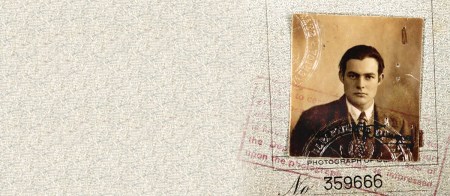
The dates and schedule for the 2017 Hemingway Festival have been announced. The event, hosted by the University of Idaho, will take place on March 3 and 4 in Moscow, Idaho. The annual festival celebrates the work of the deeply talented, if sometimes controversial writer, as well as the latest recipient of the PEN/Hemingway Award. This year, the award was given to Ottessa Moshfegh, author of the acclaimed novel, Eileen. Hemingway, of course, needs no introduction to readers and anglers. But for more information about the festival held in his name, I refer you to last year’s post.

Yale acquires Haslinger Breviary

January 17, 2017

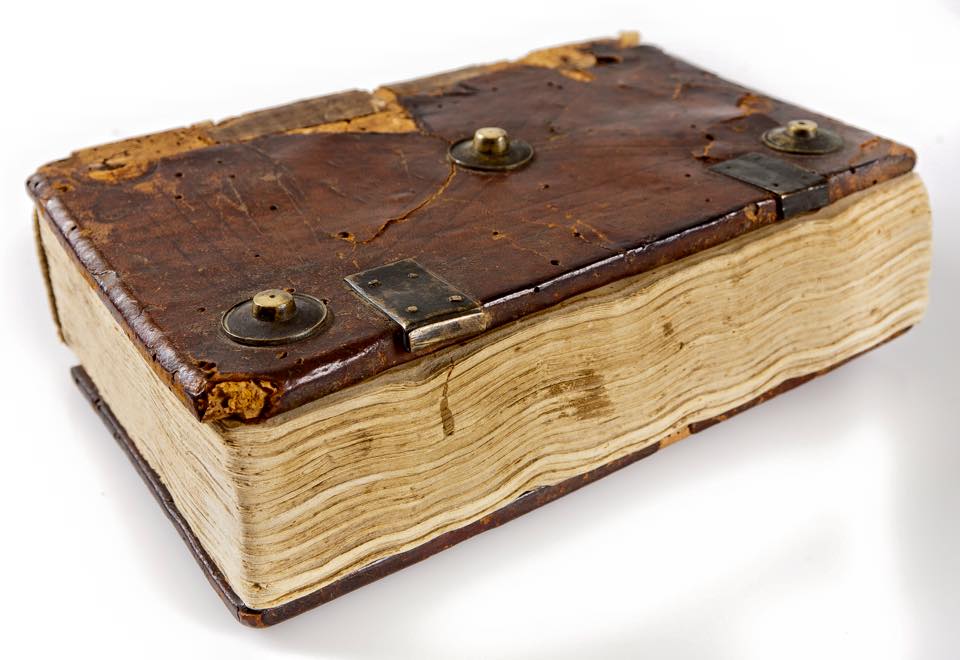
Recently, the American Museum of Fly Fishing  offered an update on the Haslinger Breviary, noting that it had been purchased by Yale University. This devotional book, which contains material on fly fishing dating to between 1452 and 1462, was first publicized last year by Magg Bros. Ltd of London. I wrote about it when it was in their possession.

Maggs Bros., Ltd

Maggs Bros., Ltd

The Breviary was later analyzed and discussed in great detail by experts Richard C. Hoffman and Peter Kidd. They published their work in the spring 2016 issue of The American Fly Fisher: Journal of the American Museum of Fly Fishing (wherein you will find the dates identified above). Hoffman is known in angling literature circles for his amazing book, Fisher’s Craft and Lettered Art: Tracts on Fishing from the End of the Middle Ages, and other writings.

Now that the book is owned by Yale, it will housed in the Beinecke Rare Book and Manuscript Library, which reopened this last fall after renovations. The fact that this singular text has been acquired by a university rather than a private collector, is wonderful news.

The Shape of the Voyage

December 6, 2016

1570225

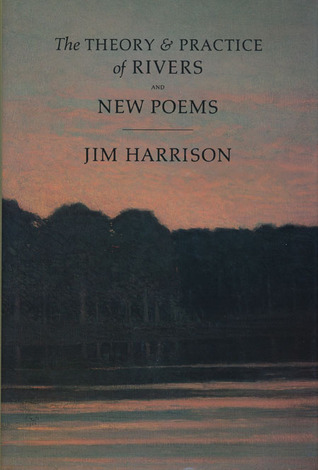
Cover Art by Russell Chatham, from 1989’s The Theory & Practice of Rivers and New Poems (Clark City Press).

Jim Harrison (1937-2016), of whom I have written before, published The Theory and Practice of Rivers (Winn Books) in 1986. He included the poem of the same name in a later collection, as well. Here, I offer an excerpt from that lengthy poem–the first two stanzas. They appeal to me on this wintry December day that provokes the same sort of self-reflection found in Harrison’s poem.

The Theory and Practice of Rivers

The rivers of my life:
moving looms of light,
anchored beneath the log
at night I can see the moon
up through the water
as shattered milk, the nudge
of fishes, belly and back
in turn grating against log
and bottom; and letting go, the current
lifts me up and out
into the dark, gathering motion,
drifting into an eddy
with a sideways swirl,
the sandbar cooler than the air:
to speak it clearly,
how the water goes
is how the earth is shaped.

It is not so much that I got
there from here, which is everyone’s
story: but the shape
of the voyage, how it pushed
outward in every direction
until it stopped:
roots of plants and trees,
certain coral heads,
photos of splintered lightning,
blood vessels,
the shapes of creeks and rivers.