Archive for the ‘Fly Fishing’ Category

Other than fly fishing.

July 20, 2015

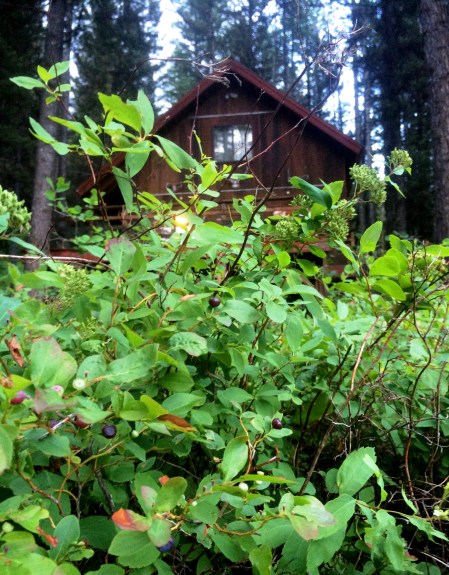
The heat in the Inland Northwest has been brutal this summer, and it has made fishing on my home waters pretty challenging. The reason I like fly fishing, however, is the fact that it requires one’s participation in the wider, non human world–the world that so many call “nature.” And, of course, there is much more to nature than rising fish. For instance, huckleberry bushes surround our cabin and run up the mountain behind it. In fact, the bush pictured below is right next to the spot where I beach the canoe, between the lake and cabin. So, while my mood could be better, after having my fly snubbed by the local cutthroats, turning from the beached canoe toward hundreds of ripe huckleberries is a great consolation.

IMG_1785

I describe fishing and berry picking at my cabin as a form of “participation” in the wider world because they both involve real, physical engagement with the living environment. This engagement blurs the lines between “nature” and myself, which is one of the reasons I try to avoid the former term. It is true that most Americans now live very anthrocentric lives, but, even in urban centers, distinguishing what is “natural” and what is not is a difficult task. Thinking similarly, the 19th century romantic, Henry David Thoreau, actually described huckleberry picking and eating as sort of socializing that takes place between humans and “nature” (see quote below).  Traditional Native American friends, seeing the non-human world as a much more personal place than most of us, leave offerings to or attend ceremonies honoring the plants from which they take berries or other items. All of this explains why, for me, finding those berries upon returning from a fishless paddle around the lake is more meaningful than you might guess. And it doesn’t hurt to get rid of those berries before the bears come looking for them.

Following, you can read Thoreau’s thoughts on huckleberries:

“What means this profusion of berries at this season only? Nature does her best to feed her children, and the broods of birds just matured find plenty to eat now. Every bush and vine does its part and offers a wholesome and palatable diet to the wayfarer. He need not go out of the road to get as many berries as he wants, of various kinds and qualities according as his road leads him over high or low, wooded or open ground: huckleberries of different colors and flavors almost everywhere, the second kind of low blueberry largest in the moist ground, high blueberries with their agreeable acid when his way lies through a swamp, and low blackberries of two or more varieties on almost every sand plan and bank and stone heap.

“Man at length stands in such a relation to Nature as the animals which pluck and eat as they go. The fields and hills are a table constantly spread. Diet drinks, cordials, and wines of all kinds and qualities are bottled up in the skins of countless berries for the refreshment of animals, and they quaff them at every turn. They seem offered to us not so much for food as for sociality, inviting us to a picnic with Nature. We pluck and eat in remembrance of her. It is a sort of sacrament, a communion—the not forbidden fruits, which no serpent tempts us to eat. Slight and innocent savors which relate us to Nature, make us her guests, and entitle us to her regard and protection.”

Henry David Thoreau, Wild Fruits: Thoreaus’s Rediscovered Last Manuscript, ed. Bradley P. Dean (WW Norton & Company, 2001), 52.

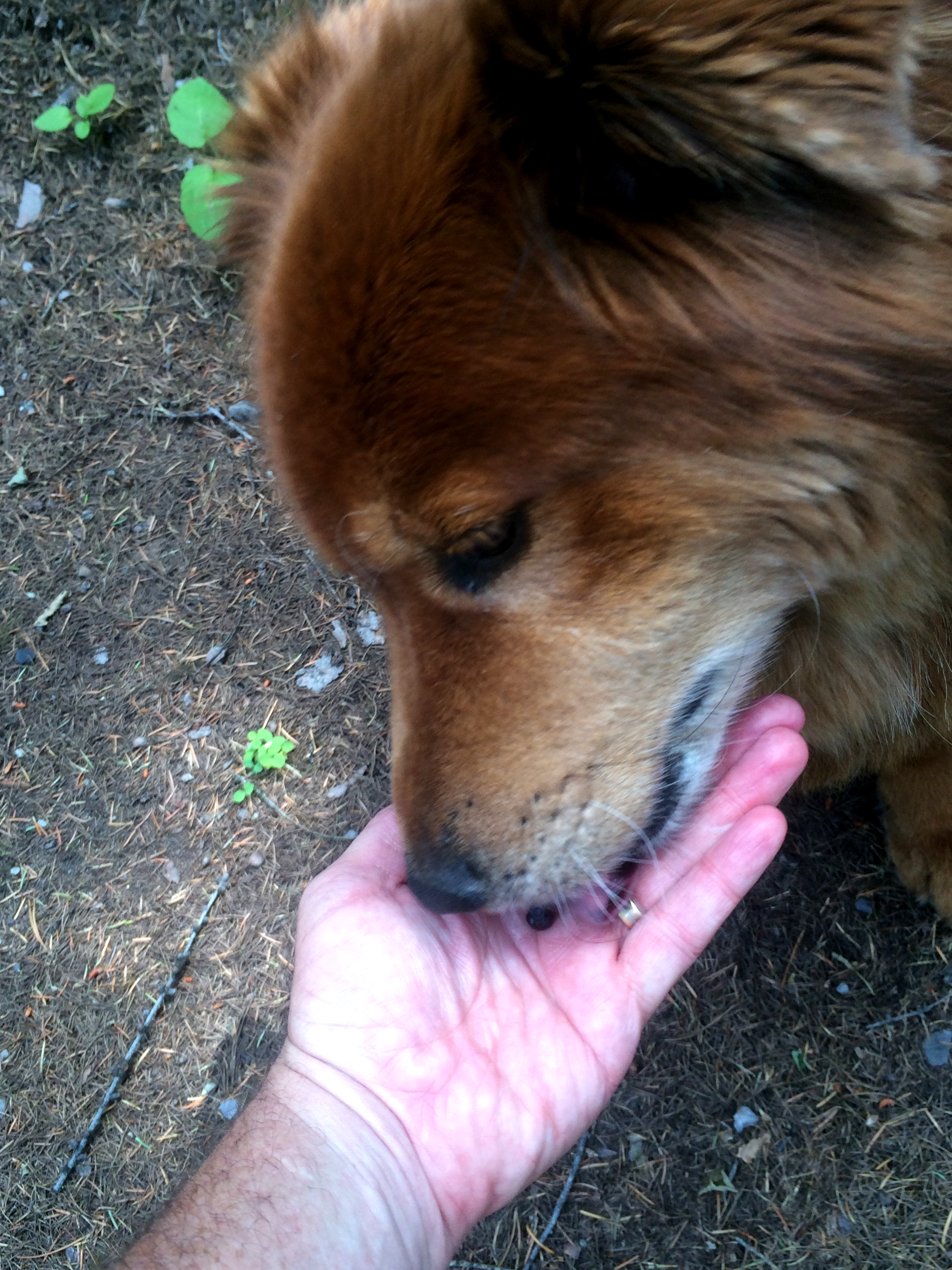
IMG_1765

My dog is a big fan of huckleberries too.

Pete Dexter and Norman Maclean

July 8, 2015

A celebration of Norman Maclean’s writings, “In the Footsteps of Norman Maclean: a Literary Festival,” about which I have written previously, will take place this weekend in Seeley Lake, Montana. A few days ago, The Missoulian (Missoula, MT’s mainstream newspaper), interviewed Pete Dexter, who wrote a well-respected profile on Maclean for Esquire in June, 1981. Dexter is among the many speakers who will be featured at the festival this weekend. You can find The Missoulian article here: Novelist Pete Dexter: Maclean put everything on the line with ‘River’.

Hoot-Owl Restrictions Update

July 6, 2015

I am sharing a post, below, from The Current Seam, the blog of the Crosscurrents Fly Shop in Craig and Helena, Montana. As the post indicates, the State of Montana began placing fishing restrictions on Montana’s waterways on Friday, July 3 , due to the heat. The restrictions will likely increase. If you are planning on visiting Montana, pay close attention to the updates.

Potential visitors might also look for some lakes to fish (but know that some of these can get dangerously warm for trout, as well). While the current restrictions limit fishing time on my own favorite river, they don’t affect fishing on the lake near which my sisters and I share a cabin. Thus, I, for one, will be doing lots of my fly fishing from a canoe, this summer.

IMG_1766


wolfcreekangler's avatarThe Current Seam

Hot and wet, good when you’re with a lady, bad if you’re a fish. To state the obvious it’s hot out there and with little relief in the forecast Montana F.W.P has issued Hoot-Owl Restrictions on several rivers in the state. Hoot-Owl restrictions mean no fishing from 2 p.m util midnight on effected waterways. Here’s the complete list of rivers under fishing restrictions….

  • The entire length of the Big Hole except from Dickey Bridge to Maiden Rock F.A.S
  • The entire length of the Jefferson River
  • The entire length of the Blackfoot River
  • The entire length of the Bitterroot River
  • The Clark Fork from the headwaters to its confluence with the Flathead River
  • Flint Creek from the Highway 1 bridge downstream to its confluence
  • Silver Bow Creek from its confluence with Warm Springs Creek to the confluence with Blacktail Creek

This portion of the post strictly represents the opinion of the…

View original post 314 more words

Norman Maclean Literary Festival

May 29, 2015

1432903473385

This summer, there will be a celebration of Norman Maclean, author of A River Runs Through It and Other Stories, and his literary work.  The celebration, “In the Footsteps of Norman Maclean, a Literary Festival,” will take place in and around Seeley Lake. Montana, where the Maclean family still has a family cabin. Of course, this area is one of the settings in A River Runs Through It, along with the nearby Big Blackfoot River and the towns of Missoula and Helena.

The festival is sponsored by the Big Blackfoot Chapter of Trout Unlimited, Big Blackfoot Riverkeeper, the Clearwater Resource Council, the Seeley Lake Community Foundation, and the Seeley Lake Historical Society. It begins with an evening reception on July 10 and runs through July 14. There will be daily presentations at the well-known Double Arrow Ranch, and numerous activities related to Maclean’s fishing and writing pursuits.

Seeley Lake is a beautiful community in the Seeley Swan Valley, between the Mission and Swan Mountains. It lies along Highway 83, in Missoula County. Because my sisters and I share a cabin in the area (about which I have written numerous times) and because it lies along the route to another family property in Glacier National Park, I have spent a fair amount of time there through the years. I recommend a visit, and there will be no better time for a contemplative angler to check out the area than during this festival. You can learn more at the festival website. And if you happen to attend, give me a shout.

Angling Gifts from Magyarország

May 25, 2015

While in Magyarország/Hungary, my wife and daughter and I took the ferry across the Danube River one morning to Visegrád to meet Ákos Szmutni. Ákos is the owner of Stickman Rods and the author of a beautiful hard-bound, Hungarian language instructional book on fly fishing. The 2009 text, which totals over 400 pages with color photos, is simply titled Legyező-Horgászat (Fly Fishing). 

My wife and daughter drove up to the Cloud Castle above Visegrád, a favorite place to visit, while I spent time with my fellow angler. We cast several Stickman Rods and shared thoughts about fly fishing, Central Europe, and life. Afterward, Ákos kindly gave me a copy of his book. It is pictured below, with a benchmade Hungarian knife, some flies tied “in hand” by Hungarian fly fisher and friend Levente Kovács, and an Association of Hungarian Flyfishers Badge.

IMG_1584

IMG_453628720

The Lower and Upper Castles (13th c.) of Visegrád, as seen from the ferry below. I admire the Upper or “Cloud Castle” often because it can be seen from the home of friends in Nagymaros, the town across the river. You can see far better pictures at the Visegrád website.

Call Us Ishmael

May 16, 2015

I write this post late at night, in a boat, at sea. The boat is my brother-in-law’s. He, his sister–my wife, and all their family are from Central Europe. A love of of large waters and all things maritime runs in her family. In her father’s house is proudly displayed an old, official document honoring her great grandfather, a sea captain, for rescuing an Imperial vessel in the Adriatic Sea. Her father, himself, built his own sailboat, after the collapse of Communism, and races it very successfully. And a few years ago, after deciding the Danube River was too small for him and/or his boat, her brother rented a slip in Croatia, and now captains his own boat on the Adriatic.

Transylvania

Transylvania

Romania

Transylvania

Personally, I prefer mountains and clear running streams to massive rivers, lakes that cannot be seen across, and oceans or seas. And in many other ways, we inhabit the world rather differently, aside from the fact that we all love my wife and young daughter immensely. In fact, when visiting Central Europe, I now sometimes leave the family to go fly fishing for trout in Transylvania with Romanian friends. Or, I fish more locally for trout or asp with Hungarian friends.

During our current visit, my wife, and daughter, and I have joined  my brother-in-law and his wife for a trip to Croatia and a few days on their boat. My in-laws, as usual, are kind and generous hosts, and it is amazing to see Dalmatia from the sea instead of from the road.

Zadar, Croatia

Zadar, Croatia

As it happens, I have been reading Herman Melville’s 1851 whaling epic Moby-Dick or, The Whale. I read the fist pages during my late-night train ride to Romania to fly fish, and I have continued to read the book after rejoining family. In those first pages, I came across a long passage of Melville’s that has led me to recognize that I have another love in common with my in-laws, besides that for my wife and daughter. We all love water. Whether that water is small or large, running or still, sweet or saline, we love water. Indeed, in Melville’s words, we see the “key to it all” in “rivers and oceans.” Following is that long passage containing those words.

Here is an artist. He desires to paint you the dreamiest, shadiest, quietest, most enchanting bit of romantic landscape in all the valley of the Saco. What is the chief element he employs? There stand his trees, each with a hollow trunk, as if a hermit and a crucifix were within; and here sleeps his meadow, and there sleep his cattle; and up from yonder cottage goes a sleepy smoke. Deep into distant woodlands winds a mazy way, reaching to overlapping spurs of mountains bathed in their hill- side blue. But though the picture lies thus tranced, and though this pine- tree shakes down its sighs like leaves upon this shepherd’s head, yet all were vain, unless the shepherd’s eye were fixed upon the magic stream before him. Go visit the Prairies in June, when for scores on scores of miles you wade knee- deep among Tiger- lilies— what is the one charm wanting?— Water there is not a drop of water there! Were Niagara but a cataract of sand, would you travel your thousand miles to see it? Why did the poor poet of Tennessee, upon suddenly receiving two handfuls of silver, deliberate whether to buy him a coat, which he sadly needed, or invest his money in a pedestrian trip to Rockaway Beach? Why is almost every robust healthy boy with a robust healthy soul in him, at some time or other crazy to go to sea? Why upon your first voyage as a passenger, did you yourself feel such a mystical vibration, when first told that you and your ship were now out of sight of land? Why did the old Persians hold the sea holy? Why did the Greeks give it a separate deity, and own brother of Jove? Surely all this is not without meaning. And still deeper the meaning of that story of Narcissus, who because he could not grasp the tormenting, mild image he saw in the fountain, plunged into it and was drowned. But that same image, we ourselves see in all rivers and oceans. It is the image of the ungraspable phantom of life; and this is the key to it all.

Fly fishing for Amberjacks in the Adriatic Sea

Fly fishing for Amberjacks in the Adriatic Sea

1st International Trout Congress

April 27, 2015

A friend alerted me to a very interesting conference taking place this summer. It will bring together scientific and cultural perspectives upon trout, and it will seek to unite those who have these perspectives to form an established “congress.” The conference is titled The World of Trout. The conference website states, “As a congress, the aim is to assemble an international body for a series of structured lectures and discussions on the relationship between trout and humans.” It also says, “As a celebration, it seeks to infuse the congress with art, literature, angling lore, and special events that promise to make the event both instructional and entertaining.” Perhaps I will see some of you there.

UPDATE: The Trout Congress has been postponed for one year. You can find details at the congress website. Please consider attending in 2016.

Congress

Anticipation and Preparation

April 21, 2015

IMG_1504

Work has keep me a bit busier than usual, of late. As a consequence, I have been fishing with a dwindling supply of flies. Soon, however, I will be returning to Central Europe to visit my wife’s family.  While there , I will fish for asp in the Danube and maybe look for a few trout in a stream near a relative’s home. I will also return to Transylvania to visit a couple of friends and to fish for trout and graylings. So, out of necessity, I am finally back at the vice. Next up…  comparaduns. The graylings loved them last time.

DSC02543

With friends in Transylvania.


The “Hugh Glass” Fly

March 23, 2015

I have some grizzly bear (Ursus arctos horribilis) fur, and I’d like to tie a few nice flies for the person who gave it to me. I had thought about tying some Adams dry flies, using the lighter under fur for dubbing and the guard hairs for tails. Obviously, the grizzly hackle normally used on Adams flies would  fit the theme nicely. I would love to hear some other suggestions, however.

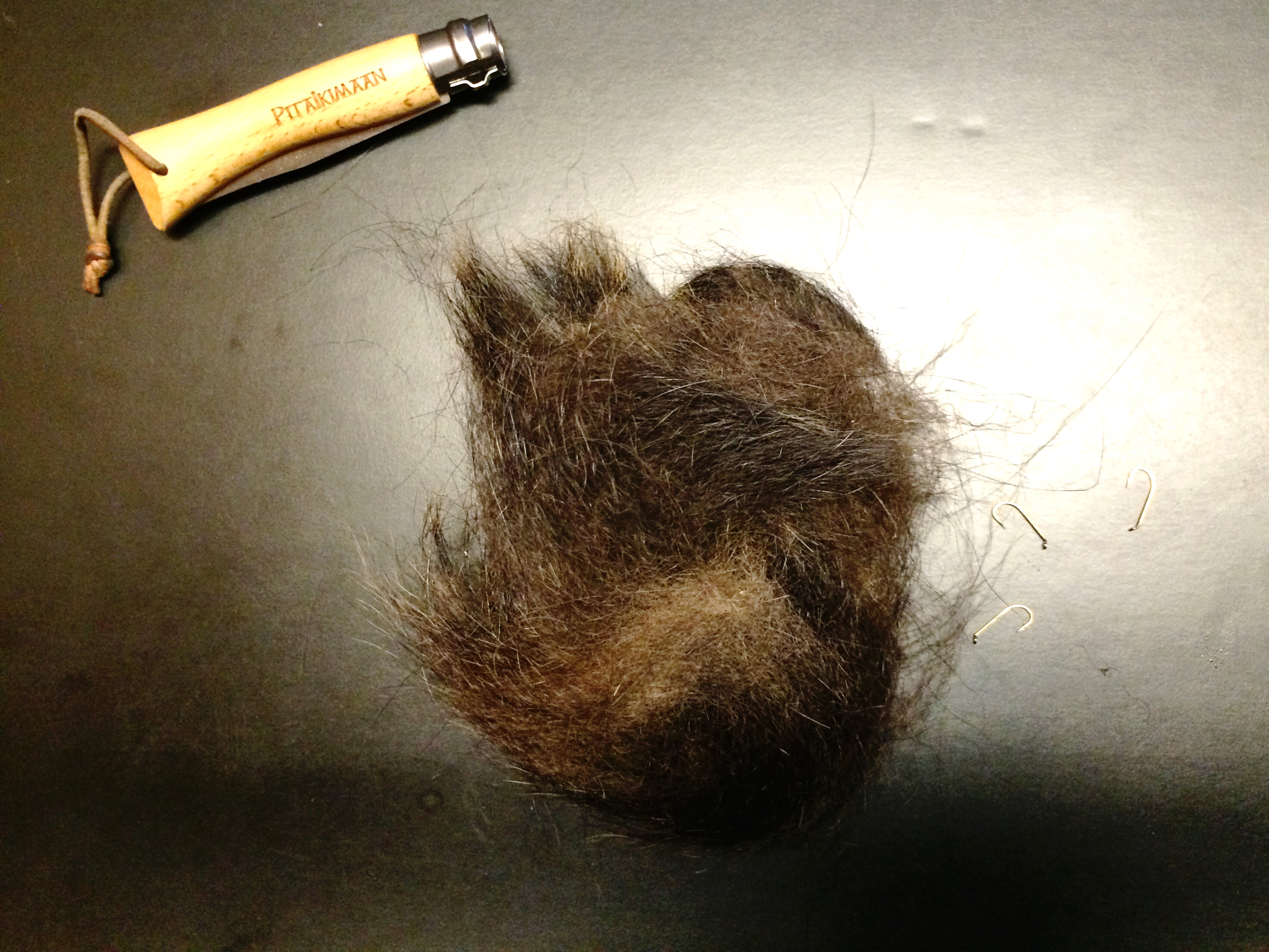
I might also tie a variation of the “black bear red but” salmon fly. I’ll call it the “Hugh Glass.” This name comes to mind because I am reading Missoula, Montana author and diplomat Michael Punke’s The Revenant: A Novel of Revenge. In the book, Punke describes the mauling of Glass by a grizzly on the Grand River, in present-day South Dakota, and the events that followed. Glass’s companions left him for dead after his encounter with the bear, and they took his prized rifle with them. The badly wounded Glass famously crawled approximately 100 miles to the Cheyenne River. He then floated downstream to Fort Kiowa, on the Missouri. After recovering physically, he set out after those who had abandoned him.

IMG_1461

Time

January 30, 2015

Not many writers of angling literature, or even of environmental literature, are as respected as conservationist and fly fisher Roderick Haig-Brown. His observations of the physical world provoke a depth of reflection that those of few other literary figures do. One of the reasons for this may be that his observations are almost always tied to the passage of time–the passage of a day, the turning of a season, or even the growth of his children. In  A River Never Sleeps, published in 1946, Haig-Brown ties his observations to the months. An excerpt from “January” follows.

IMG_1422

A River Never Sleeps, Easton edition, below my favorite art from Michael Simon.

It is easy to forget about the river in winter, particularly if you are a trout fisherman and live in town. Even when you live in the country, close beside it, a river seems to hold you off a little in winter, closing itself into the murky opacity of freshet or slipping past ice-fringed banks in shrunken, silent flow. The weather and the season have their effect on the observer too, closing him into himself, allowing him to glance only quickly with a careless, almost hostile, eye at the runs and pools that give summer delight. And probably his eyes are on the sky for flight of ducks or geese or turned landward on the work of his dogs. Unless he is a winter fisherman, he is not likely to feel the intimate, probing, summer concern with what is happening below the surface.

IMG_1415

Idaho’s Clearwater, in January

Edit/Further thoughts:

I realize now that “observations” is the wrong word for Haig-Brown’s writings. Rather, his essays are recordings of interactions with the physical world. For him, the landscape is a character (or a chorus of characters). This sounds trite, but I mean it in a literal sense: for Haig-Brown, the landscape is an acting subject, not a passive object. Thus, he does not simply observe it. Rather, he interacts with it. Of course, the subjecthood of the “natural” environment is not merely a literary invention on Haig-Brown’s part. Indeed, the landscape acts upon all of us, and all of us act upon it. Haig-Brown is simply one of the rare members of Euro-American society to recognize this fact. This is all the more reason for readers to admire the work of this great man, who passed decades ago.