Archive for the ‘Fly Fishing Literature’ Category

Johnny has Gone for a Soldier

June 6, 2014

“Johnny has Gone for a Soldier” is a well-known folk song. It was sung during the Revolutionary and Civil Wars. Some speculate that it may have originated among Irish Jacobites — the 17th and 18th century supporters of King James II and VI and of monarchical succession.[1]

A.A. Bondy covers “Johnny has Gone for a Soldier” on the excellent 2013 collection of contemporary, reinterpreted Civil War era songs, Divided and United.

In this song, Bondy sings:

Sell your rod, sell your reel,
Sell your chain of silver.
Buy your love a sword of steel.
Johnny has gone for a soldier.

In earlier versions of the song, the words cited above differ. Following are the lyrics of the early Irish version, Siúil a Rún, by Clannad:

I’ll sell my rock, I’ll sell my reel,
I’ll sell my only spinning wheel.
To buy my love a sword of steel
Is go dté tú mo mhúirnín slán.

In Clannad’s version, “rock” and “reel” refer to the distaff and spindle used in hand spinning. In Bondy’s Civil War era lyrics, “rod” might possibly refer to a distaff, which often takes the shape of a rod. However, spinning wheels had greatly improved and largely replaced the use of distaffs and spindles altogether by this time. Moreover, I can find no common historical evidence of the word “rod” being used interchangeably with “rock” or “distaff.”

I wonder, then, if the latter lyrics might refer to fishing tackle. By the time of the war, the split bamboo fly rod had been invented and the use of reels was common. Moreover, a fishing rod and reel was most certainly more valuable at the time than a spindle and, particularly, a distaff. Distaffs, after all, were usually very simply devices (at least those used predominantly in Western Europe and American were).

Regardless, hundreds of years after this song was first sung, it remains a moving one. And selling those things that are of the greatest monetary value to you, in order to arm yourself or a loved one is no small thing.  Sacrifices such as things are important to ponder, as we think back upon the even greater sacrifices made by soldiers at Normandy and elsewhere, 70 years ago today. In 17th century Ireland, England, and Scotland; in 18th and 19th century United States; in 1940’s Europe, Oceania, and Asia; and in far too many places in throughout the world right now, fishing tackle and even new clothing is a luxury that many cannot afford.[2]

[1] Numerous other posts describe the circumstances of the 17th century English speaking world. This is, after all, the world of Izaak Walton.

[2] Then again, there have been those soldiers who considered fishing tackle a fundamental necessity.  For instance, Charles K. Fox imagines the fate of  flyfishing soldiers before and after the battle of Gettysburg in This Wonderful World of Trout (1963). Charles Ritz describes the immense collection of tackle and guns brought to France during WWII by Lieutenant General Walter Bedell Smith (later Director of Central Intelligence) in A Flyfisher’s Life (1959).

John Montague’s “The Trout”

June 2, 2014

This morning, in my readings, I was reminded of poet John Montague. This inspired me to write a bit about him. Following, then, I share some biographical information about and a poem by Montague.

Montague is one of Ireland’s most respected, living poets. Montague was born to a Roman Catholic Irish immigrant father in New York, in 1929. A few years later, he was sent to live with his father’s relatives in County Tyrone, Northern Ireland. His studies eventually brought him back to the US, for a brief time, before he returned to Europe and Ireland. In 1998, he was awarded the first “Ireland Chair of Poetry.” This professorial appointment is sponsored by Trinity College Dublin, Queen’s University Belfast, and University College Dublin.

Montague’s “The Trout,” was first published in 1967’s A Chosen Light. The “Barrie Cooke” mentioned in the dedication is the well-known Irish artist, who passed just this year. Cooke was a passionate fly fisherman and friend of Montague’s.  You can find an online selection of Cooke’s paintings via Dublin’s Kerlin Gallery.

“The Trout”

for Barrie Cooke

Flat on the bank I parted
Rushes to ease my hands
In the water without a ripple
And tilt them slowly downstream
To where he lay, tendril-light,
In his fluid sensual dream.

Bodiless lord of creation,
I hung briefly above him
Savouring my own absence,
Senses expanding in the slow
Motion, the photographic calm
That grows before action.

As the curve of my hands
Swung under his body
He surged, with visible pleasure.
I was so preternaturally close
I could count every stipple
But still cast no shadow, until
The two palms crossed in a cage
Under the lightly pulsing gills.
Then (entering my own enlarged
Shape, which rode on the water)
I gripped. To this day I can
Taste his terror on my hands.

The Lochsa, Again.

April 21, 2014

And Alan, whose muscles are not yet really strong enough to handle a fly rod, perched on a rock with the landing net. Little boy in summer, I thought, watching the ripples of water all about him and the dense screen of leaves on the trees behind him. But he was more than that, a creature of choice, putting a deliberate trust in me to hook a fish and make work for the net that he still finds the most exciting part of going fishing.

Roderick Haig-Brown, Measure of the Year: Reflections on Home, Family, and a Life Fully Lived (1950).

Fishing

I drove with my daughter to Missoula the other day, so that we could spend some time with her grandfather on Easter weekend. I asked her if she would like to fish a bit on the return trip, and she said she would.  Instead of returning over Lookout Pass, then, we went over Lolo Pass and drove along the Lochsa River.  As I’ve indicated before, the Lochsa has a lot of significance to me.  Perhaps it will for my daughter some day, as well.

After finding a spot on the river that was accessible to a four-year-old, we fished.  I had not thought to bring her own, short rod. The 8.5 foot one I had with me was a bit much for her.  So, we tied a fly and leader to a long branch, still green and flexible.  She carefully cast the fly into the water, again and again, for a good while before getting anxious to leave.  Not surprisingly, she didn’t catch a fish.  I was happy to see how enthusiastic she was, though.  While on the river, she was a “creature of choice,” to borrow the words with which Roderick Haig-Brown describes his son in the epigraph above.  My daughter and I have summer just ahead of us, and she’ll have many more opportunities to catch a fish with her father during the coming months..

Recommended Reading

April 7, 2014

Fly Fish Journal


When I was looking through The Flyfish Journal that arrived in the mail last week, I came across a pleasant surprise. As I neared the end of the magazine, thinking how I really needed to be in bed, I came across a piece written by a friend, Mike Sepelak. The next day, I realized there were two more pieces by him in the same issue.

Until recently, Mike and I were nearly neighbors (by semi-rural/small town standards, at least). We have fly fished together quite a bit, in saltwater, warmwater, and coldwater. All along, I have followed his writing. You can, too, by looking at his website, Mike’s Gone Fishin’ … Again. There, you will find some great essays. I know Mike has put a lot of work into them, but I also know that choice words come easier to him than they do to many.

It’s very gratifying to see Mike’s writing in print. I have urged him to put together a collection of essays for publication as a book someday, and I continue to hope he does so. Read an essay such as “Shattered,” and  you will understand why. Few people can write something so emotional, yet so well crafted at the same time.

Meanwhile, pick up Volume Five, Issue Three of The Flyfish Journal. It’s a great publication, and it’s all the better with Mike’s work in it.


Burkheimer, Peak, and Gingrich

March 25, 2014

Filson recently released a promotional video featuring graphite rod maker Kerry Burkheimer. Filson sells C. F. Burkheimer fly rods, and Burkheimer wears Filson’s gear in the video.

I love my Filson “strap vest,” but I have never handled a Burkheimer rod. His rods are popular around here, and I have spoken to people who love them and to people who do not. One thing that interests me, personally, about Burkheimer rods is their pedigree. Burkheimer was mentored by Russ Peak — probably the most revered maker of fiberglass rods. His rods thus have an interesting connection to the past.

My favorite angling author, Arnold Gingrich, wrote of Peak that, “I regard his glass rods, and  the best makers’ bamboos, as fully equal examples of the rodmaker’s craft” (The Joys of Trout, 1973). This is high praise. Gingrich, the founding editor of Esquire magazine, had the money, intelligence, and experience to be a true connoisseur of bamboo rods.

Posted below is Filson’s video. No matter whether your are interested in Filson gear and Burkheimer rods or not, the video is worth watching.  It allows one to imagine what stepping back into  Peak’s workshop might have been like, though Burkheimer is no doubt his own man.

Presidents’ Day

February 17, 2014

January can be cold and dry, but it can also be a very wet month, a month of heavy rain or quick thaw and freshet-guarded rivers. February is more dependable…. And February is likely to have splendid days of bright sun after frost, with the first faint feelings of spring in the them, for the sap is rising in the maples again and the willow shoots are scarlet with it and the alders and fruit trees budded with it.

February is a good month too because Washington was born on the twenty-second, and that means that my brother-in-law Buck Elmore will probably be able to take time out and come up to try for a fish.

Roderick Haig-Brown, A River Never Sleeps, 1946.

Unlike Haig-Brown’s brother-in-law, I had to work on what is now Presidents’ Day.   However, I  did some exploring with my wife and daughter yesterday– a sort of Sunday drive–and I surely agree with Haig-Brown’s

assessment of February.  It is a solidly winter month; the evidence of this is everywhere.  Yet, the month is also pregnant with the feeling that spring is just around the corner.

IMG-20140216-00459

IMG-20140202-00440   IMG-20140216-00467

Getting Settled

January 20, 2014

Having relocated to the area where the Palouse and Rocky Mountains meet in Idaho, my mind has been as filled with fish and fly fishing as ever. But even with my thoughts wandering toward the rivers, I have been unpacking boxes and getting acquainted with a new university. This week, as time allows, I’ll get to know the angling collections housed among Washington State University’s Rare Books and Special Collections. And soon enough, I’ll reacquaint myself with Idaho’s fish. Eventually, I’ll even write a few posts about it.

DSC02793

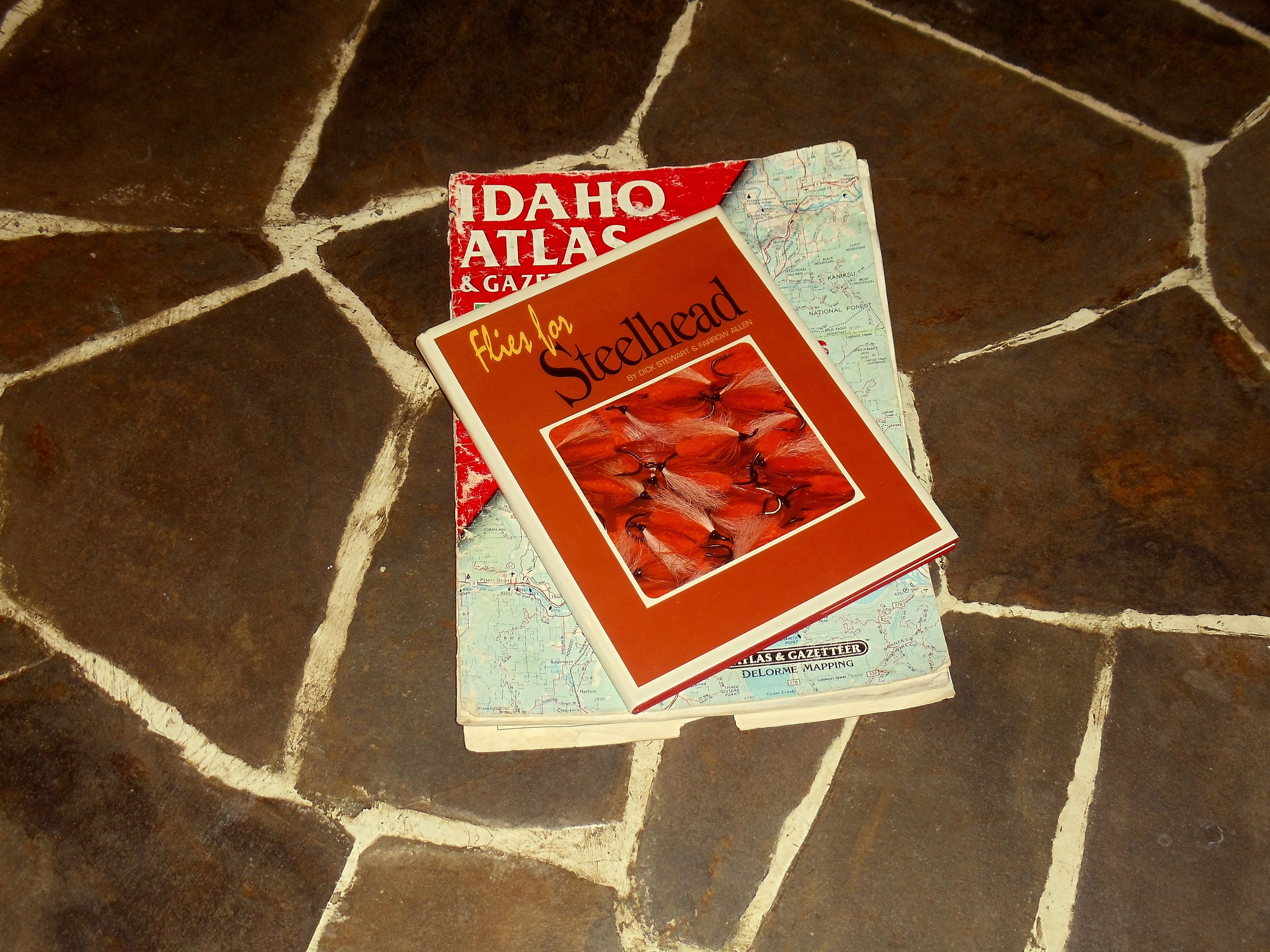
The flagstones in our mid-century modern house were reportedly taken from the Clearwater River.

Mark Browning on Martin Buber

December 5, 2013

Buber

Fishing, of course, can be described in terms of Buber’s worldview. Those who focus on the catch as the ultimate goal and who see the fish or the river as something to be mastered would be described in I-It terms; however, the mainstream of American fly fishing writers subscribe to a completely different perception: I-Thou. Fly fishing, for these practitioners, is a method for creating connections of various sorts.

Mark Browning, in Haunted by Water: Fly Fishing in North American Literature (1998). Browning refers to philosopher Martin Buber’s (pictured) brilliant Ich und Du (1923) or, in translation,  I and Thou (1937).

Peter Pan, Fly Fishing, and the Girl Who Won’t Grow Up.

November 21, 2013

It is well known that the character of Peter Pan was first created by J.M. Barrie, in the stories he told to the young Llewelyn Davies boys. In fact, the four boys, with whom Barrie had a special relationship, helped inspire the character. Barrie eventually immortalized Pan (and thus the Davies boys) in his 1904 stage play and 1911 novel, Peter Pan; or, the Boy Who Wouldn’t Grow Up.

After the deaths of the Davies boys’ parents, Barrie became their guardian. Among other things, Davies took the boys salmon fishing, which was a favorite pastime of his. Such trips included the provision of fly fishing instructors and gillies.

IMG-20131103-00329

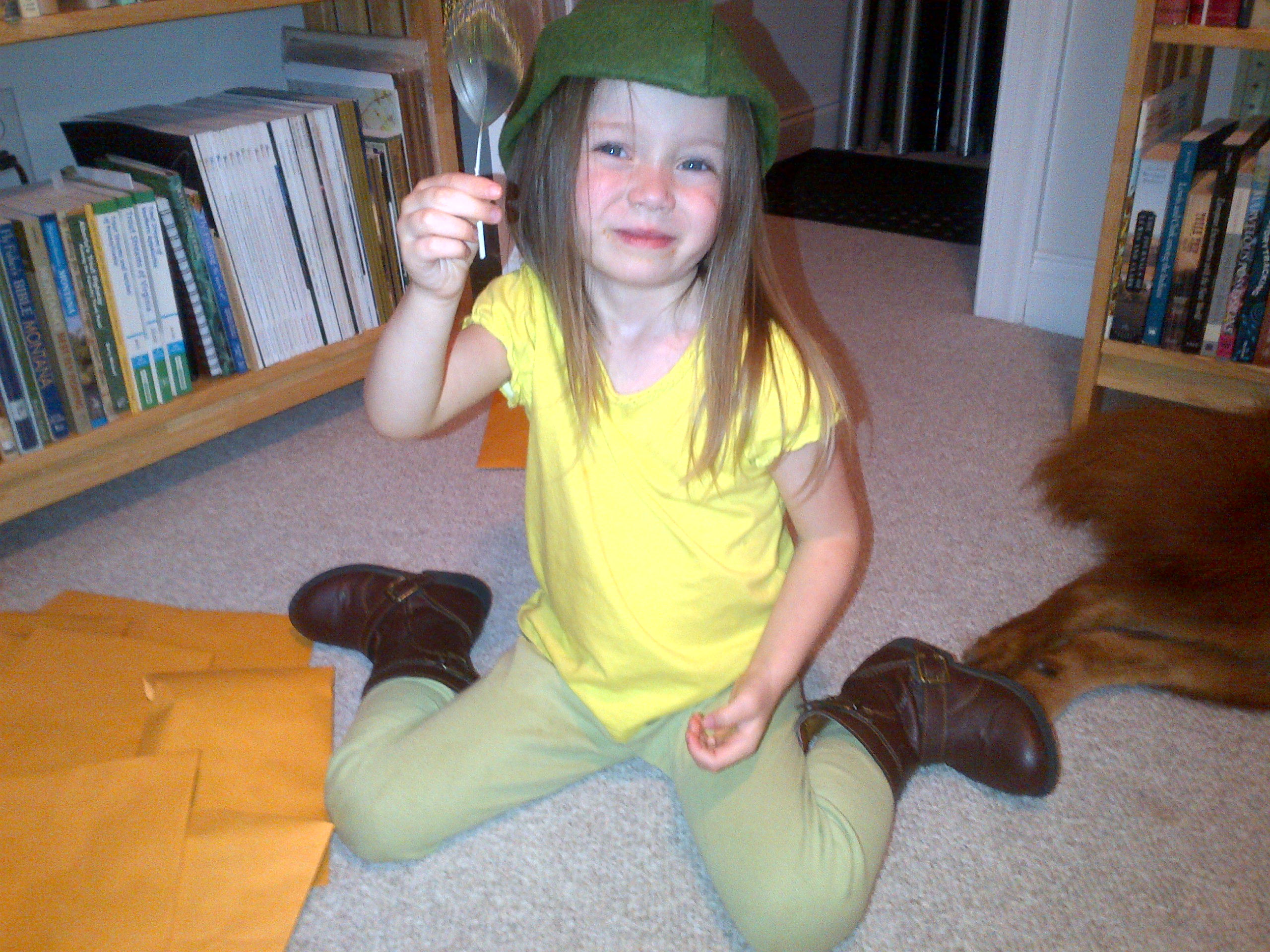
My daughter is a great fan of Peter Pan’s.  She is very familiar with fly fishing, as well. However, at this point, she is much more interested in the sartorial possibilities of fly tying materials than she is in actual fishing flies.  In the picture above (notice the Peter Pan inspired clothes),  she procures some peacock for Captain Hook’s hat. Unsurprisingly, given her interest in Pan, she claims that she does not want to grow up. That’s fine by me, but I hope she grows just enough to handle a rod.

Diminution

November 18, 2013

To me, a large part of fishing and hunting is aesthetic. A diminutive fly rod, neatly done, with a tiny grip to match and a plain reel seat is a joy to look at and carry, as is a short, slender, light-weight shotgun or rifle.  As long as I am not chancing a crippling shot, I’ll take the lightweight every time. The portability and beauty of the equipment are a great part of the game. Bear in mind that when I speak of fly fishing, I’m talking about the average everyday trouting, with a little bluegill and bass fishing thrown in; steelhead and salt-water fishing are not included. So, for my fishing, diminutive rods are entirely adequate.

Ed Shenk, Fly Rod Trouting, 1989.

IMG-20131116-00358

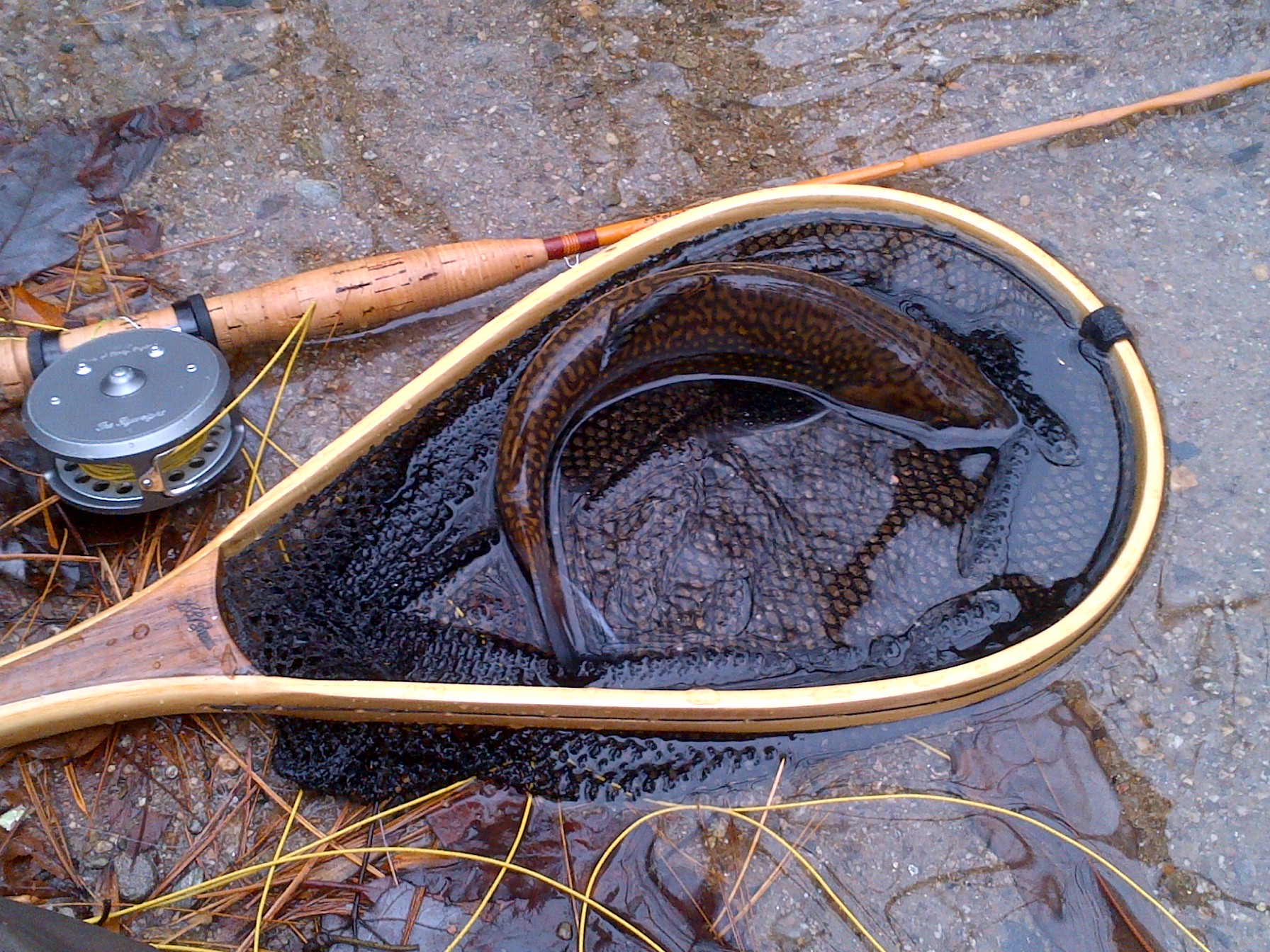
As a younger person in Montana, the biggest fly fishing influences upon me were Eastern writers.  As their books happened to be on the shelves at our cabin, I read short rod advocates like Arnold Gingrich. When I later moved to Central Pennsylvania, and started fishing many of the streams cherished by those writers, I found that I enjoyed short rods myself. Eventually, I came upon “a diminutive fly rod, neatly done, with a tiny grip to match and a plain reel seat” built by Ed Shenk himself. I have really enjoyed fishing this 5′ 2″ fiberglass rod, but I fear it caught its last brook trout (or any other trout) this past weekend. It’s not suited to the waters I’ll be fishing after my return West, and, as a once piece-rod, it is not travel friendly.  So, I guess it goes to the rear of the closet or to the sale page.  Either way, it’s been nice fishing with you (your rod, that is), Ed.