Archive for the ‘Environmental Literature’ Category

A “Dog Song”

March 14, 2016
IMG_2050

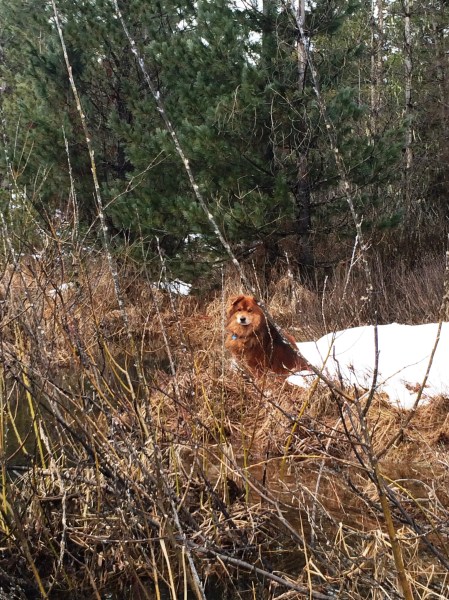
My somewhat faithful fly fishing companion, “Bear.” He displays a look of indifference, after I fell into the stream. In his defense, he has witnessed this many times before.

In Dog Songs: Thirty-five Dog Songs and One Essay (Penguin, 2013), the best-selling poet Mary Oliver captures the sense of wonder that dogs awaken in many of us, and which the other-than-human world in general, still awakens in at least a few of us. Her 1984 collection of poems, American Primitive, won the Pulitzer Prize. And her 1992 collection, New and Selected Poems, won the National Book Award. Dana Jennings of the New York Times describes Oliver as an “old fashioned poet,” inspired by nature (“Scratching a Muse’s Ears,” Oct. 6, 2013). Oliver certainly has her critics, as any poet–especially an unusually popular one–does. Perhaps because I lean toward the “old fashioned” and because I’m a great fan of dogs as well, I enjoy her Dog Songs. Following, is one of them.


The Storm (Bear)

Now through the white orchard my little dog
romps, breaking the new snow
with wild feet.
Running here running there, excited,
hardly able to stop, he leaps, he spins
until the white snow is written upon
in large, exuberant letters,
a long sentence, expressing
the pleasures of the body in this world.

Oh, I could not have said it better
myself.


John Donne on the Lures of Love in Difficult Times

March 2, 2016

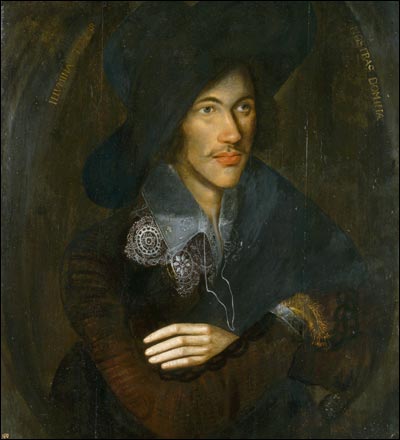
John Donne was a gifted poet and reluctant religious figure. Donne was born in London, to Roman Catholic parents, in 1572. His family suffered directly from the Church of England’s repression of Catholics. Donne, himself, converted to Anglicanism, and subsequently received financial support for his poetry and even served in Parliament.  He became an Anglican priest, at the insistence of King James I. He died n 1631, just as James’ son and successor, Charles I, was experienced increasing resistance from religious and political dissenters, especially the Puritans and other Calvinist Protestants. Charles, of course, was beheaded in 1649, by the then Anglican dominated Parliament.

John Donne, c. 1595. Artist unknown.

John Donne, c. 1595. Artist unknown.

Donne lived a full life; he was well-educated, he travelled extensively, and he served in the navy. No doubt, these and other experiences, and the forced self-examination of his religious stance, contributed to the quality of his poetry. He is perhaps best known for his Devotions upon Emergent Occasions. “The Bait” is an earlier poem and is written in response to Christopher Marlowe’s “The Passionate Shepherd to His Love” (1599).

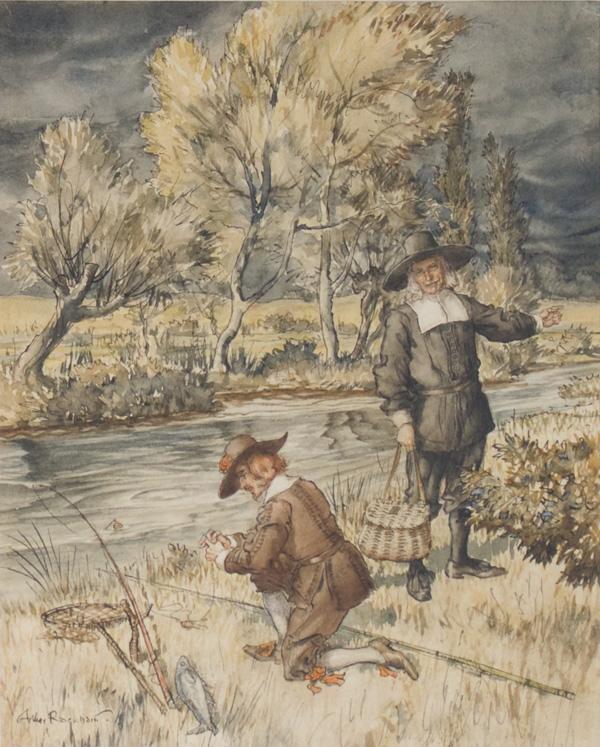
Illustration of Piscator and Venator, by Arthur Rackham. From Rackham's 1931 illustrated edition of The Compleat Angler.

Illustration of Piscator and Venator, by Arthur Rackham. From Rackham’s 1931 illustrated edition of The Compleat Angler.

Donne was clearly a respected author in his lifetime, though his fame was no doubt helped along by Isaac Walton. Most of us know Walton as the author of The Compleat Angler, or The Contemplative Man’s Recreation (1653). However, he also published a biography of Donne in 1640. Moreover, Walton later included “The Bait” in The Complete Angler. In this text, his character Viator says he loves Donne’s verses “because they allude to rivers, and fish, and fishing.”  Following is “The  Bait.”

The Bait

Come live with me, and be my love,
And we will some new pleasures prove
Of golden sands, and crystal brooks,
With silken lines, and silver hooks.

There will the river whispering run
Warm’d by thy eyes, more than the sun;
And there th’enamour’d fish will stay,
Begging themselves they may betray.

When thou wilt swim in that live bath,
Each fish, which every channel hath,
Will amorously to thee swim,
Gladder to catch thee, than thou him.

If thou, to be so seen, be’st loth,
By sun or moon, thou darken’st both,
And if myself have leave to see,
I need not their light, having thee.

Let others freeze with angling reeds,
And cut their legs with shells and weeds,
Or treacherously poor fish beset,
With strangling snare, or windowy net.

Let coarse bold hands from slimy nest
The bedded fish in banks out-wrest;
Or curious traitors, sleave-silk flies,
Bewitch poor fishes’ wand’ring eyes.

For thee, thou need’st no such deceit,
For thou thyself art thine own bait:
That fish, that is not catch’d thereby,
Alas, is wiser far than I.

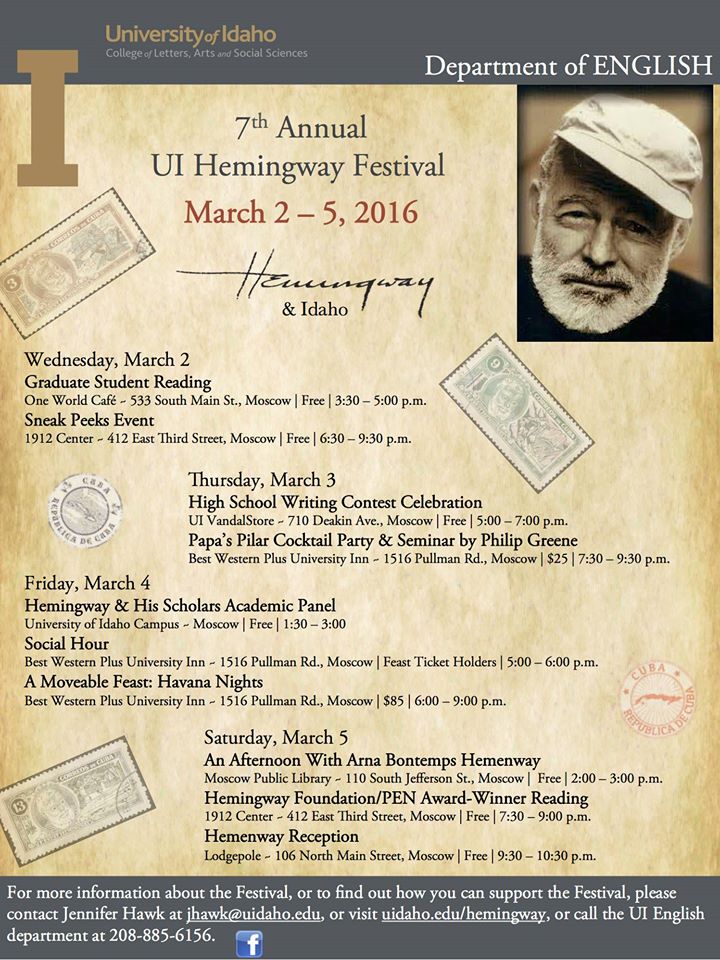
7th Annual Hemingway Festival

February 10, 2016

12485872_540178289484657_1603676783309305617_o

As most of his readers know, Nobel Prize for Literature winner Ernest Hemingway lived in Ketchum, Idaho, just prior to his 1961 death. He visited the Ketchum area over the course of many years, before moving there. In Idaho, he skied, fly fished, hunted birds, and wrote. It is appropriate, then, that the Creative Writing Program at the University of Idaho in Moscow sponsors the Hemingway Review journal, which  “specializes in researched scholarship on the work and life of Ernest Hemingway.” UI also holds an annual festival to honor the literary legacy of Ernest Hemingway, as well as the recipient of the Hemingway/PEN award.

This year, the Hemingway Festival will take place from March 2 to March 5. You can purchase tickets here. If you happen to attend, look me up. Living in Moscow (though working in WA), being obsessed with fly fishing, and having read and taught Hemingway’s work, I will be there.

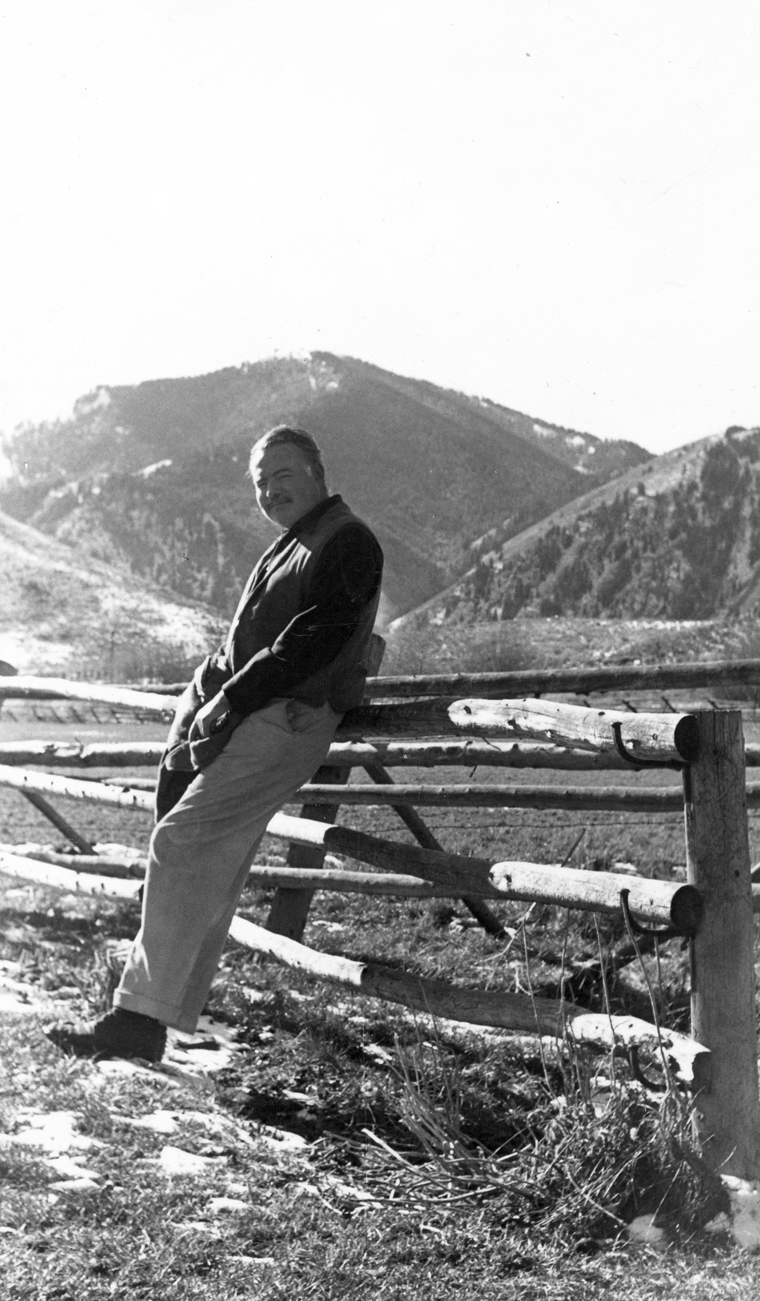
EH 4074P  Ernest Hemingway in Idaho, not dated. Photograph in the Ernest Hemingway Photograph Collection, John F. Kennedy Presidential Library and Museum, Boston.

Ernest Hemingway in Idaho, not dated. Photograph in the Ernest Hemingway Photograph Collection, John F. Kennedy Presidential Library and Museum, Boston.

“To my Daughter,” on Burns Night, 2016

January 25, 2016

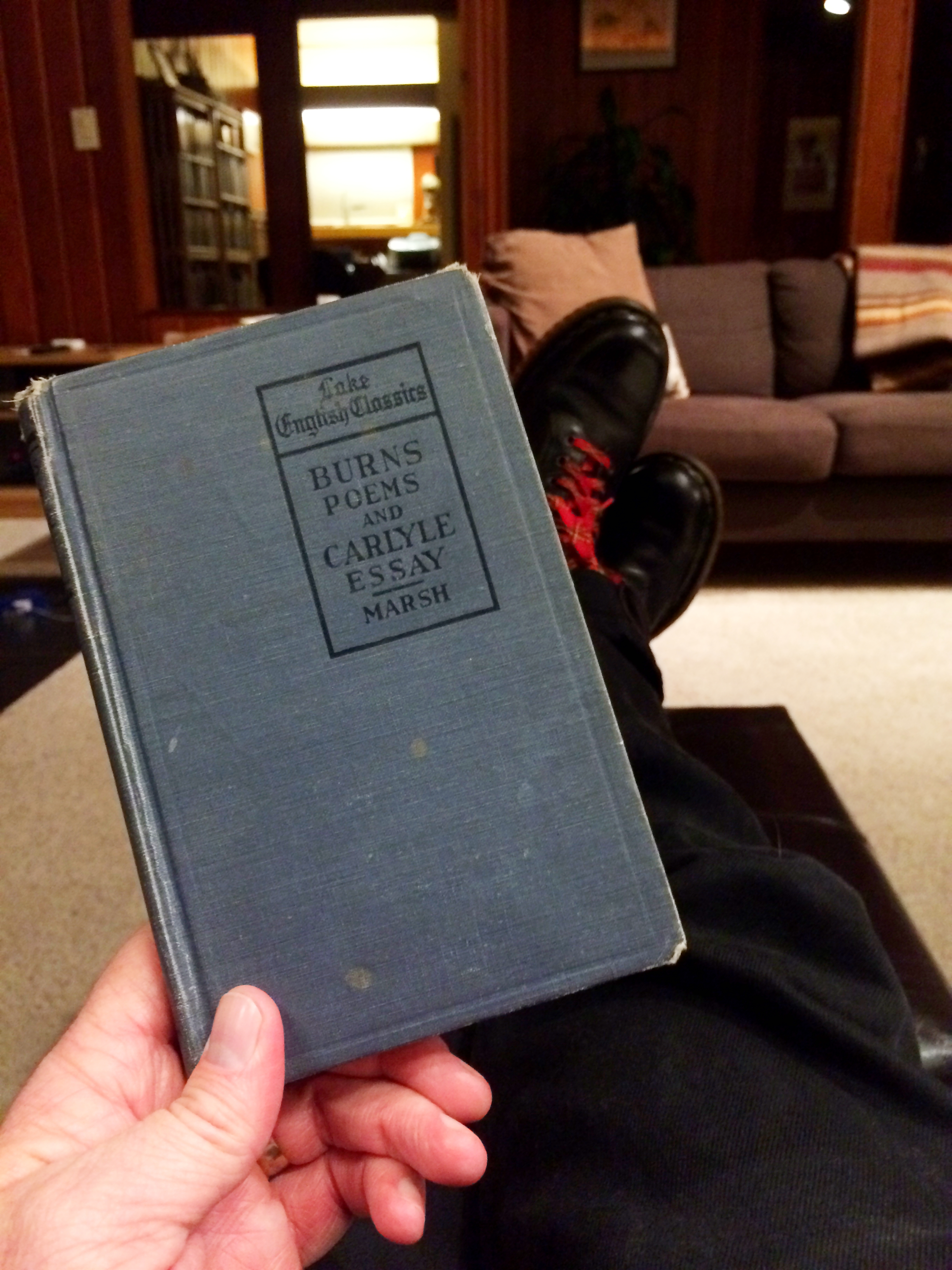
January 25th, when many of us celebrate the Scottish poet Robert Burns, is one of my favorite times of the year; I have indicated as much, in my many previous mentions of the bard. Tonight, as in most recent years,  I am spending the holiday at home. Earlier this evening, I read a Burns’ “To a Mouse,” to my daughter.
My daughter indulging her father.

My daughter indulging her father.

In explaining the poem to my daughter, I also explained my love of Burns. I told my Daughter that he was a modest man, who worked in the fields during certain periods of his life. I also told her that he was the sort who was literally moved to compassion–the state of “suffering with” another–when he realized that his plowing disturbed a mouse.

Of course, in reading “To a Mouse,” to my little one, I did my best to render the poem in modern English. So, I didn’t explain to her that Burns often wrote in his native Scots, and that doing so made many of his oft-oppressed, fellow country-persons proud. And I didn’t explain that his poetry was so forceful that the meaning of his words transcended the boundary of Scots/English to appeal to a huge audience, including those of us who read him over two hundred years later.

IMG_2037

One day, I will explain these things. And I will tell her about the many other poets, artists, musicians, and scholars who have done similar things.  And, perhaps, as a means to do so, I will read her Burns’ song, “A Man’s a Man for A’ That” (published in 1795).

“A Man’s a Man for A’ That”

Is there for honesty poverty
That hings his head, an’ a’ that?
The coward slave , we pass him by–
We dare be poor for a’ that!
For a’ that, an’ a’ that,
Our toils obscure an’ a’ that,
The rank is but the guinea’s stamp,
The man’s the gowd for a’ that.

What though on hamely fare we dine,
Wear hoddin grey, an’ a’ that?
Gie fools their silks, and knaves their wine–
A man’s a man for a’ that.
For a’ that, an’ a’ that,
Their tinsel show, an’ a’ that,
The honest man, tho’ e’er sae poor,
Is king o’ men for a’ that.

Ye see yon birkie ca’d a lord,
Wha struts, an’ stares, an’ a’ that;
Tho’ hundreds worship at his word,
He’s but a coof for a’ that.
For a’ that, an’ a’ that,
His ribband, star, an’ a’ that,
The man o’ independent mind,
He looks an’ laughs at a’ that.

A prince can mak a belted knight,
A marquise, duke, an’ a’ that;
But an honest man’s aboon his might–
Guid faith, he maunna fa’ that!
For a’ that, an’ a’ that,
Their dignities an’ a’ that,
The pith o’ sense, an’ pride o’ worth
Are higher rank than a’ that.

Then let us pray that come it may,
(As come it will for a’ that)
That Sense and Worth, o’er a’ the earth,
Shall bear the gree, an’ a’ that.
For a’ that, an’ a’ that,
It’s comin yet for a’ that
That man to man, the world o’er,
Shall brithers be for a’ that.
Jim Harrison’s Calling

January 2, 2016

In an interview with the Los Angeles Times’ Dean Kuipers, published on December 18, author and angler Jim Harrison (about whom I have written here) describes  being “called” to writing when he was 19-years-old:

I was out on the roof at night in the summer, stars, the Milky Way, and I got just absorbed into poetry,” Harrison recalls. “I thought it was actually my calling that night. And then, when my dad and my sister got killed [in a car accident] a couple years later, I realized that even though I was married there couldn’t be any higher obligation on earth. Because if people you love die what are you going to do?

As uneven and often rough as his writing can be, in my opinion, Harrison has taken his obligation as a writer more seriously than most. This is especially the case with his poetry. Judging by his talk with Kuipers, his new collection of poems, Dead Man’s Float (2016) will be no exception. You can order it directly from the publisher, Copper Canyon Press. And for more of the interview with an unusually introspective Harrison, read “Jim Harrison on spirits, bad poetry and the wonder of nature.”

Possibility

December 8, 2015

In preparing for the Honors class I teach today, I was rereading Mark Browning’s Haunted by Waters: Fly Fishing in North American Literature (Ohio University Press, 1998). Reading a work for a second or third time almost always reveals new passages of significance.  Today, I came across the following:

Ultimately, it seems, the best answer to the question why humans feel compelled to fish is that they fish in order to ask the question. Fishing is, by its nature, an uncertain and interrogatory endeavor, By engaging in this endeavor–or in writing, composing, painting, or any of a hundred other pursuits–the angler moves out of the realm of the known an into a creative realm of questions. (131).

This passage has significance to my class because we are exploring the reasons why there is such a large body of English-language literature devoted to angling and why so much of that literature has a religious theme.

IMG_2007 (3)

Some rods I shared with my students today.

Many authors of angling literature fished for food. Yet, even Dame Juliana Berners, the ostensive nun and author of the 15th c. A treatyse of fysshynge wyth an Angle, suggests there is much more to angling than catching fish. For the angler who fails to procure her or his dinner with an artificial fly, Berners identifies several other benefits to trying:

And yet as the least he hath his holsome walke and mery at his ease, sweet ayre of the sweet sauour of the medow floures that maketh him hungry. He heareth the melodious armony of foules. He seeth the yonge swans, herons, duckes, cootes, and many other foules with their broodes, whyche me semeth better then all the noyse of houndes, the blastes of hornes, & the scry of foules, that hu[n]ters, faukeners, & foulers ca[n] make. And if the angler take fyshe: surely then is there no ma[n] meryer then he is in his spirite.

Browning, and other authors too, imply that a primary benefit of fishing is the sense of possibility that is part of each angling trip. This is the same sense of possibility that every reader feels when she or he begins a new book or rereads an old one. This is the sense of possibility that is represented by every blank page before the writer, every blank canvas before the artist, and so on. Most important, it the sense of possibility–of mystery even–that every religious person confronts through ritual and that some of us find in fly fishing.[1]

[1] Here I am thinking of Rudolf Otto’s concept of Mysterium tremendum et fascinans.

“I stopped running, and hearing my friend, the terror, the pleading – my survival instinct subdued.”

December 2, 2015

Recently, via Adventure Journal, I came across the mention of a harrowing grizzly bear encounter that took place in Canada. The encounter involved alpine climbers Nick Bullock and Greg Boswell, from Wales and Scotland respectively. I have never had a great interest in climbing myself, but it has produced some excellent outdoor literature that I appreciate very much. Bullock, himself, authored Echoes: One Climber’s Hard Road to Freedom (Vertebrate Publishing, 2012). He also writes a blog, in which the reader will find some finely written pieces.

Ursus arctos horribilis

Ursus arctos horribilis

It is in his blog, Great Escape. Nick Bullock, that Bullock describes the bear encounter referenced in Adventure Journal. Having spent a significant part of my life in or near grizzly country, bears are never too far from my mind. Fortunately, I have never had any problems with them, nor have any family members. My attitude toward them, therefore, is one of wary admiration, rather than fear or even worry.  However, my attitude might change if I had an encounter like the one Bullock and Boswell did. Bullock’s account, which is harrowing, honest, and amusing–all at the same time– is worth reading. You will find it in his December 1 post, “From Dawn to Dusk. From Dusk to Dawn.” The words in the title of this entry are Bullock’s, and they give a sense of what you will find in his story.

Incidentally, Adventure Journal, now an online publication, will soon be available as a quarterly print publication. The print version will offer unique content and, I assume, some longer format essays. It will likely be an excellent publication. You can find more information here: Adventure Journal Quarterly Subscription.

Visiting the Past

October 10, 2015

Last week, I took my students to the Manuscripts, Archives, and Special Collections Department of our university libraries. Washington State University’s MASC holds a huge collection of angling texts, many of which were donated by alumni Joan and Vernon Gallup. MASC Department Head Trevor James Bond gave an informative and enjoyable overview of the collection to the students. I urge anyone interested in working with these texts, or even visiting them for the mere pleasure of doing so, to contact him. And if you do visit, let’s wet a line.

IMG_466036091

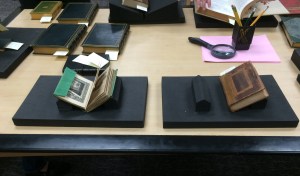
Various editions of Izaak Walton’s The Compleat Angler. First editions (1653) in the foreground. Vellum bound edition, illustrated by Arthur Rackham (1931), in right background.

IMG_466036382

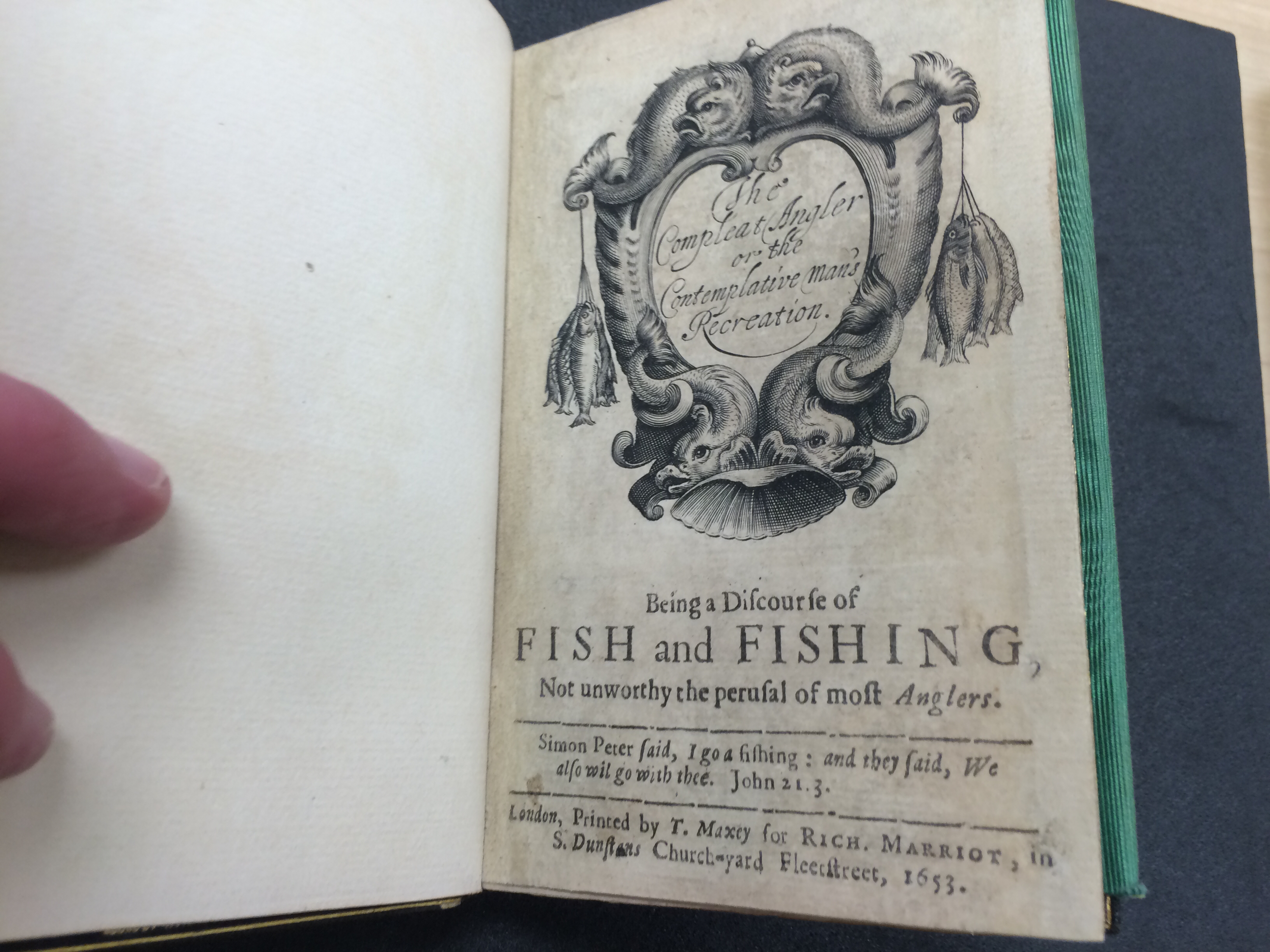
First Edition of The Compleat Angler

IMG_466036149

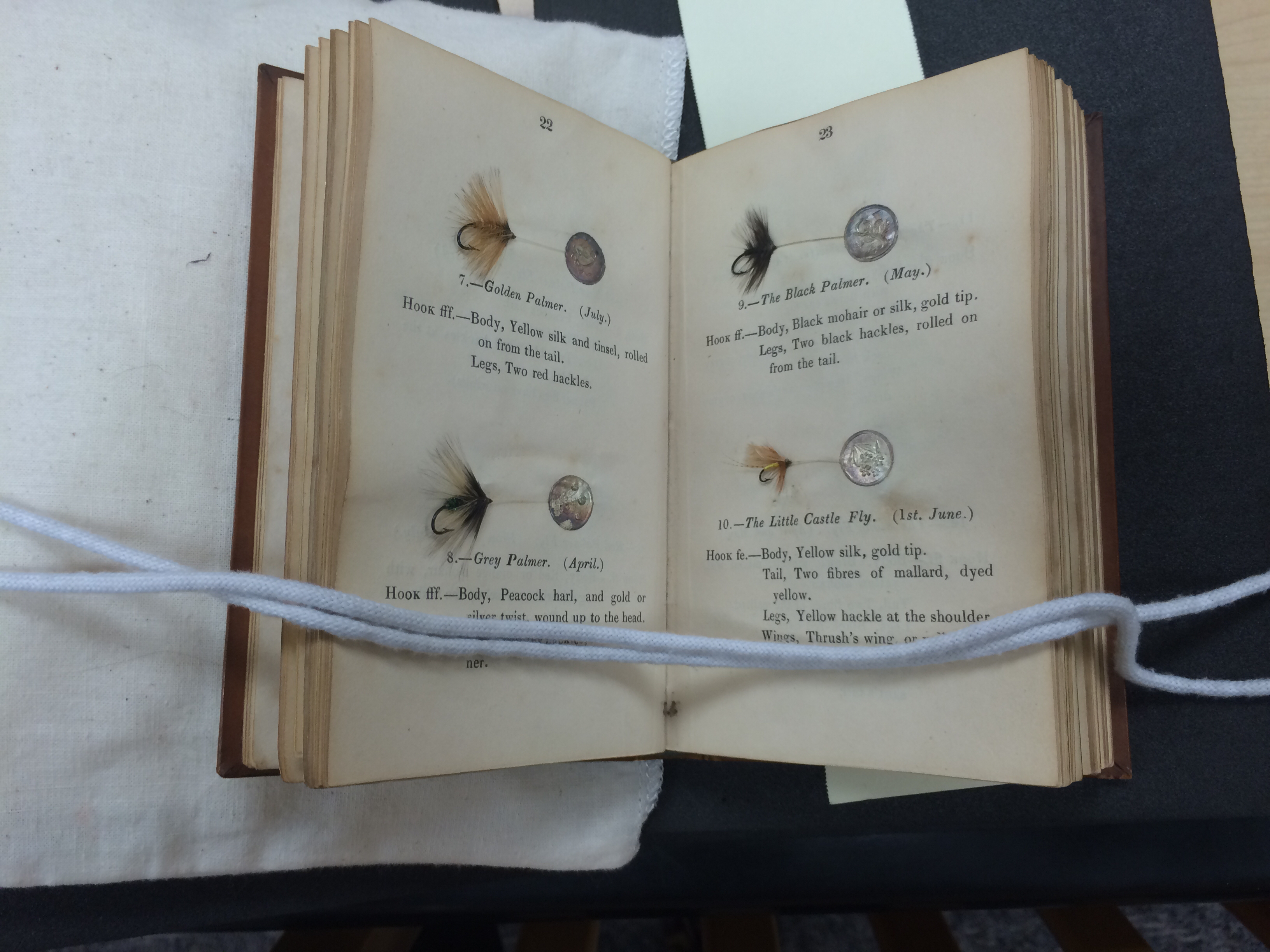
William Blacker’s Catechism of Fly Making, Angling, and Dying (1843).

IMG_466036161

The actual flies tipped into Blacker’s text. This copy includes both trout and salmon flies.

IMG_466036582

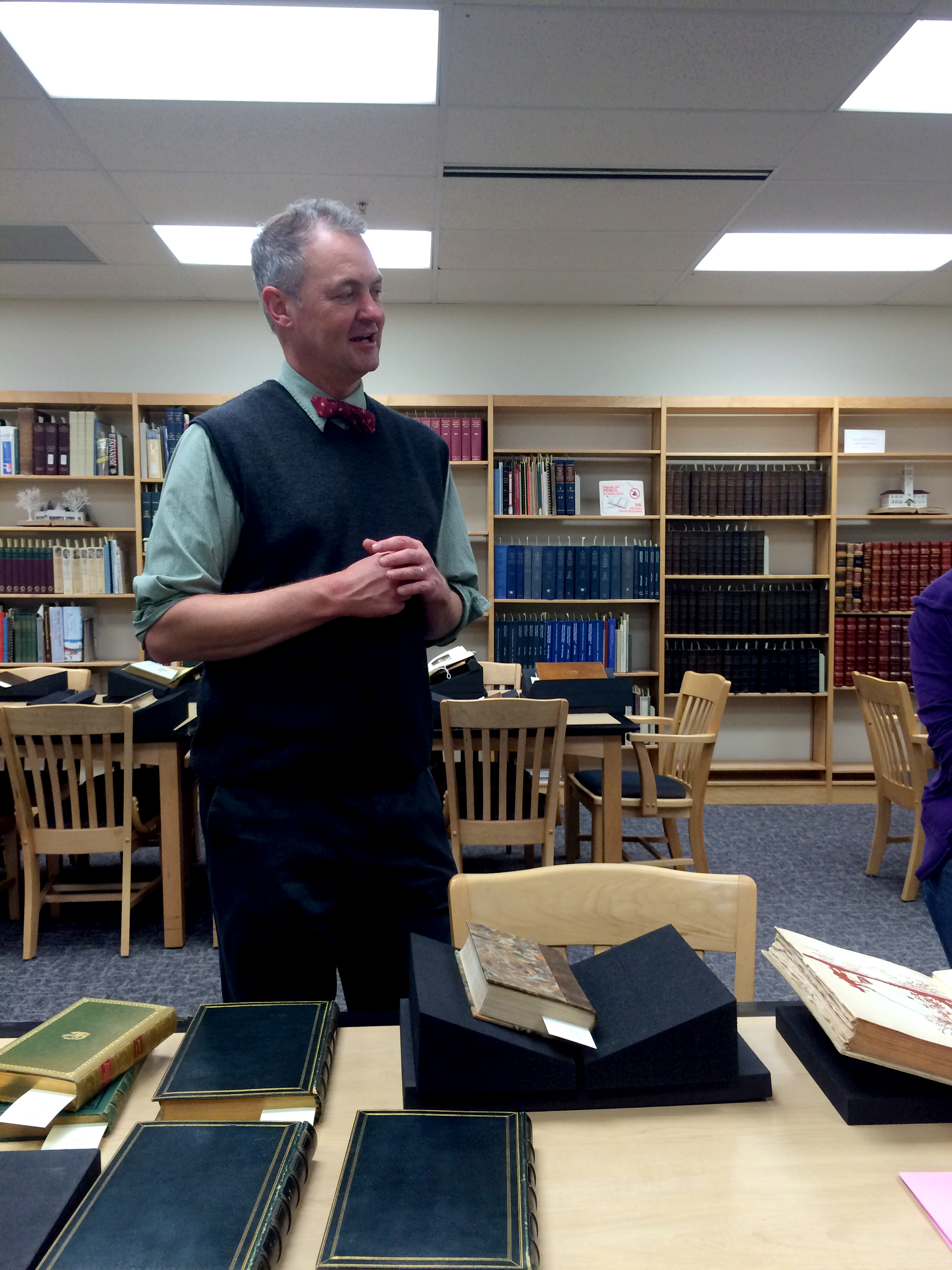
Bond. Trevor James Bond. Seriously, this guy knows a lot more about security than Daniel Craig does.


Thanks and Wonder

October 4, 2015

IMG_1904

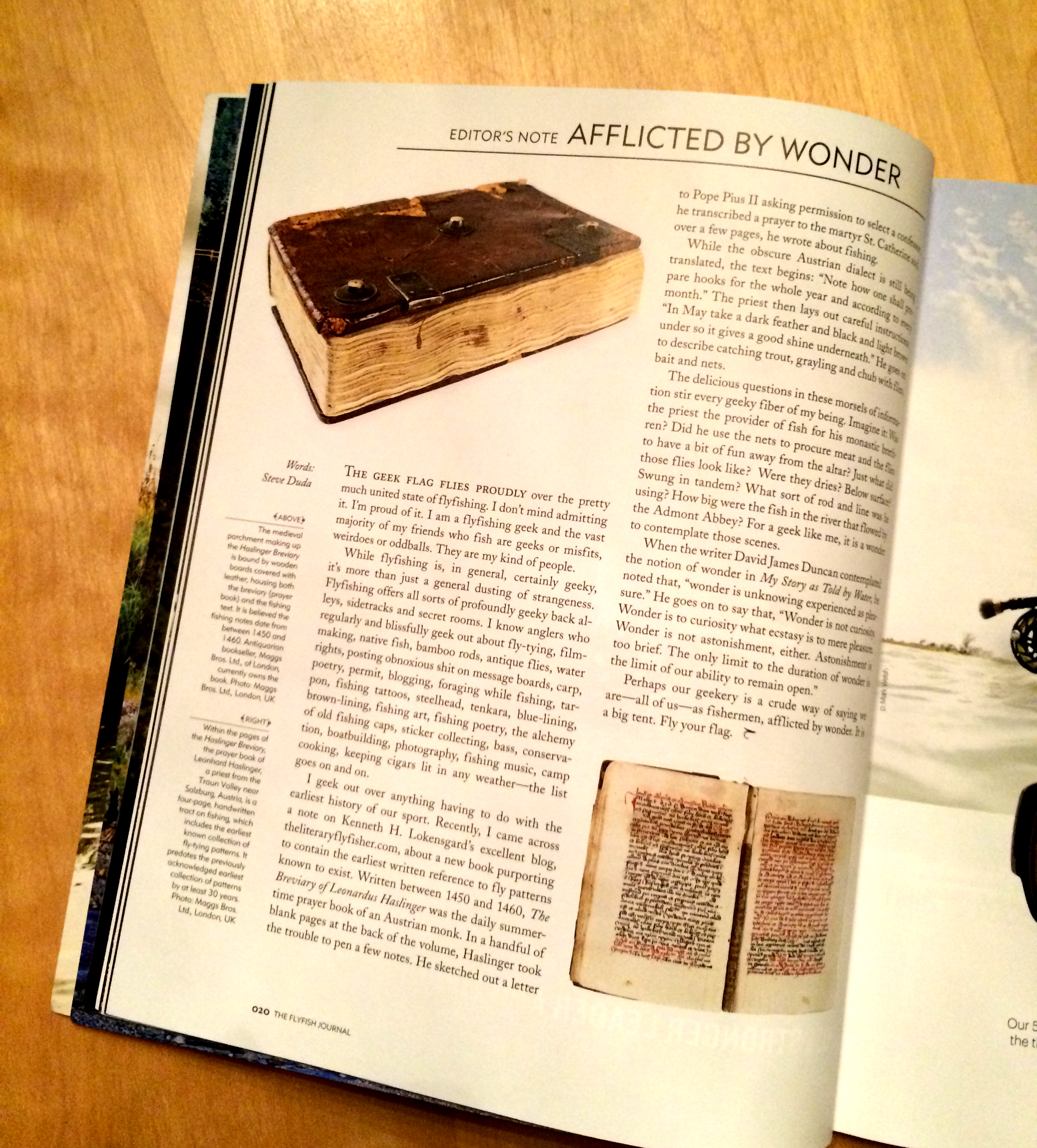
Steve Duda, editor of The Flyfish Journal, titles the editor’s column in the latest issue (7:1) of the magazine “Afflicted by Wonder.” In the column, he writes about his passion for “anything having to do with the earliest history of our sport.” He continues on to discuss fifteenth century Breviary of Leonardus Haslinger, about which I wrote some time back.

Duda kindly writes that he was made aware of The Breviary through my own “excellent blog.” I am grateful for this note. I think very highly of The Flyfish Journal, preferring its literary, reflective tone to the more technical and often sensationalistic tone of other outdoor magazines. Of course, this tone is maintained by Duda’s editorial leadership. I should add that he is fine writer, himself, as well.

In “Afflicted by Wonder,” Duda describes how many fly fishers are particularly taken with certain aspects of the sport, which leads them to seek more information and to grow even more passionate about the activity, generally. Like Duda, much of my passion has to do with sporting history. Whatever your passion may be, as a fly fisher, it will likely be fueled by The Flyfish Journal. And if you are not a fly fisher … well, I am sure there are print publications out their for you too, though there are certainly fewer of them than there were in the past.

A “Home Water” Poem

September 3, 2015

A few days ago, I fished my home water, the North Fork of the Blackfoot, in Montana. Afterwards, I stopped by the closest fly shop, The Blackfoot Angler, in the tiny town of Ovando. As I entered the shop, a book of poetry happened to catch my eye. I flipped through it and noticed a poem about the North Fork. The book is titled The Wind Blows White (Conflux Press, 2014), and it is written by Eldon Wren Beck. a well-known landscape architect.  Beck has a daughter living in the Blackfoot River Drainage, and this area inspired some of his writings. Beck’s poem follows.

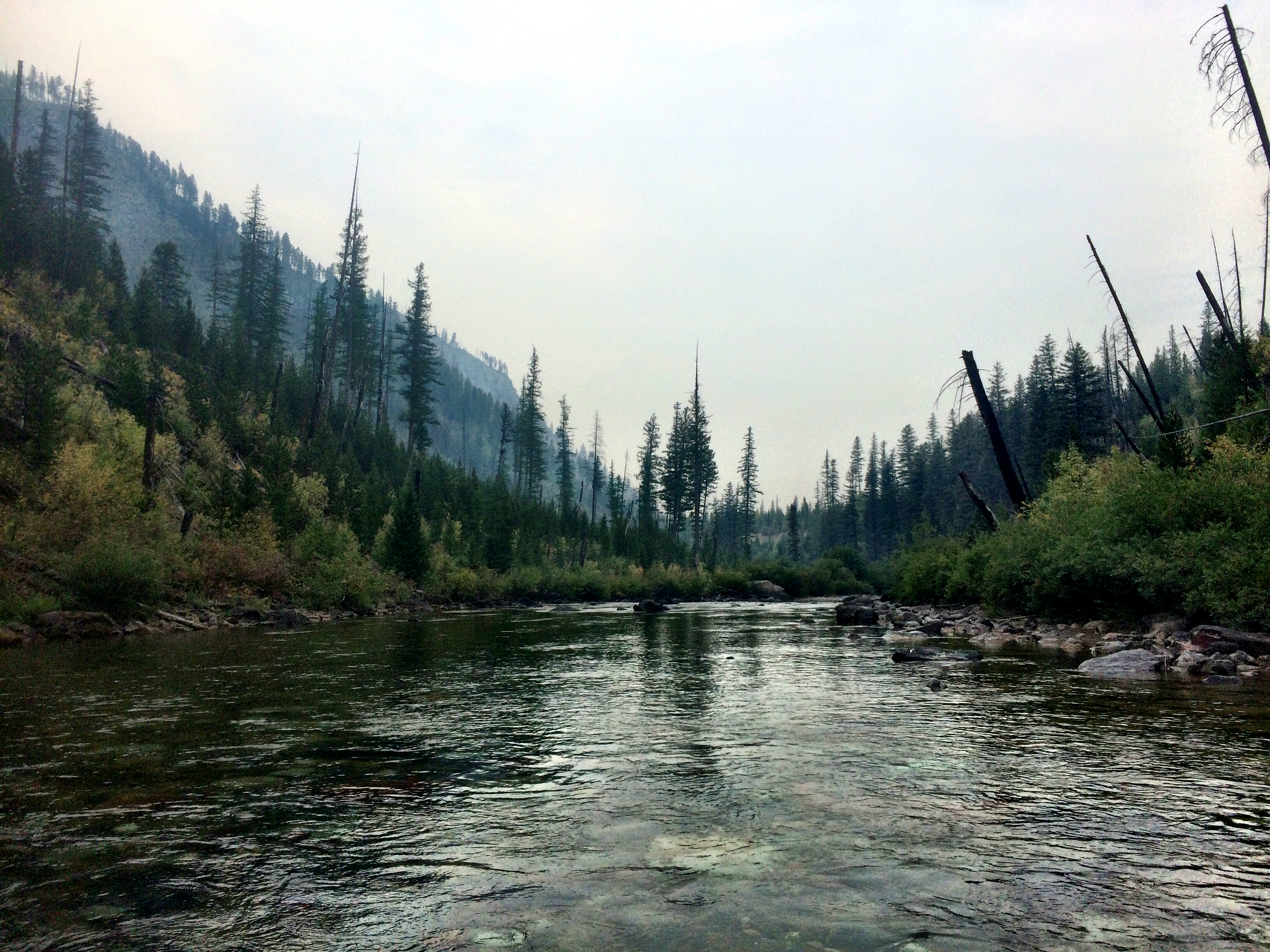
The North Fork, looking south, into a flat.

The North Fork, looking south, into a flat.

Near the North Fork of the Blackfoot

I.

My sack of memories spill open

as drops of a long life

trickle through sun-lit dust

of another day.

In the verdant meadow

a rutted lane passes

by a staggered fence

amidst fields and forest.

II.

Here, a lonely cabin

with roof askew and porch derelict,

random boards nailed

over sightless windows.

No longer tales to tell in rooms within.

III.

Mouldering stumps hunker in the grass.

Once-proud pines lay in decay.

IV.

I bow to youthful vigor, squint

into the warm evening

where Grandpa chuckled

at his own jokes

and cows now rub against the fence

under the Ponderosa

where seedlings waltz.