Sorry for the lack of February posts, folks. It’s been a busy month of fishing and writing. More to come soon.
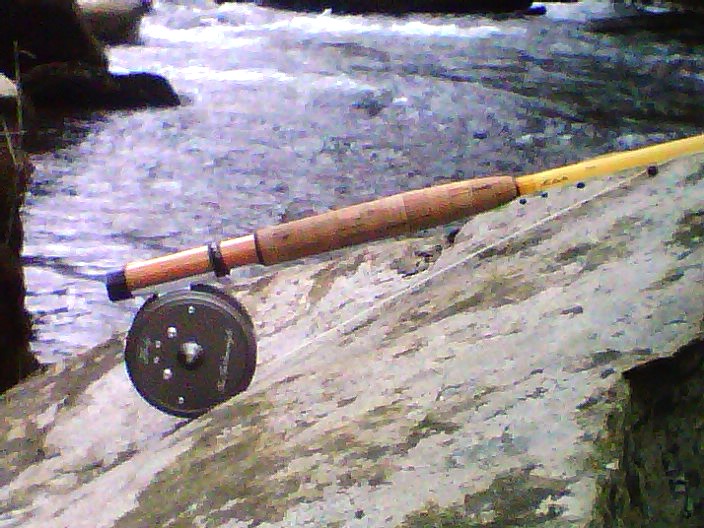
Sorry for the lack of February posts, folks. It’s been a busy month of fishing and writing. More to come soon.
The following is excerpted from a version of “The Treatyse of Fysshynge wyth an Angle,” the first English language text devoted to Fly Fishing. It was ostensibly written by Dame Juliana Berners between 1406 and 1420. This version was put into modern English by Prof. Sherman Kuhn, and printed in The Origins of Angling and Quill Gordon, by John McDonald.
But the angler can have no cold nor discomfort no anger, unless he be the cause himself, for he cannot lose more than a line or a hook, of which he can have plenty of his own making, or of other men’s making, as this simple treatise will teach him; so then his loss is no grievance. And he can have no other grievances, unless some fish breaks away from him he is on his hook, in the landing of that same fish, or in any case, he does not catch him. This is no great hardship, for if he fails with one, he cannot fail with another, if he does as this treatise which follows will instruct him — unless there are no fish in the water where he is angling. And yet, at the very least, he will have his wholesome and merry walk at his own ease, and also many a sweet breath of various plants and flowers that will make him right hungry and put his body in good condition.
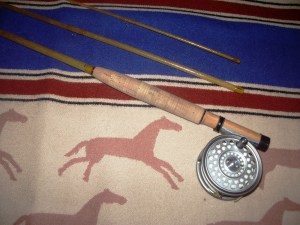 Cameron Mortenson, of The Fiberglass Manifesto (thefiberglassmanifesto.blogspot.com/) visited last weekend to attend The Fly Fishing Show (www.flyfishingshow.com/). Cameron brought with him a few glass demo rods with which to play. He left behind a beautiful 7 foot 3 weight for me to try out. This rod is built by Japanese craftsman Yasuyuki Kabuto.
I’ve been interested in contemporary rods from Japan for some time. The Japanese have fished for centuries with flies, and European and American styles of fly fishing are popular there now. Some amazing rod and reel builders have emerged in recent years. Kabuto is one of these. You can learn more about his rods at his website: www.kabutorods.com/. I’ll be writing more about the one in my brief possession, as I will be fishing it this weekend.
There must be a wealth of Japanese-language writings on fly fishing. I found myself wondering about the more literary — less technical — of these writings the other day. I would certainly love to find some translations, if anyone can point me in the right direction. Even texts in the original language would be welcome, as I have friends who can translate.
In celebration of Burns’ Night, the holiday honoring the great Scottish poet Robert Burns, I post a poem (a song, actually) in which he honors the trout.
To Alexander Cunningham (1795)
Now spring has clad the groves in green,
And strew’d the lea wi’ flowers;
The furrow’d, waving corn is seen
Rejoice in fostering showers;
While ilka thing in nature join
Their sorrows to forego,
O why thus all alone are mine
The weary steps o’ woe!
The trout within yon wimpling burn
Glides swift, a silver dart,
And safe beneath the shady thorn,
Defies the angler’s art:
My life was ance that careless stream,
That wanton trout was I;
But Love, wi’ unrelenting beam,
Has scorch’d my fountain dry.
That little flow’ret’s peaceful lot,
In yonder cliff that grows;
Which, save the linnet’s flight, I wot,
Nae ruder visit knows,
Was mine; till Love has o’er me past,
And blighted a‘ my bloom,
And now, beneath the withering blast,
My youth and joy consume.
The waken’d lav’rock warbling springs,
And climbs the early sky,
Winnowing blithe his dewy wings
In morning’s rosy eye;
As little reck’d I sorrow’s power,
Until the flowery snare
O’witching Love, in luckless hour,
Made me the thrall o‘ care.
O had my fate been Greenland snows,
Or Afric’s burning zone,
Wi ‘man and nature leagu’d my foes,
So Peggy ne’er I’d known!
The wretch whase doom is, “Hope nae mair!”
What tongue his woes can tell!
Within whase bosom, save despair,
Nae kinder spirits dwell.

Is anyone familiar with the Lucky Bug Shop, formerly in Butte? I’m from Montana myself, but I grew up mostly in Helena, and the Lucky Bug may have closed before my time (or not long after). I saw a rod marked with the shop’s name once, as well.
Copyright 2011, Kenneth H. Lokensgard
Following is a short blurb inspired by my academic work and adapted from another project:
Members of individual Native American nations have lived in particular places for hundreds or even thousands of years. Over the course of generations, they have carefully observed the vitality of their natural environments, and they have attributed that vitality to the presence of the various seen and unseen beings animating their worlds — all endowed with life and volition by their creator. Living successful and happy lives in such worlds means maintaining positive relationships with these other beings. Hunting, fishing, and agricultural activities, as well as the many rituals that surrounded those activities, therefore requires Native Americans to show the utmost respect for the animals and plants upon whom they depended so strongly for life.
Historically, the Blackfoot Peoples of Montana and Alberta depended primarily upon bison and other four-legged animals for subsistence. Not surprisingly then, even today, spirits of the bison are welcomed and honored in nearly all of their ceremonies and in their smaller day-to-day rituals. In addition to honoring the bison, the Blackfeet honor Ihtsipaitapiy’op, the creator, who gave these animals life and set them upon the Blackfoot landscape. For in so doing, he ensured the survival of the Blackfoot Peoples.
In the pre-reservation era, the Blackfeet rarely fished. Nevertheless, they still afforded the fish a degree of respect similar to that they afforded the bison. This is because they considered the fish to be the primary food of other spirit beings, who inhabited the many bodies of water in Blackfoot Country. These beings were powerful and potentially dangerous water serpents. So, it was especially important for the Blackfeet to avoid offending them.
Many of the fish in Blackfoot Country have been replaced by or interbred with other species over the last hundred some years. For instance, native cutthroat trout have interbred with rainbow trout introduced by white settlers. The settlers felt that rainbows were more a more sporting gamefish. Native arctic grayling, on the other hand, are nearly extinct. They have been outcompeted for food by more aggressive rainbows and other introduced species, and they have been impacted heavily by the recent development of the landscape.
Today, many more Blackfeet fish than did in the past. In the late 1800’s, when the bison disappeared, some Blackfeet probably fished out of necessity, in order to supplement their changing diets. More recently, some Blackfeet have begun to fish not only for food, but for sport as well. A Blackfoot elder suggested to me that this is more acceptable now than it might have been historically, since the fish themselves are now largely different – these fish are no longer the same creatures upon whom the powerful water beings relied for food. Still, even as new inhabitants of Blackfoot country, the introduced and hybrid trout deserve the basic respect due to any being with whom the Blackfeet share their world. Fishing with Blackfoot friends, I have witnessed this respect, and the awareness of the larger natural world that informs it.

A river associated with the ancient establishment of Blackfoot Country.
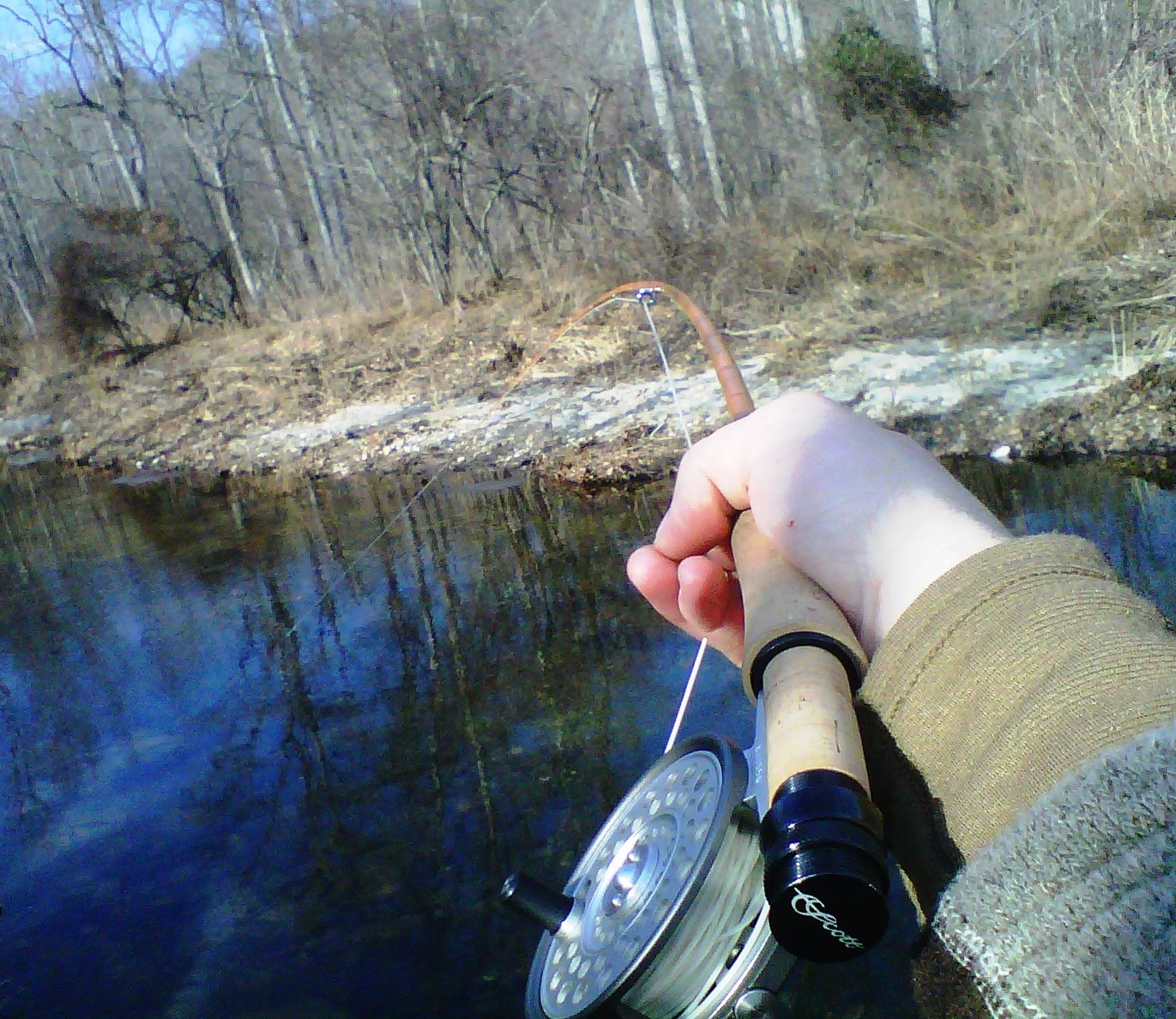
A friend had his reel bag fall out of his truck in the Raleigh/Durham/Chapel Hill area of NC. He had some nice reels, some marked “Bill Gregory.” If you happen to come across such a reel online, please let me know.
Books added to sale listings.
A few years back, I visited Scotland with my close friend John Bechtel (http://www.freestonefly-fishing.com) and our wives. There, we fished the River Clyde near Biggar, in Lanarkshire. This beautiful stretch of river, maintained by Lamington and District Angling Improvement Association (www.lamingtonfishing.co.uk), holds some fantastic trout and grayling. Among the things John and I discovered while fishing the River Clyde was the fact that the river has a long tradition of very distinctive fly tying associated with it.
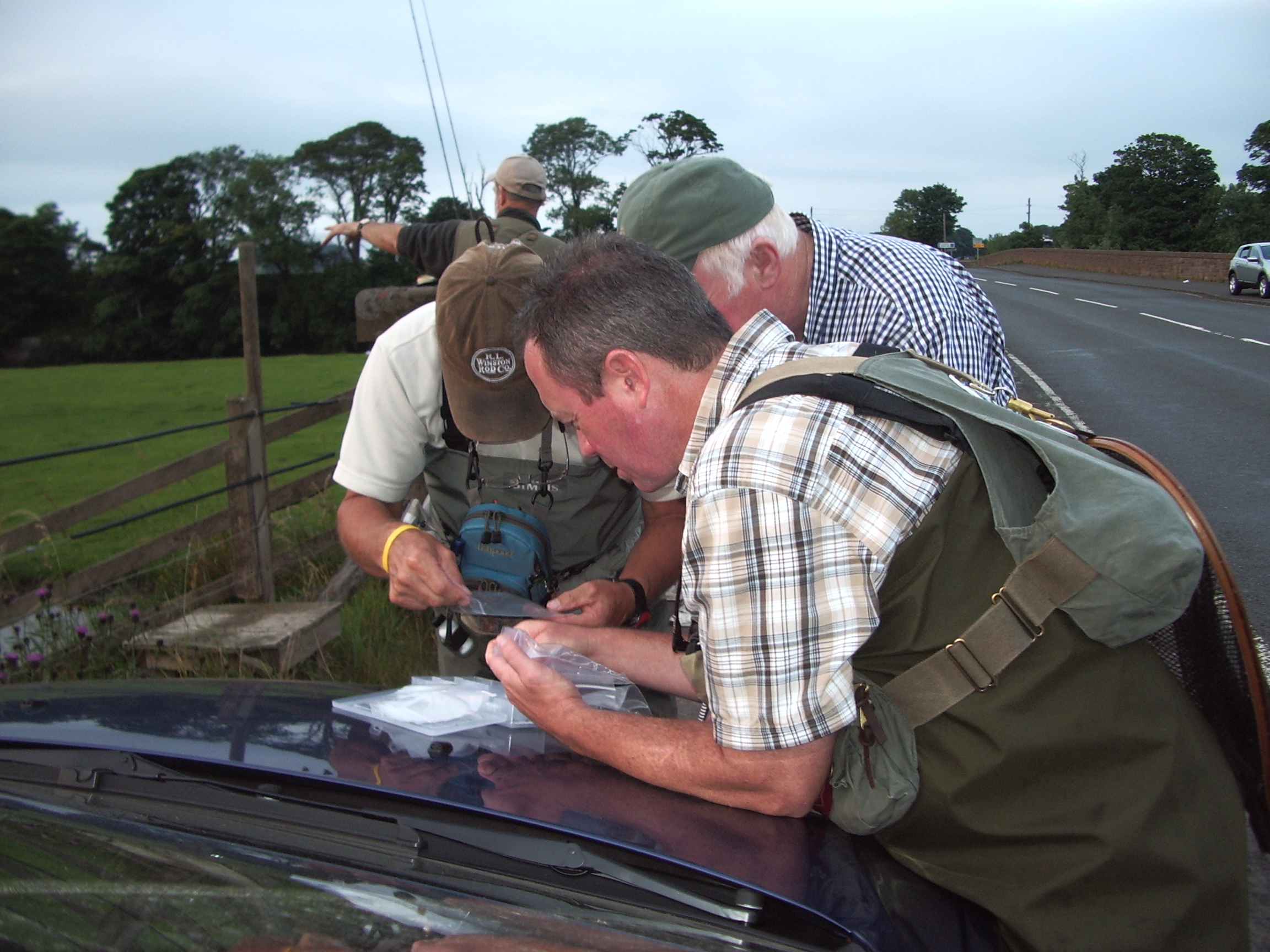
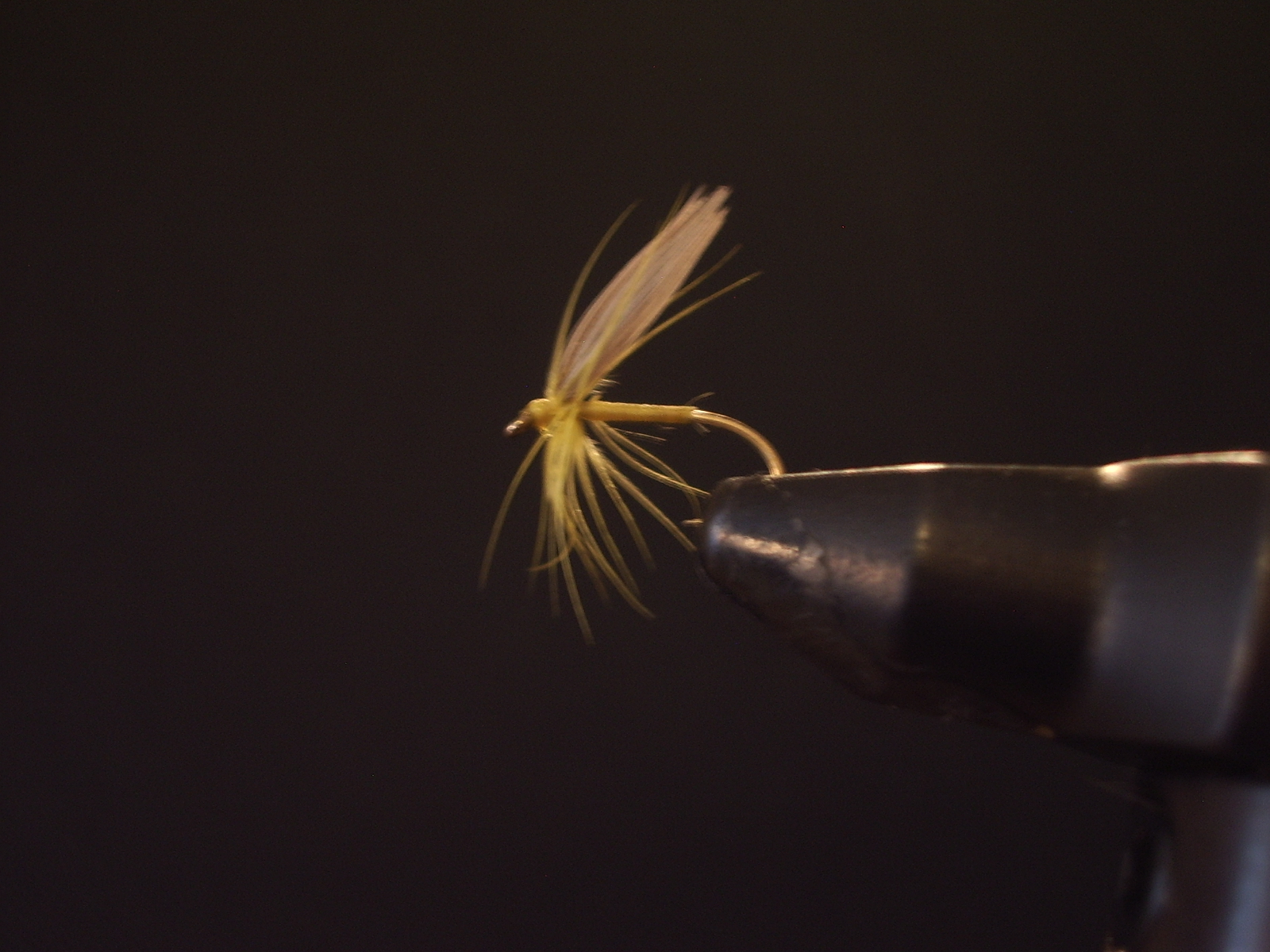
Lamington Club members kindly met John and I while we fished and brought a selection of flies tied by club member Andy Gunderson. One of his beautiful Clyde style wet flies is shown above. In the picture below left, John and I are pouring through the whole selection of his masterful creations. Below right, we talk with Club President Tom Martin. He and Maggie Martin, his wife and Club Treasurer, were tremendously helpful in introducing us to this river and her traditions.

Finally, here are some pictures of the river itself. The first shows a double rainbow over the river, with the “Cornhill House” chateau and hotel in the background. The second shows John furiously fishing for browns, which only became active later in the evening.


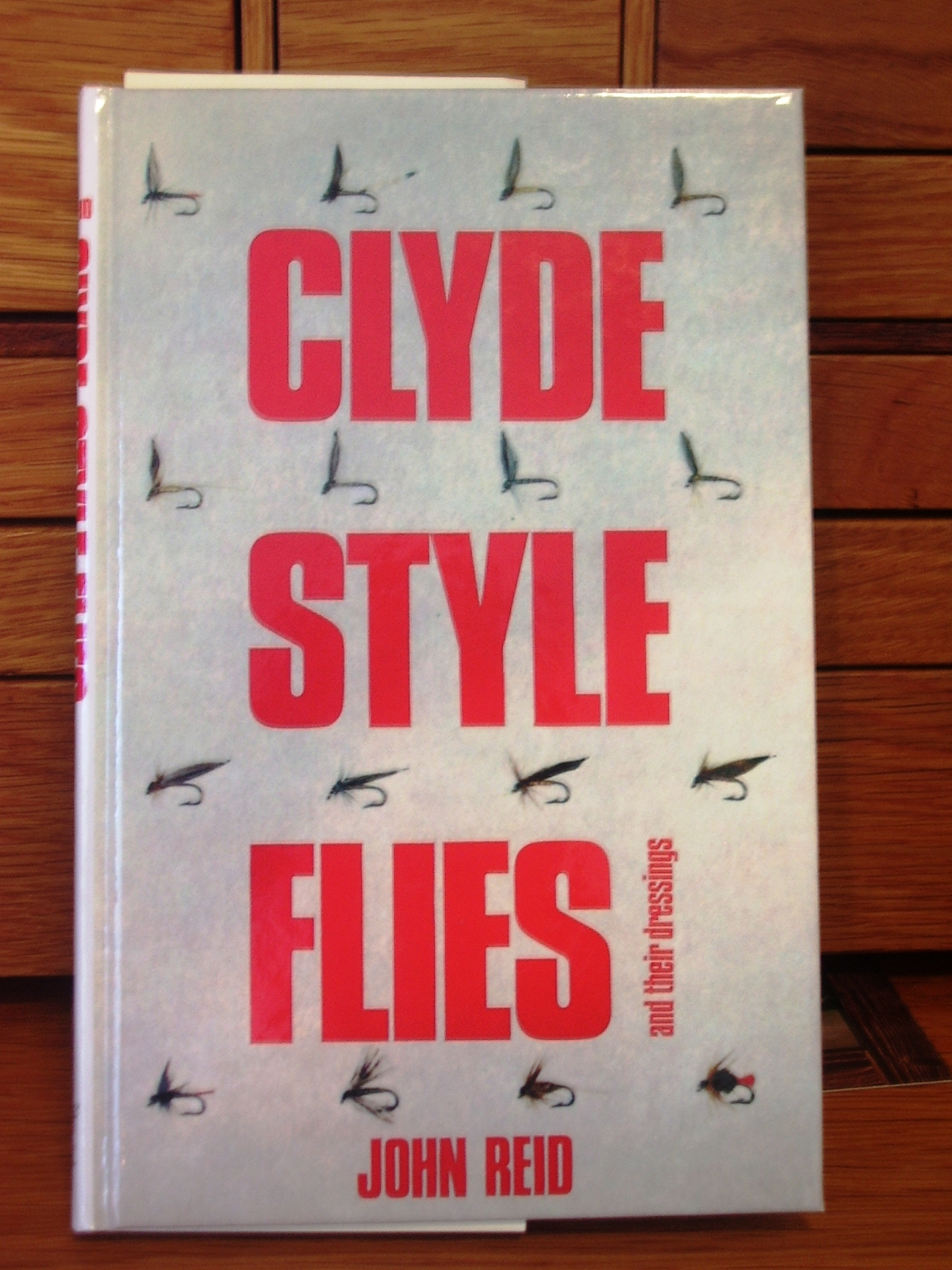
To learn more about Clyde style flies, look for Clyde Style Flies and their Dressing, by John Reid. The book was first published in 1971 by David and Charles. There is now a reprinted version available. Sadly, the color plates in this latter volume are of poor quality. Still, the text is a wonderful resource.


 The Literary Fly Fisher
