Archive for the ‘Fly Fishing Literature’ Category

Mon enfant! Will you come travel with me?

June 3, 2013
Szofi and I stuck at JFK after returning from Europe. Picture by Szofi's mommy.

Szofi (“mon enfant”) and I stuck at JFK after returning from Europe. Picture by Szofi’s mommy.

Following are some selected stanzas from “Poem of the Road,” by Walt Whitman.  The version from which these stanzas are excerpted is found in the 1860 edition of Whitman’s Leaves of Grass.  The selected words remind me of the transformative power of travel, companionship, and family.


Allons! the road is before us!

It is safe—I have tried it—my own feet have tried it well.

Allons! be not detain’d!

Let the paper remain on the desk unwritten, and the book on the shelf unopen’d!

Let the tools remain in the workshop! let the money remain unearn’d!

Let the school stand! mind not the cry of the teacher!

Let the preacher preach in his pulpit! let the lawyer plead in the court, and the judge expound the law.

Mon enfant! I give you my hand!

I give you my love, more precious than money,

I give you myself, before preaching or law;

Will you give me yourself? will you come travel with me?

Shall we stick by each other as long as we live?

Brothers of the Angle.

May 20, 2013

In other words, for those who have a religious experience, all nature is capable of revealing itself as cosmic sacrality.

Mircea Eliade, Romanian author and  historian of religion, The Sacred and the Profane (Harcourt, 1959), 12. While some of his theories are now questioned, Eliade had an immense influence upon the academic study of religion.

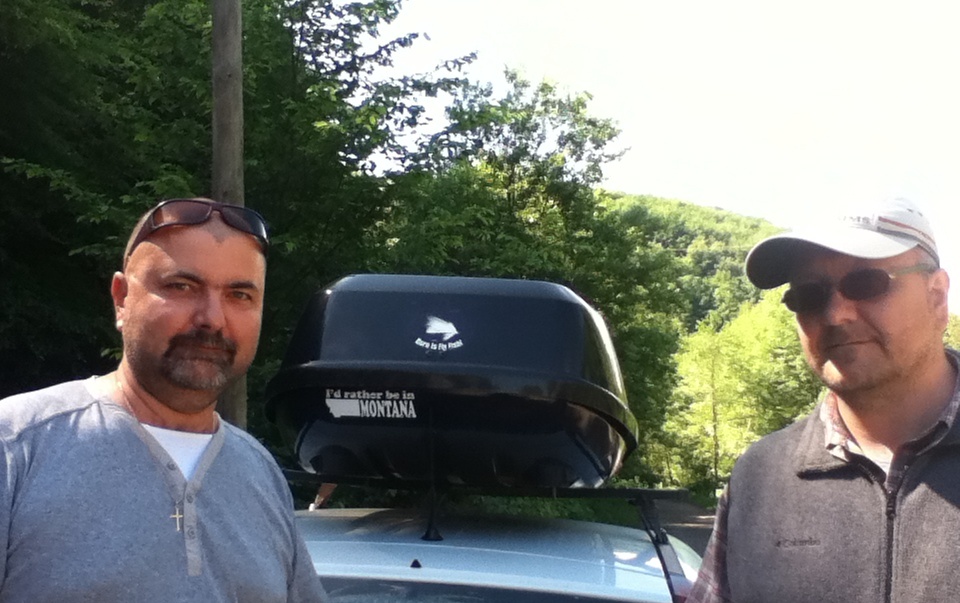
It has been a while since I have posted. I have been distracted by a variety of things, including fishing. For instance, last week I had the pleasure of meeting some people in Romania to fly fish. My thanks go to painter Claudiu Presecan, who helped arrange the trip, and to his gracious family. I extend thanks, also, to rod maker Paul Sas for fishing and keeping good company with Claudiu and me. Claudiu and Paul are fine men — great fishers and thoughtful human beings — and I look forward to spending more time with them in the future. I am also grateful to some of their fellow fly fishers in Transylvania, especially their friend Dan, who allowed us to spend a couple of nights in his cabin. Transylvania is a beautiful place.  Its people and wild salmonids are as well.

Transylvania.

Transylvania.

Transylvania.

Transylvania.

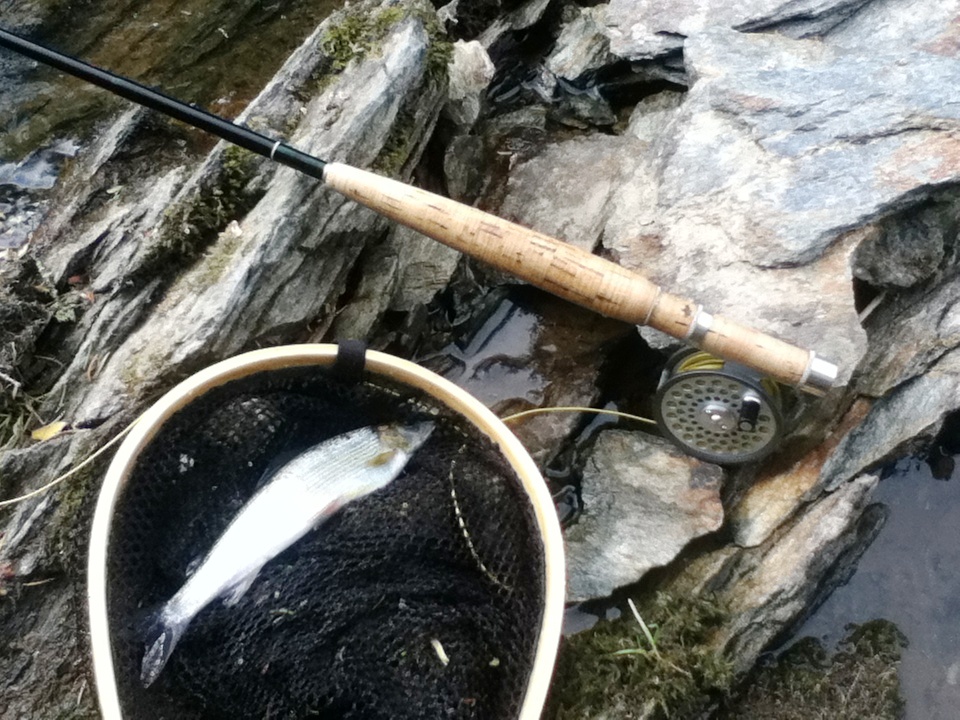
Wild grayling.

Wild grayling.

Claudiu and Paul

Claudiu and Paul.

I’ll write more about recent events soon.  At 5:00 tomorrow morning however, I will meet another friend here in Magyarorszag (Hungary) for a second days of fishing for asp on the Danube.

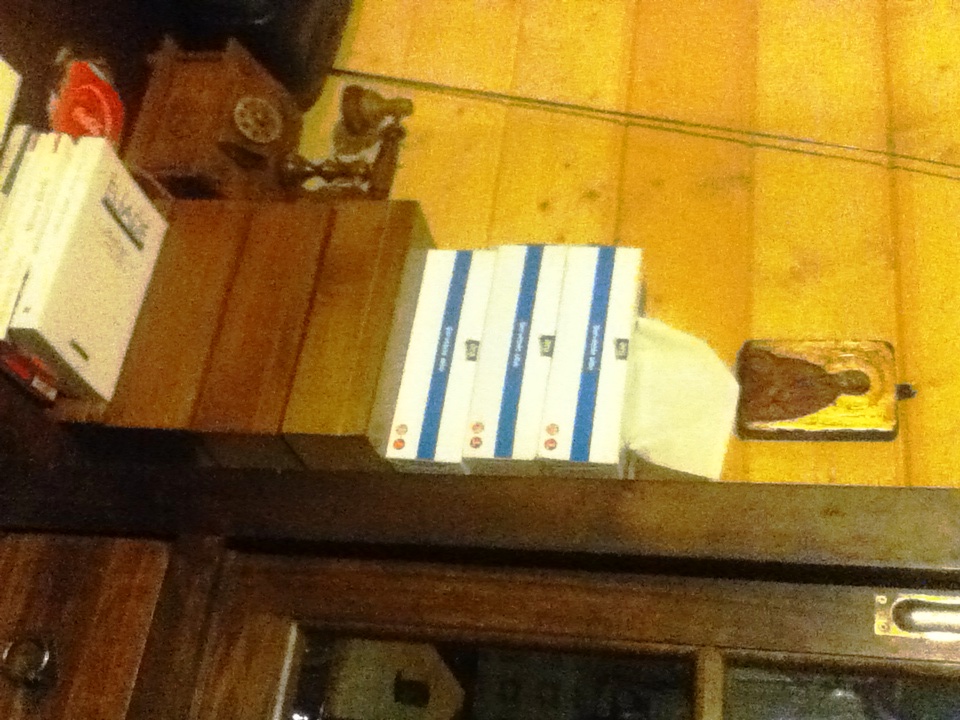
A fly rod, an icon, and a stack of books, by Mircea Eliade and Ioan Culianu, at the fishing cabin.

A fly rod, an icon, and a stack of books by Eliade and Culianu at the fishing cabin.

How many Books are inspired by Television Commercials?

May 6, 2013

The popular Yellow Pages television commercial posted below aired in the UK in 1983.  Actor Norman Lumsden portrays JR Hartley, a man trying to locate a bookstore that stocks a book he wrote.

A 27 September 2009 article in The Telegraph, “Title Deed: How the Book got its Name,” by Gary Dexter, explains how the commercial led to a series of actual books authored by Michael Russel and published under the fictional Hartley’s name:

Fly Fishing was at first just a title: it appeared in the famous Yellow Pages ad in which an old man, one JR Hartley, makes telephone calls to bookshops asking for a book of that name and, after much searching, finally finds it and announces himself as its author. Then the sports-writer Roddy Bloomfield sensed an opportunity. He contacted a bona fide fly-fisherman, Michael Russell, to write the book of the ad, and in Christmas 1991 Fly Fishing by JR Hartley shifted an eye-watering 130,000 copies in hardback. It was followed by two sequels, JR Hartley Casts Again and Golfing by JR Hartley. Two other examples of ‘fictional’ titles spawning real books are L Sprague de Camp’s Necronomicon, drawn from the non-existent book by HP Lovecraft, and Philip José Farmer’s Venus on the Half-Shell, a realization of a fictional work by Kilgore Trout (himself the fictional creation of Kurt Vonnegut).

Despite the unusual source of inspiration for the book, Russel’s Fly Fishing, is really a great read. I recommend it very highly to fly fishers on non-fishers alike. Incidentally, the book and its sequels were best sellers.  The out-of-print Fly Fishing is now a collectible title.

Short Reading List of Angling and other Environmental Literature. Recommendations?

April 24, 2013

As the semester comes to a close, I am providing my “Religion, Nature, and Environment” students (the theme is fly fishing literature) with a bibliography of selected readings.  If you feel that there are any important texts that must be included in a reading list on the topics mentioned, please let me know. Of course, the wonderful texts we’ve already read in class are not included here.  Note that I will add titles, as I think of them and as they are recommended to me.
IMG-20130424-00094

Bibliography of Selected Angling, Environmental, and other Outdoor Literature (to serve as supplements to assigned readings).

RELI 438, Spring 2013

Henry David Thoreau, Walden, 1854.

Essays produced during transcendentalist Thoreau’s two-year stay at Walden Pond, in MA.

Antoine de Saint-Exupery, Wind, Sand, and Stars, 1939.

Early reflections by acclaimed aviator, best known for writing The Little Prince.

Beryl Markham, West with the Night, 1942.

Amazing memoir by aviation pioneer, who spent her childhood and young adult years in Africa.

Aldo Leopold, A Sand County Almanac, and Sketches Here and There, 1949.

Foundational book in American conservationism.

Heinrich Harrar, Seven Years in Tibet, 1952.

Austrian Mountaineer and Himalayan explorer (and then member of the Nazi Ahnenerbe) described his escape from Allied  internment in India, and subsequent years spent in Lhasa with the Dalai Lama (book was made into film starring Brad Pitt).

Henry Bugbee, The Inward Morning: A Philosophical Exploration in Journal Form, 1958.

Lyrical wilderness philosophy, in the existentialist vein, from University of Montana professor and angler.

Thomas Merton, Thoughts in Solitude. Farrar, Straus & Cudahy. 1958.

One of many books on contemplation by Trappist monk and nature mystic.

Rachel Carson, Silent Spring, 1962.

Book that helped launch the modern environmentalist movement.

John McDonald, Quill Gordon, 1972.

Historical essays on fly fishing literature by economist and Fortune magazine contributor.

Barry Lopez, Arctic Dreams: Imagination and Desire in a Northern Landscape, 1986.

National Book Award winner by prolific author of environmental literature.

Arnold Gingrich, The Fishing in Print, 1974.

Detailed, bibliographic tour of angling literature through the centuries, by founding editor of Esquire magazine and early promoter of Hemingway and others.

Robert Traver (John Voelker), Trout Magic, 1974.

Entertaining essays by circuit-court judge and famed author of Anatomy of a Murder.

Peter Mattheissen, The Snow Leopard, 1978.

Chronicles personal and professional Himalayan quest by founder of The Paris Review literary magazine.

Gaston Bachelard, Water and Dreams: an Essay on the Imagination of Matter,  1983 (orig. published in French, 1942).

Influential French philosopher and historian of science considers the epistemological significance (or significations) of water.  The text is part of a larger series.

Russell Chatham, Dark Waters: Essays, Stories, and Articles, 1988.

Successful artist and angler reflects upon past experiences and friendships with such figures as writer Richard Brautigan.

Harry Middleton, The Earth is Enough, 1989.

Moving memoir of a childhood spent with eccentric, fly fishing grandfather and uncle by the later nature writer, which now has a cult following.

Doug Peacock, The Grizzly Years: In Search of the American Wilderness, 1990.

Vietnam-era Special Forces medic retreats to the Glacier National Park area to find himself again and becomes grizzly expert along the way.  Peacock is the model for one of environmental writer Edward Abbey’s.

Pete Fromm, Indian Creek Chronicles: A Winter in the Wilderness, 1993.

Author leaves college to work alone in Idaho’s Selway-Bitterroot Wilderness.

Lyla Foggia, Reel Women: The World of Women who Fish, 1997.

Addresses various female figures in the world of fishing, from Juliana Berners to living individuals.

John Krakauer, Into Thin Air, 1997.

Book based upon tragic 1996 deaths on Mount Everest.  Krakauer was there as a journalist for Outside magazine.  He also authored Into the Wild.

Craig Nova, Brook Trout and the Writing Life, 1999.

Describes the place of fish and family in Nova’s early years as a writer.

Thomas McGuane, Some Horses: Essays, 2000.

Reflections upon individual horses loved and admired by McGuane.

Kathy Scott, Moose in the Water/Bamboo on the Bench : a Journal and a Journey, 2000.

Reflective essays upon craft[wo]manship and nature.

Thomas McGuane, The Longest Silence, 2001.

An acclaimed series of essays on angling by one of America’s best know Western writers.

Jamling T. Norgay, Touching My Father’s Soul: A Sherpa’s Journey to the Top of Everest, 2002.

Book by son of Tenzing Norgay, Sherpa who was first to summit Mt. Everest, alongside Sir Edmund Hillary.

 Yvon Chouinard, Let My People Go Surfing, 2005.

Patagonia’s founder explains how he came to understand that sustainable business can be profitable.

Steven Kotler, West of Jesus: Surfing, Science, and the Origins of Belief, 2007.

Book explores the phenomenon of “soul surfing,” and other forms of outdoor recreation often described as religious, from a biological perspective.

Wayne K. Sheldrake, Instant Karma: The Heart and Soul of a Ski Bum (Ghost Road Press, 2007).

Religiously oriented memoir of an avid skier’s early years.

Paul Schullery, Royal Coachman, 1999.

Essays on fly fishing history in the U.S.

Maximillian Werner, Black River Dreams, 2009.

Reflective, religiously oriented essays on angling by creative-writing professor.

Anders Halverson, An Entirely Synthetic Fish, 2010.

Highly acclaimed book on the role of non-native fish in changing the American landscape.

Erin Block.  The View from Coal Creek, 2011.

The writer describes her angling centered life in Colorado.

Eric Eisenkramer and Michael Attas, Fly-Fishing, the Sacred Art: Casting a Fly as a Spiritual Practice, 2012.

Co-authored by a Reform Rabbi and an Episcopal Priest/MD.

 

The Romantics, Blake, and Water

April 10, 2013
Sabrina's Silvery Flood

“Sabrina’s Silvery Flood,” from Robert John Thornton’s “The Pastorals of Virgil.” William Blake, 1821.

In preparing a lecture on the possible relationship between the Romantic Movement and the eventual embrace of outdoor recreation (other than field sports) in the United States, I found myself thinking of William Blake. Blake is certainly not one of the optimistic romantics, such as transcendentalist Henry David Thoreau, who might normally come to mind when thinking about outdoor recreation. Still, Blake’s poetry and visual art are stunning. In his song “Memory, hither come,” composed when he was just a boy, Blake captures the sense of mystery that all moving water embodies with just a few words.

“Memory, hither come” (1783)

Memory, hither come,
And tune your merry notes;
And, while upon the wind
Your music floats,

I’ll pore upon the stream
Where sighing lovers dream,
And fish for fancies as they pass
Within the watery glass.

I’ll drink of the clear stream,
And hear the linnet’s song;
And there I’ll lie and dream
The day along:

And, when night comes, I’ll go
To places fit for woe,
Walking along the darken’d valley
With silent Melancholy.

W.B. Yeats’ “The Fisherman”

March 20, 2013

I was reading A.A. Luce’s Fishing and Thinking (19590 today. Luce considered himself a great empiricist, inspired by philosopher George Berkeley. It stuck me as odd, then, that Luce was a fan of W.B. Yeats’ poetry. Yeats had a rather fanciful imagination.

Luce reflects upon the meaning of Yeats’ poem, “The Fisherman,” and wonders why this boyhood acquaintance and later colleague wrote about a fly fisher, instead of some other figure. Ultimately, he decides it is because angling “takes us out of ourselves, and confronts us with the comforting blank wall of something not ourselves, to which our sensing, imagining, thinking and action must conform” (Fishing and Thinking, 82).

Luce continues:

The fresh air, the open spaces, the physical exercise, the nature of the occupation and the objectivity of the chase combine to make angling a sedative and a general tonic for the occupational dis-ease of the man of letters; and if W.B. Yeats had found it so, as seems probable, it is no wonder that in later life he turned back nostalgically to the sport of his young and active days, and idealized it. (Fishing and Thinking, 83)

I do not agree with Luce about many things — I suppose I am more of a romantic than an empiricist — but I do share his admiration of Yeats and his belief that fly fishing calms our souls by connecting us with what something real, that is beyond ourselves.

“The Fisherman,” by W.B. Yeats, first published in Poetry, 1916.

Although I can see him still—

The freckled man who goes

To a gray place on a hill

In gray Connemara clothes

At dawn to cast his flies—

It’s long since I began

To call up to the eyes

This wise and simple man.

All day I’d looked in the face

What I had hoped it would be

To write for my own race

And the reality:

The living men that I hate,

The dead man that I loved,

The craven man in his seat,

The insolent unreproved—

And no knave brought to book

Who has won a drunken cheer—

The witty man and his joke

Aimed at the commonest ear,

The clever man who cries

The catch cries of the clown,

The beating down of the wise

And great Art beaten down.

Maybe a twelve-month since

Suddenly I began,

In scorn of this audience,

Imagining a man,

And his sun-freckled face

And gray Connemara cloth,

Climbing up to a place

Where stone is dark with froth,

And the down turn of his wrist

When the flies drop in the stream—

A man who does not exist,

A man who is but a dream;

And cried, “Before I am old

I shall have written him one

Poem maybe as cold

And passionate as the dawn.

“The Retirement”

March 3, 2013

Izaak Walton first published his immensely popular The Compleat Angler or, The Contemplative Man’s Recreation in 1653.  In 1676, he published the fifth edition of his book, with an added section on fly fishing.  This section, as anyone familiar with the book knows, was authored at Walton’s invitation by poet Charles Cotton.

Walton and Cotton were very close.  Cotton described himself, in correspondence between the two, as Walton’s “son.”  He also dedicated one of his own poems to his much older “father,” mentor, and fishing companion.  This poem is entitled “The Retirement.”  In content, it seems to speak to Walton’s profound love for the English country landscape, and specifically The River Dove, which the two friends fished together (Cotton’s fishing house, which he shared with Walton, is pictured below).

   © Copyright neil gibbs

Creative Commons Licence [Some Rights Reserved]   © Copyright neil gibbs

Upon a close reading, though, it is clear that many of the sentiments are, understandably, Cotton’s.  In his section of The Compleat Angler, Walton praises intimate companionship with fellow sportsmen as highly as he does the landscape created by his “God of Nature.”  (His attitude is remarkably sunny, considering that he published the book just after the conclusion of the long, bloody English Civil War).  Yet, in “The Retirement,”  Cotton speaks longingly of the “solitude,” “safety,” and “privacy” that he can sometimes find on The River Dove.  Moreover, it is quite clear that Walton had no interest in “retirement,” whether on a stream or elsewhere.  After all, he spent many of his last years working on further editions of The Compleat Angler.  In fact, he was 83 years old, when he published the fifth edition.  Still, “The Retirement” is a lovely and all-too-often overlooked poem, which Walton no doubt appreciated, even if it didn’t precisely capture his feelings about fishing and old age.

“The Retirement”*

I.

Farewell, thou busy world! and may
We never meet again;
Here I can eat and sleep, and pray,
And do more good in one short day,
Than he, who his whole age outwears
Upon the most conspicuous theaters,
Where naught but vanity and vice do reign.

II.

Good God! how sweet are all things here!
How beautiful the fields appear!
How cleanly do we feed and lie!
Lord! what good hours do we keep!
How quietly we sleep!
What peace! what unanimity!
How innocent from the lewd fashion
Is all our business, all our recreation!

III.

O, how happy here’s our leisure!
O, how innocent our pleasure!
O ye valleys! O ye mountains!
O ye groves, and crystal fountains!
How I love at liberty,
By turns to come and visit ye!

IV.

Dear solitude, the soul’s best friend,
That man acquainted with himself dost make,
And all his Maker’s wonders to entend,
With thee I here converse at will,
And would be glad to do so still,
For it is thou alone that keep’st the soul awake.

V.

How calm and quiet a delight
Is it alone
To read, and meditate, and write;
By none offended, and offending none!
To walk, ride, sit, or sleep at one’s own ease,
And, pleasing a man’s self, none other to displease!

VI.

O my beloved nymph, fair Dove!
Princess of Rivers! how I love
Upon thy flowery banks to lie,
And view thy silver stream,
When gilded by a summer’s beam
And in it all thy wanton fry
Playing at liberty;
And, with my angle, upon them,
The all of treachery
I ever learned industriously to try.

VII.

Such streams, Rome’s yellow Tiber cannot show,
The Iberian Tagus, or Ligurian Po;
The Maese, the Danube, and the Rhine,
Are puddle-water all, compared with thine;
And Loire’s pure streams yet too polluted are
With thine, much purer, to compare;
The rapid Garonne and the winding Seine,
Are both too mean,
Beloved Dove, with thee
To vie priority;
Nay, Thame and Isis, when conjoined submit,
And lay their trophies at thy silver feet.

VIII.

O my beloved rocks, that rise
To awe the earth and brave the skies!
From some aspiring mountain’s crown,
How dearly do I love,
Giddy with pleasure, to look down,
And from the vales to view the noble heights above!
O my beloved caves! from Dog-star’s heat,
And all anxieties, my safe retreat;
What safety, privacy, what true delight,
In th’ artificial night
Your gloomy entrails make,
Have I taken, do I take!
How oft, when grief has made me fly,
To hide me from society,
Ev’n of my dearest friends, have I
In your recesses’ friendly shade,
All my sorrows open laid,
And my most secret woes intrusted to your privacy!

IX.

Lord! would men let me alone,
What an over-happy one
Should I think myself to be,
Might I, in this desert place,
Which most men in discourse disgrace,
Live but undisturbed and free!
Here, in this despised recess,
Would I, maugre Winter’s cold,
And the Summer’s worst excess,
Try to live out to sixty full years old!
And, all the while,
Without an envious eye,
On any thriving under Fortune’s smile,
Contented live, and then–contented die.

C.C.

*This version of “Retirement” is taken from Izaak Walton and Charles Cotton, The Compleat Angler, or The Contemplative Man’s Recreation, with an Introduction by Howell Raines  (New York: The Modern Library, 1996).   The Modern Library’s text is based upon the 1889 edition of The Compleat Angler, published by James Russell Lowell.

New Year’s 2013

January 7, 2013

The days surrounding New Years were great fun.  My wife, daughter, dog, and I shared a little cabin in the mountains.  My daughter loved playing in the snow, my dog and I enjoyed fishing, and my wife loved the warmth of the cabin and her family.  Of course, my wife and I jumped into the New Year at midnight and then read Robert Burns’ “Auld Lang Syne.”  Already, it is a fine memory, and many years from now, we will fondly remember this holiday, “a long time ago.”

Sure, for those of us who pay attention to such things, the year turned a few weeks back at the solstice.  Still, I enjoy the January 1st holiday and it serves as a fine reminder that the time we can spend with our loved ones and on the stream are, indeed, getting longer (or at least more sunlit).

IMG-20121231-00691

IMG-20121231-00689

IMG-20130101-00702

IMG-20121231-00697

IMG-20130101-00704

IMG-20121231-00700

And there’s a hand, my trusty fiere,

And gie’s a hand o’ thine,

And we’ll tak a right gude-willie waught

For auld lang syne.

From “Auld Lang Syne” (“A Long Time Ago), a traditional Scots song, put to paper (and, most likely, largely composed) by Robert Burns in 1793.

Jumping into the New Year

December 29, 2012

DSC02297

Years ago, during my first visit to my wife’s hometown of Budapest, Hungary, we celebrated New Year’s Eve at the home of a somewhat shady businessman and family friend.  Just before the clock struck 12:00 AM, he had us all stand on the couches and clutch as much money as we could find.  At midnight, we jumped off the couches and into the New Year.  The idea was that the coming months would be filled with wealth.

My wife and I now do this every year, and it has become a tradition in the rest of her family too.  Of course, one can jump into the New Year with things that signify non-monetary wealth too.  As for the shady New Years Party host, who introduced us to this little ritual all those years ago … well, let’s just say that he’d best start jumping into the New Year with a key, since he is usually locked up.

Often times, I have been lucky enough to go fishing on New Years Day (and on the Winter Solstice too, which is a much more proper start date for each new year).  I’ll be doing that again on January 1, next week; I’ll be making yet another visit to my newly discovered, enchanted brookie stream. The tackle is packed, and I’m ready to roll.  Happily, I am heading to the mountains with my wife, daughter, and dog, too.  Therefore, I’ll be jumping into the New Year doing the thing that I love and also enjoying the company of those precious to me.

Photo by Mike Sepelak

Photo of me on the enchanted stream, by Mike Sepelak

My own tradition, by the way, has been to always read Robert Burns’ classic version of “Auld Lang Syne” on New Years Eve.  I have already packed the 1920 copy of Burns Poems and Carlyle Essay, edited by George Marsh, that I have been sure to have in my back pocket every December 31, since 1992.

DSC02317

Eden Phillpotts, Pretense, and Fly Fishing in the 1800’s and Today

August 19, 2012
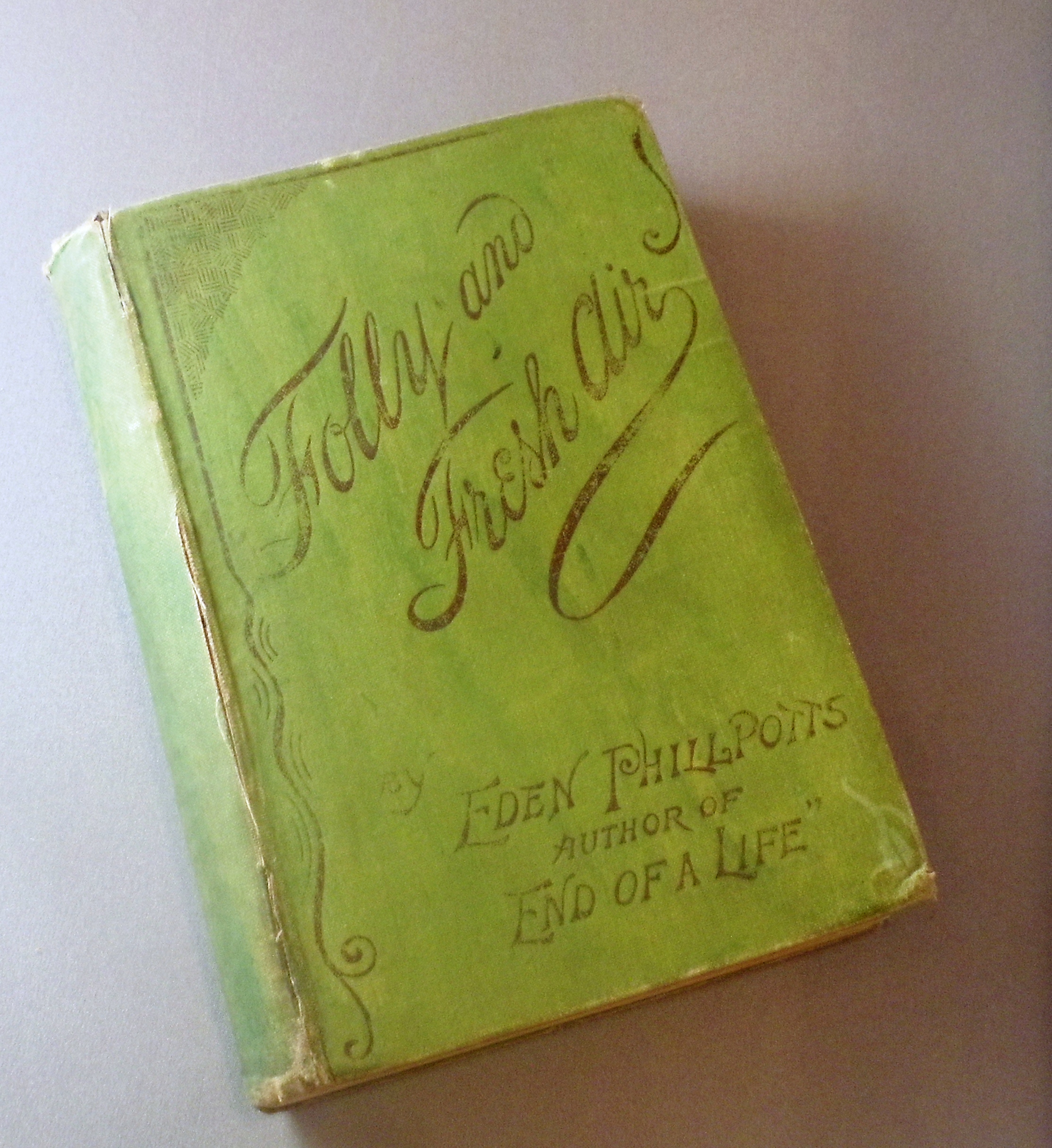
First Edition of Folly and Fresh Air, 1891

First Edition of Folly and Fresh Air, 1891

I received an email today from a very old and reputable outdoor company, with a subject line that read, “complete your look with the right accessories.”  Of course, I found this line a bit ridiculous.  I fully realize, though, that many fly fishers are more concerned about appearances than they are the practice of fishing and the other activities that go with it.

Things seem a bit different than they were, say, fifty years ago, here in the States.  Back then, most fly fishers probably would have been casting a glass rod with an automatic reel or Medalist attached.  At least, that was certainly the case in the West.  It’s also true that there were simply fewer fancy fishing clothes in which the fisherperson of the time may have donned her or himself.  That’s not to say there weren’t plenty of other gadgets marketed to fly fishers.

Still, there is a segment of the fly fishing population that has always been concerned more with appearances than fishing.  And I would be less-than-honest, if I did not admit that my own eyes are often caught be a particularly nice piece of gear, wearable or otherwise.  My tastes are a bit eccentric, however (look at the books I read!)  and not so much affected to impress any one other than a community of fellow sartorial weirdos in my head.

Regardless, one of the most amusing examples a fly fisher obsessed with appearances is a fictional one.  This is a young man, who is the central character in Eden Phillpotts’ (b. 1862, d. 1960) Folly and Fresh Air.  The book, narrated in the first-person, was published by the prolific and very successful English author in 1891.  The young man in question is rather prone to exaggeration.  He attempts to impress his family and colleagues by claiming fly fishing prowess.  Before long, he has accidentally talked himself into taking a fishing trip to Devon with his brother, who actually does know how to fish.  In Devon, the two brothers make friends with locals, find romance, and even catch a few trout.

The funniest part of the book comes toward the beginning, when the central character visits a tackle shop to gear up.  Actually knowing nothing about fishing, but trying to pretend that he does, he makes a buffoon of himself.  Following are a few passages from this hilarious scene:

Finding an admirable establishment, I entered it and asked to see some fly rods.  I said—

” I happen to want a new one.”

Note the ‘new.’  This, if properly understood, must have led the man to suppose that I owned hundreds of faithful, well tried, old rods, and now, just for the mad freak of the thing, thought about adding another to my collection.  But it was not understood properly.  The person in the shop appeared to be upset about some private concern, and answered, shortly—

“We never sell any but new ones.”

Then he dived out of sight behind his counter, and brought up a fishing-rod.  He put it together without a word and handed it to me.  I took it from him, weighed it and frowned.  Then I shut one eye and looked down the handle, as though I purposed shooting something with it.  Meanwhile the man regarded  me in stony silence.  I began to yearn for a word of encouragement from him.  Even censure would have been more bearable than the look he cast at me.  I felt as if I was doing wrong, grew nervous, and flourished the thing to show technical familiarity with it.  This action fetched down a gas globe, which should have made conversation.  I took the liberty of pointing out that anybody showing technical familiarity with a trout rod here, must destroy that glass globe every time the man renewed it.  Still his taciturnity was such that I grew foolhardy, and advised him to modify the whole scheme of his shop.  This stung him into retort.  He said any alteration would depend up the extent of my custom.  If I could limit my visits, and mention the date of them beforehand, he thought he should risk leaving things as they were.  For which intentionally rude remark I snubbed him. (19-20).

Things go on like this for some length, until the shopkeeper realizes he has a sucker on his hands.  Eventually, the young man leaves the establishment with “all the best things in the shop” (21).

No doubt, if Phillpotts’ fictional character were an actual person and alive today, he would have been mightily excited to receive the email that was sent to me this morning.  And, perhaps, after acquiring the latest zipper-crotched waders, expedition quality wading  jacket, retro trucker cap or fedora, and so on, he would have actually gone fishing, as the character in the book does, and fallen in love with the pastime.  No doubt, there are worse things than well-dressed fly fishers — well-dressed bankers, politicians, and used-car salespersons, for instance.  Then again, a lot of those well-dressed fly fishers probably are bankers.