Archive for the ‘Uncategorized’ Category

Missoula Philosopher Henry Bugbee, on Water and Thought

December 18, 2011

I could wish for no more than to do justice to the instruction I have received from moving waters.  Even as I think of the Housatonic River, the Gualala River, the Eel, of the Truckee and of Rising River, of the open sea itself, the care of the situation which so lately cramped me washes away.  It seems that there is a stream of limitless meaning flowing into the life of a man if he can but patiently entrust himself to it.  There is no hurry, only the need to be true to what comes to mind, and to explore the current carefully in which one presently moves.  There is a constant fluency of meaning in the instance in which we live.  One may learn of it from rivers in the constancy of their utterance, if one listens and is still.  They speak endlessly in an univocal exhalation, articulation silence.

Henry Bugbee, The Inward Morning: A Philosophical Exploration in Journal Form, with a new introduction by Edward F. Mooney (Athens: The University of Georgia Press, 1999), 83.

New items added to sale listings.

December 18, 2011

Reels, lines, vintage magazines, and more.

Another Place to Spend your Time and Money

November 15, 2011

Gary Siemer has launched a new vintage and classic fly fishing tackle dealer’s website.  The simply named “Vintage Fly Tackle” site can be found at http://www.vintageflytackle.com/.  The site features a stunning array of beautiful rods, reels, art, books, and more — all of which is easily viewed in categories.  The dealer and website owner also intends to create a “research” section on the website.  No doubt, this will be a wonderful place to visit, regardless of whether one is going there to purchase or just peruse.  Gary also posts regular updates on the Vintage Fly Tackle facebook page: https://www.facebook.com/VintageFlyTackle.

Harry Middleton, the Smokies, and Life as Fire

November 11, 2011

Time has a way of defining its own symmetry and fulfilling its own rhythms.  Days are days, though, and are best used by spending each one fully, nothing saved.  For years I tried collecting time as though it were precious stones, certain than if I gave myself completely to earning a living fifty weeks a year, I could wrench a year’s worth of solace, solitude, relaxation, joy, and fulfillment out of two weeks’ vacation.  It never worked.  I never felt better, only empty and exhausted.  These days I try not to divide time but only use it, use it all, as it comes, living through it all like fire moving through dry grass leaving only ashes.  Because things come and go.  Come and go.

Harry Middleton, On the Spine of Time: An Angler’s Love of the Smokies (New York: Simon and Schuster, 1991), 192.
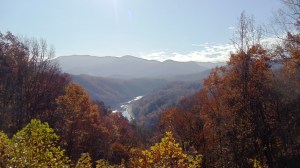
 

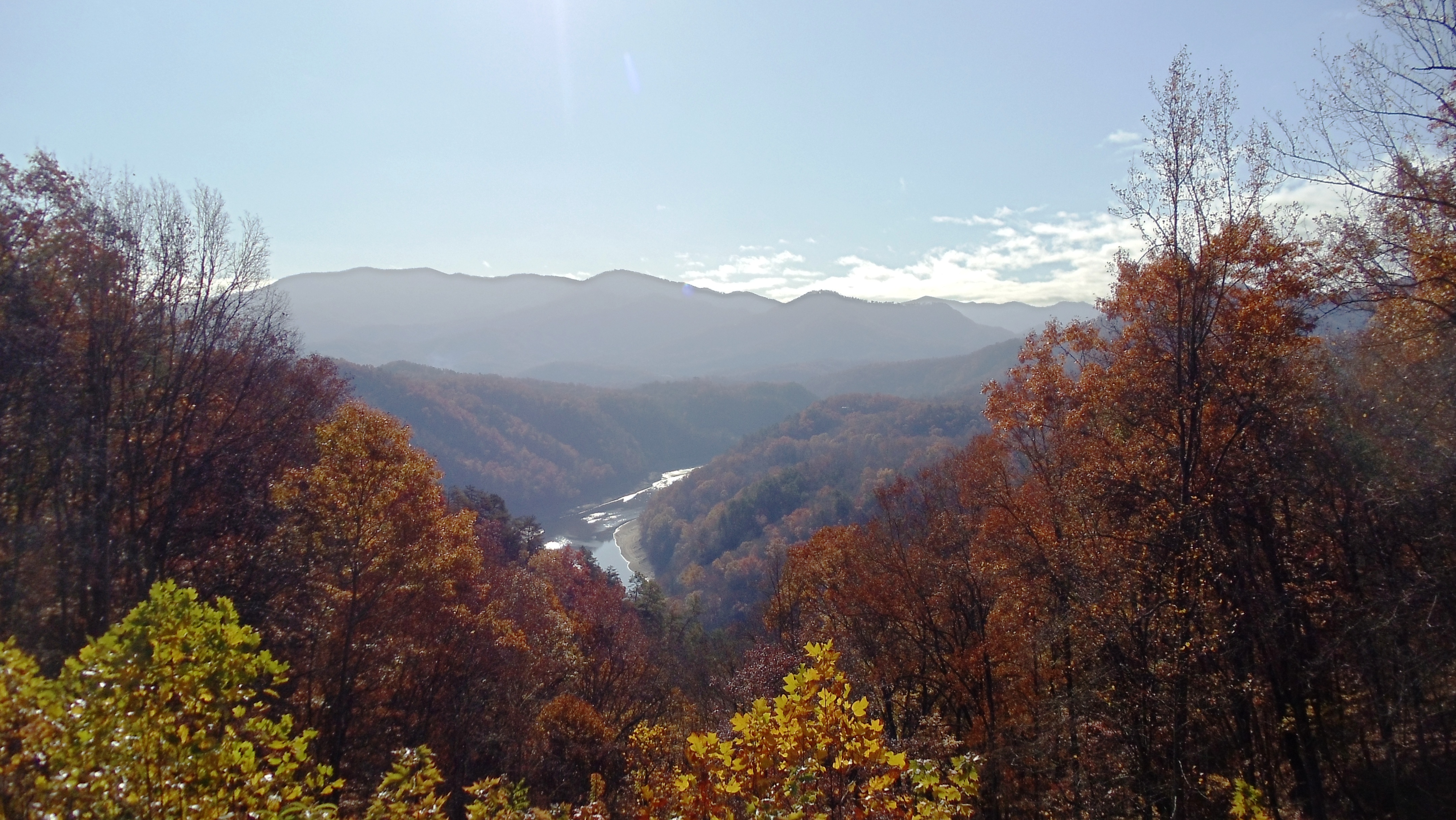
This last weekend I spent a few days fishing in the Great Smokey Mountains National Park.  A friend, who is familiar with the Park and the neighboring Eastern Band of Cherokee Land Trust, or Qualla Boundary, showed me some of his favorite streams and taught me a bit about Cherokee culture too.  The waters we visited were wonderful, and I enjoyed learning about the people who call the area home.

Hiking along some of these Smokey Mountains streams, I found myself thinking of the late writer Harry Middleton.  During his all-too-short life, Middleton authored a number of books that have become true classics in the canon of outdoor literature.  Middleton struggled with the professional troubles that many authors do.  But some of his writings indicate that he seemed to face some more fundamental, personal challenges as well.  Sadly, he passed away in his mid-forties (and age I am rapidly approaching).  Still, in some of Middleton’s books, particularly in the pages of On the Spine of Time, he left a clear record of his love of fly fishing in the Smokey Mountains and his deep appreciation for those who shared his love.

Middleton and his writings came naturally to mind as I walked some of the same fishing paths that he walked, only a few years before.  While my own life has been far from trouble free, thoughts of fish caught and future fishing adventures are among the things that keep me going.  Of course, my love of family and the world less touched by human culture are also among these things.  These may not have always been enough for Middleton, even if this speculation contradicts the implicit claim in the main title of his first book: The Earth is Enough (you can find a copy of this book on my for sale page).

In the preface to the 1996 edition of The Earth is Enough: Growing up in a World of Flyfishing, Trout, and Old Men (1989), author and painter Russell Chatham writes the following:

Middleton’s passion is manifested through intelligence, sensitivity, and compassion to create a profound ode to the earth and to mankind, governed by respect, gentleness, and humor.  At all appropriate moments this story will make you weep convulsively, burst out laughing, and cause you to ache with longing.  The sadness is that these qualities certainly contributed to the doom of their creator.  Passion and soul, the dual sources of everything valuable and meaningful, are not very hot commodities in our largely puritanical, calvinistic, money-driven republic.  In a society like ours, layered with ennui, greed, aggressive ignorance, dispassionate, poor-quality living, all soaked in a gooey solution of snake-belly-grade voyeurism a la Oprah et al., the sensitive frequently don’t make it.

I’m pretty sensitive myself.  Nevertheless, all those things I mentioned above bring pleasure to my life.  So does reading Middleton’s books.  If you haven’t read them yet yourself, I suggest that you do.  And you need not be a fly fisher to enjoy doing so.  Indeed, my first Middleton book was given to me by a non-fishing student.  Inside the cover, the student inscribed, “it most definitely made me dream of a lifestyle much different than the one I lead today.”  Middleton would have liked this inscription.  And he might have hoped that my student began to live “like fire moving through dry grass.”  

By the way, if you find yourself in the area, spend some time in the Smokies.  The mountains and streams of the area are truly gorgeous, even to a displaced, home-sick Montanan like myself.

The Great Pearl Bailey offers some Fishing Music

September 29, 2011

A Great Writer Interviewed

September 25, 2011

Some of you fly fishers are likely familiar with the novels and poems of Jim Harrison.  Harrison writes often of Michigan, but now lives in Livingston, Montana.  He is well-known not just for his writings, but for his friendships with other fishing writers and artists, such as Tom McGuane, Richard Brautigan, and Russell Chatham.  If you are not familiar with the works of these men, you owe it yourself to pick up one of their books or to take a look at Chatham’s art.  You might also take a look at the movie Tarpon, which features some members of this crowd fly fishing for tarpon in 1970’s Key West.

In the meantime, enjoy this interview with Harrison, published in the most recent issue of Outside Magazine.  He is a fascinating, one-of-a kind personality.

Fishing only in Words

September 25, 2011

If any readers have recently wondered about the lack of posts, this resulted from the need to meet some writing deadlines in the non-cyber world.  Fortunately, at least some of that writing involved fishing.  More on that later.  Meanwhile, my deadlines are met (though more are quickly creeping up), and I look forward to putting the computer, pictured below, to some more enjoyable use for a bit.  Of course, the first thing to do is wet a line.

Fly fishing during the 1870’s in Blackfoot Country

August 22, 2011

In writing a book chapter on changing attitudes toward fish and fishing among the Blackfoot Peoples, as my contribution to a book on fly fishing, conservation, and culture, I came across some interesting passages by James Willard Schultz.  Schultz was a trader among the Blackfeet, primarily in Montana, during the late 1800’s.  He also guided white fishers and hunters in the region, and wrote extensively about his experiences.  In the following paragraphs, he describes fly fishing at Two Medicine Lake, in present-day Glacier National Park on the eastern boundary of the Blackfeet Reservation in Montana.

I had talked about the pleasures of fly fishing.  The Indians were anxious to see this, to them, new phase in the white man’s arts.  Ashton made the first cast, and his artificial flies were the first that ever lit upon the waters of the Two Medicine [Lake].  The response was generous.  The placid water heaved and swirled with the rush of unsophisticated trout, and one big fellow, leaping clear from the depths, took the dropper with him in his descent. The women screamed, “Ah-ha-hai’!” the men exclaimed, clapping hand to mouth, “Strange are the ways of the white men.  Their shrewdness has no end; they can do everything.”

The big trout made a good fight, as all good trout should do, and at last came to the surface, floating on its side, exhausted.  I slipped the landing net under it and lifted it out, and again there were exclamations of surprise from our audience, with many comments upon the success of it all, the taking of so large a fish with such delicate tackle (James Willard Schultz, My Life as an Indian, 329-330).

No doubt, Schultz overstates the impression he made upon his Blackfoot observers, but the passage is still interesting.  It shows that fly fishing made its way to even the farthest reaches of Montana by the late 1870’s, when the incident described by Schultz takes place.   According to a Blackfoot informant and fly fishing guide, fly fishing did make enough of an impression — even if not so large a one as Schultz describes — that it was picked up by a few Blackfoot people fairly early, despite the fact that fishing was not a traditional practice among them.

Fishing in Underground Manhattan

June 29, 2011

National Public Radio offers an amusing story, originally related by the New York Times, about a man supposedly catching carp in a stream running beneath his Manhattan basement.   The story is worth a quick read.

Scott Fly Rods Video

June 23, 2011

I’m sure some readers of this blog are Scott Fly Rods fans, as I am.  I particularly like their fiberglass series, the discontinued Fibertouch and the brand new Fibertouch 2.  I fish my G2 graphite rod a huge amount as well. (You can find some Scott products on the Sale page, incidentally).

Felt Soul Media, recently worked with Scott to make a short promotion video with the working title of “Scott: Behind the Scenes.”  While this video isn’t literature, in the textual sense, it is certainly the manifestation of a type of communicative art.