Archive for the ‘Fly Fishing Tackle’ Category
Montana Fishing Exhibit
February 23, 2017Patagonia, Nimmiipuu, and the Columbia River Drainage
February 6, 2017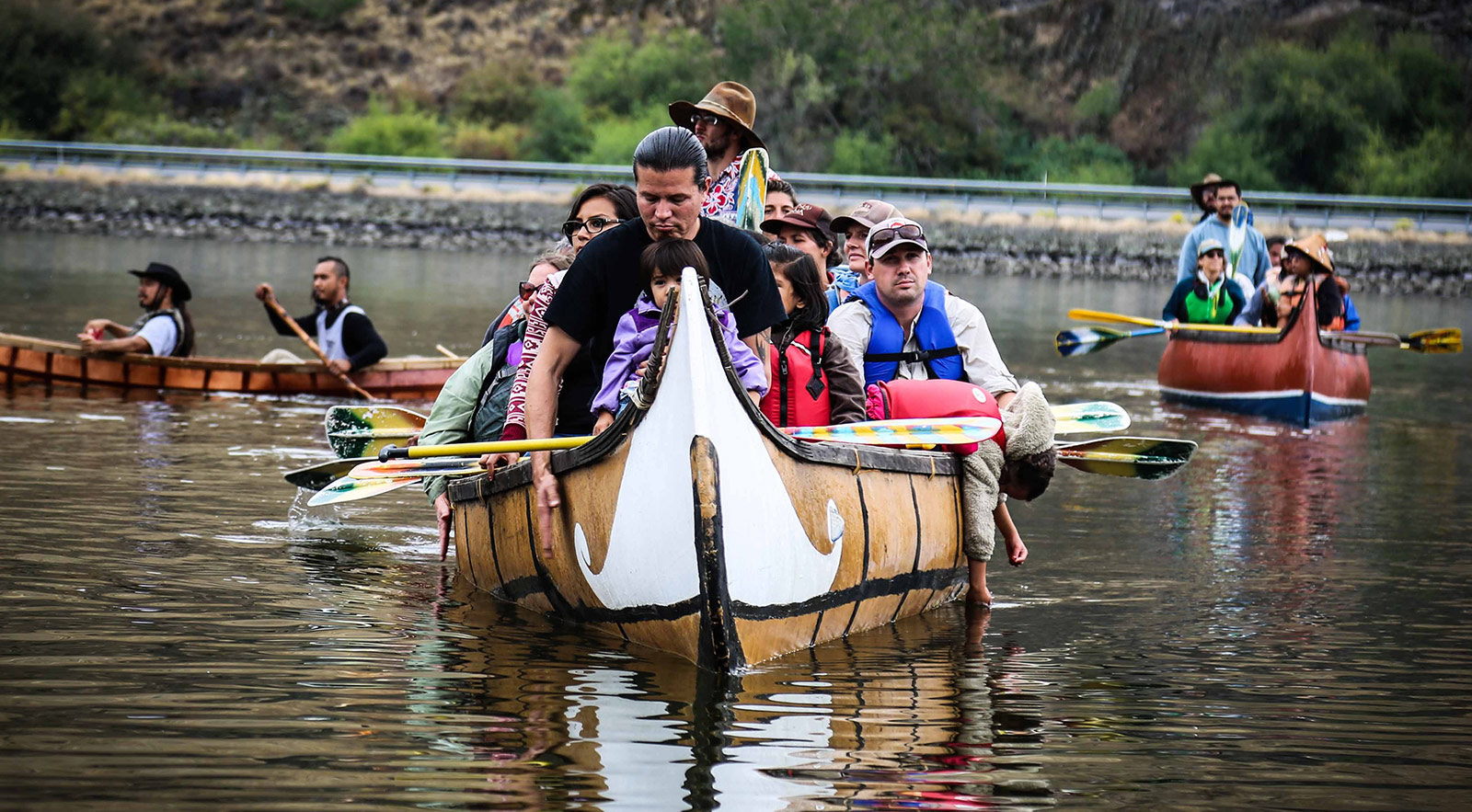
Photo by Wingspan Media Productions, featured in The Cleanest Line
It is great to see Nez Perce/Nimiipuu treaty rights and efforts to protect the fish of the Columbia River Drainage featured in Patagonia‘s blog, The Cleanest Line. The post, “Free the Snake and Restore Salmon to Honor Treaty Rights” is authored by Julian Matthews, director of “Nimiipuu Protecting the Environment.” This grass roots Nez Perce organization works closely with Friends of the Clearwater and many other regional conservation groups.
The Nez Perce Tribe and other members of the Columbia River Intertribal Fish Commission and the United Upper Columbia River Tribes engage in a great deal of restoration, native fish protection, and education regarding their traditional “salmon culture.” Some Nonnative sportspersons in the region do not support the tribes’ subsistence rights, established in numerous treaties and executive orders; I suspect some of these people may not realize just how deeply engaged in fisheries protection and restoration the tribes, particularly the Nez Perce, are.
The photos in the Patagonia story feature images of the Free the Snake River Flotilla. A popular event (previously featured in The Cleanest Line) held annually by opponents of four Snake River dams. Prominent in the pictures is Sammy Matsaw, a graduate student at the University of Idaho, who is doing some great work on the intersections of Indigenous and “Western” sciences. Sammy is Shoshone-Bannock and Oglala Lakota, but he has many Nimiipuu and other Native peers at U of I and neighboring Washington State University, who are also doing great work.
PEETZ Fly Reel, featuring Kwagu’ł Art
November 30, 2016

Father, Daughter, PEETZ.
Many anglers, including myself, had found that it was more pleasant to check the reel by pressing the wire line guard than by placing a finger on the circumference of the reel. Captain Barton has gone a step further. In the Andaman Islands the fish ran so strongly and wildly, that the ordinary check was of little use, the reel frequently overran, and his line was broken. He tried placing his finger on the rim of the reel, with the same result as it if had been place in a piece of red hot iron. This was when fishing for the cavalla. He then worked out a very simply and effective brake. To the upper crossbar of the Bickerdyke guard, he sewed on the end of a piece of webbing about 8in. or 9in. length, and a trifle less width than the crossbar. The other end of the webbing was whipped on to the rod above the reel, the webbing being kept fairly taught. The rod thus fitted is held with the hand above the webbing. When a check is required, the hand is slid down over the webbing, pressure on which causes the guard to press against the rim of the reel as strongly or lightly as the angler may wish. Letters, 311.
Art, Friendship, and Dan Klein’s Flies
November 15, 2016Dr. Dan Klein is a legendary Montana fly tier. A story that carries his legend transpired decades ago, but he was well known even before then. The story is recounted by Geoffrey Norman in a March 1982 Esquire article titled “The Sporting Art of Tying Flies.” In the article, Norman mentions numerous fly tiers of fame, but states that, of the flies he owns, he values Dr. Klein’s the most. He continues:
Klein’s hopper is what people in the trade call “imitative,” as opposed to “suggestive.” That is to say, it looks exactly like a grasshopper, right down to the eyes and antennae. The things are eerie, and they catch fish. Klein ties them from unorthodox materials–surgical tubing and things like that–but they are not sneered at by insiders. To the contrary, they are prized, and prized very highly. One of the best rodmakers in the country traded Klein a cane rod, made to Klein’s specifications, for five of those hoppers. If you cold persuade him to take your order, he would charge you a thousand dollars or more for building a rod like that. When they decided to trade, Klein and the rodmaker asked other fly-fishermen to establish the terms. Three celebrated anglers studied the problem and then calculated what was fair. 132.
The rodmaker mentioned by Norman is the late Gary Howells. His bamboo rods remain among the most acclaimed and obviously cost much more now than they did in 1982 (I see several listed for sale online at prices between two and three thousand dollars). The famous trade is recounted in greater detail by Joseph Beelart, Jr., in his 2013 biography of Howells, titled “Howells: The Bamboo Fly Rods & Fly Fishing History of Gary H. Howells” (Whitefish Press).

Klein’s Hopper
Dr. Klein’s daughter blessed me recently with the gift of a hopper tied by her father. The personal connection–a connection I do not have with the other collectible Montana flies I own, such as those tied by the amazing Jack Boehme–makes the fly particularly special. Like Norman, however, and like Howells and many others, I also view the hopper as a genuine work of art. And I happen to believe we need more art in our lives right now, and the beauty art so often conveys, no matter how small and mundane that art may seem.

Dr. Klein and his flies, as pictured in Beelart’s book.
More First Nations Artistry from PEETZ
June 28, 2016Last year, I wrote about the 2015 “Artist Series” Nottingham-style reels sold by PEETZ, which featured the work of artist Jason Henry Hunt. A descendant of the Kwagu’ł First Nation on Northern Vancouver Island, British Columbia, Hunt is part of a large family recognized for their mastery of traditional art forms. PEETZ commissioned Hunt to carve 90 signed and numbered 5-inch Evolution reels (these reels feature a one-way drag system and are not the “knuckle busters” they may appear to be). The result was the beautiful “Circle of Life” reel.
PEETZ, based in BC, commissioned Hunt to carve their 2016 series as well. This year, Hunt’s design is called the “Orca, Salmon, & Moon.” According to PEETZ, it features “an Orca hunting salmon under a full moon.” As you will see below, it is simply stunning. Just as they did last year, PEETZ will donate a portion of the proceeds generated by the sale of these reels to the Pacific Salmon Foundation. Purchasers thus help support a Native American/First Nations artist, salmon recovery, and a venerable old company that still produces hand-made wooden reels. All three of these causes are immensely worthy of attention.

“Orca, Salmon, & Moon,” as shown on the PEETZ website.
Of course, it is important to note that besides looking wonderful, PEETZ reels function perfectly. I have their 3.5 inch fly reel, which I enjoy very much. Most recently, I have spooled it with a 150-foot full sink level line and fixed it to LL Bean’s “Trolling Series” 6/7 weight fly rod. With this outfit, I troll streamers in a lake, behind a canoe. I normally fish dry flies there, but the trolling set-up is great to use when paddling from place-to-place or on those days that the trout simply cannot be coaxed to the surface. Incidentally, fishing flies this way is far from unique. For instance, a 2007 New York Times article describes the traditional practice of trolling for landlocked salmon in Maine. As for the PEETZ fly reel, when the center drag-adjustment screw is loosened, it is easy to unspool line. And the large arbor makes it easy to retrieve all that line once a fish is hooked.


Be Grateful for the Little Things, too.
November 26, 2015
Fiddles, Fly rods, and Fall
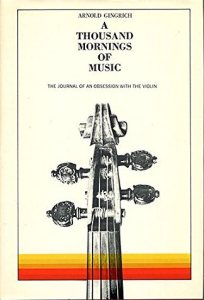
November 11, 2015I was able to spend a few days at our cabin last week. I passed part of the time there reading A Thousand Mornings of Music: The Journal of an Obsession with the Violin (Crown Publishers, 1970), by Arnold Gingrich. Of course, I spent time enjoying my family and fly fishing, as well.
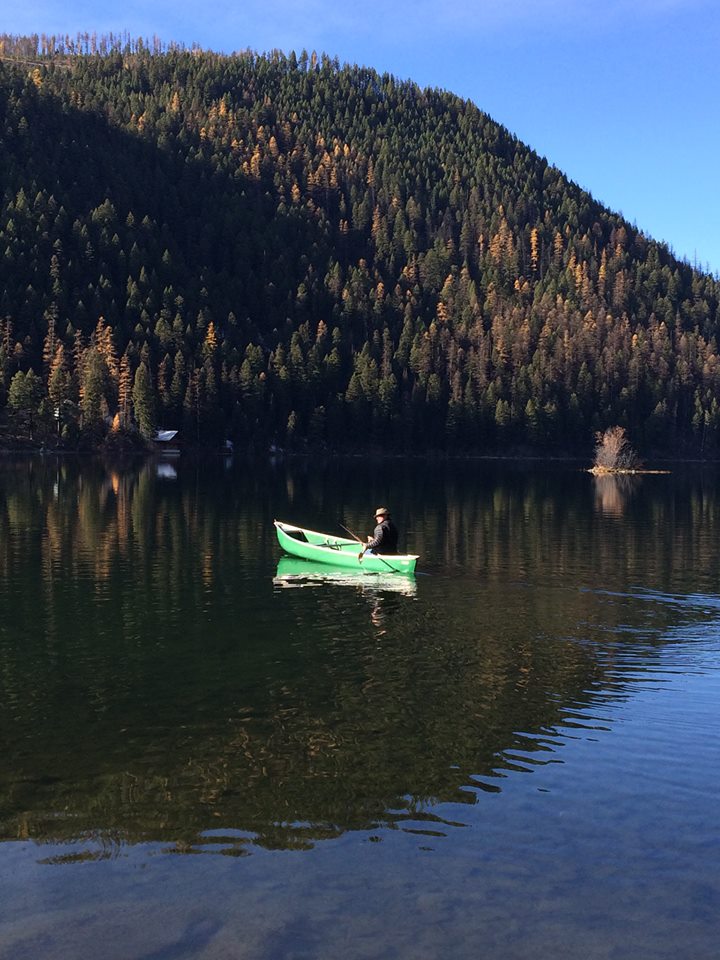
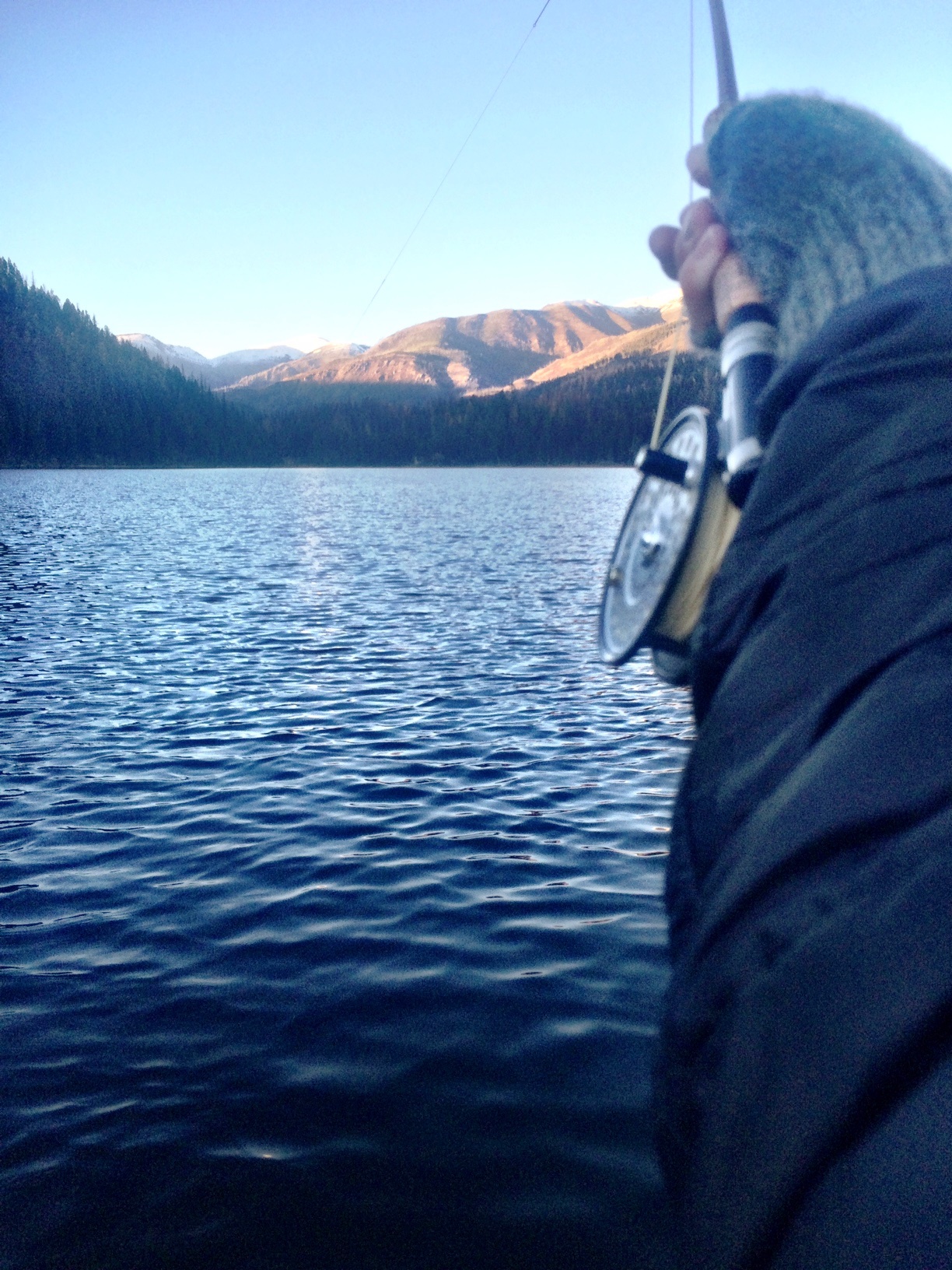
I have long been a fan of Gingrich’s writings, especially of The Well Tempered Angler (Alfred A. Knopf, 1965). In A Thousand Mornings of Music Gingrich writes about a passion that paralleled his interest in all things fly fishing–a passion for violins, which he playfully calls “fiddles” throughout the book. If you have read his angling books or Toys of a Lifetime (Alfred A. Knopf, 1966), you know that he had the tendencies of a collector. In A Thousand Mornings he describes those tendencies, as they were directed toward violins over a period of several years. At the end of that period (and at the end of the book) he had acquired violins made by some of the most respected luthiers in history. Among them was one made by Antonio Stradivari of Cremona (now a of part of northern Italy), in 1672. Gingrich named this violin “The Gudgeon,” after its second owner.
Gingrich’s Stradivarius was played for a period by Hungarian born virtuosa, Erna Rubinstein. Gingrich, himself, during his tenure as a collector, renewed his own studies of violin playing. For a time, he even spent early morning at the Rembert Wurlitzer offices, playing celebrated, rare violins that passed through the company’s hands.
It is no surprise that Gingrich loved both violins and bamboo fly rods. Many people have made comparisons between them, emphasizing the care that must be exercised in forming both, the importance of varnish, and so on. Indeed, I know more than one fly fisher, who collects violins. That said, the work done by luthiers is certainly much more extensive than that done by any fly rod maker.
I recently came across a video that shows a French luthier, Dominique Nicosia, engaged in his craft. The video was made by Baptiste Buob and filmed at the Musée de la lutherie et de l’archèterie françaises de Mirecourt. No doubt, Gingrich would have loved such films. Yet, I hope that neither music nor his interest in instruments would have kept him away from the beauty that we find while fly fishing, a beauty that far exceeds that produced by of any violinist, luthier, or rod maker.

DiPietro Vises
November 5, 2015During some recent virtual wanderings, I came across the website of Marlo DiPietro, who makes custom fly tying vises. His work is stunningly beautiful and unique. It might seem odd to some readers to think of vises as art. However, fly tiers can become pretty attached to their tools, and it’s not uncommon for us to appreciate their aesthetic beauty as much as their functionality (see my previous post on “form and function.”). Indeed, I prize my rather common Regal Medallion vise almost as highly as any reel, rod, or even painting in my possession.

“Imitura Natura” vice. Image © Marlo DiPietro
DiPietro’s custom vises exist in different realm than my Regal does. His gallery of pictures allows you to check that realm out, if, like me, you don’t have the means to actually purchase one of his vises.
“Form ever follows Function”
November 5, 2015I have had limited time to post lately, due to a busy work schedule. Fortunately, I like my work, and it often takes me to places I like, as well. Recently, I attended some meetings at Salish Kootenai College in Pablo, Montana. As is often the case with meetings and conferences in Indian Country, there were some vendors there. Among them was Dion Albert. He was displaying some of his art, which included the beaded rainbow trout knife and sheath pictured below. My picture is not great, but you can still see how amazing this piece is.
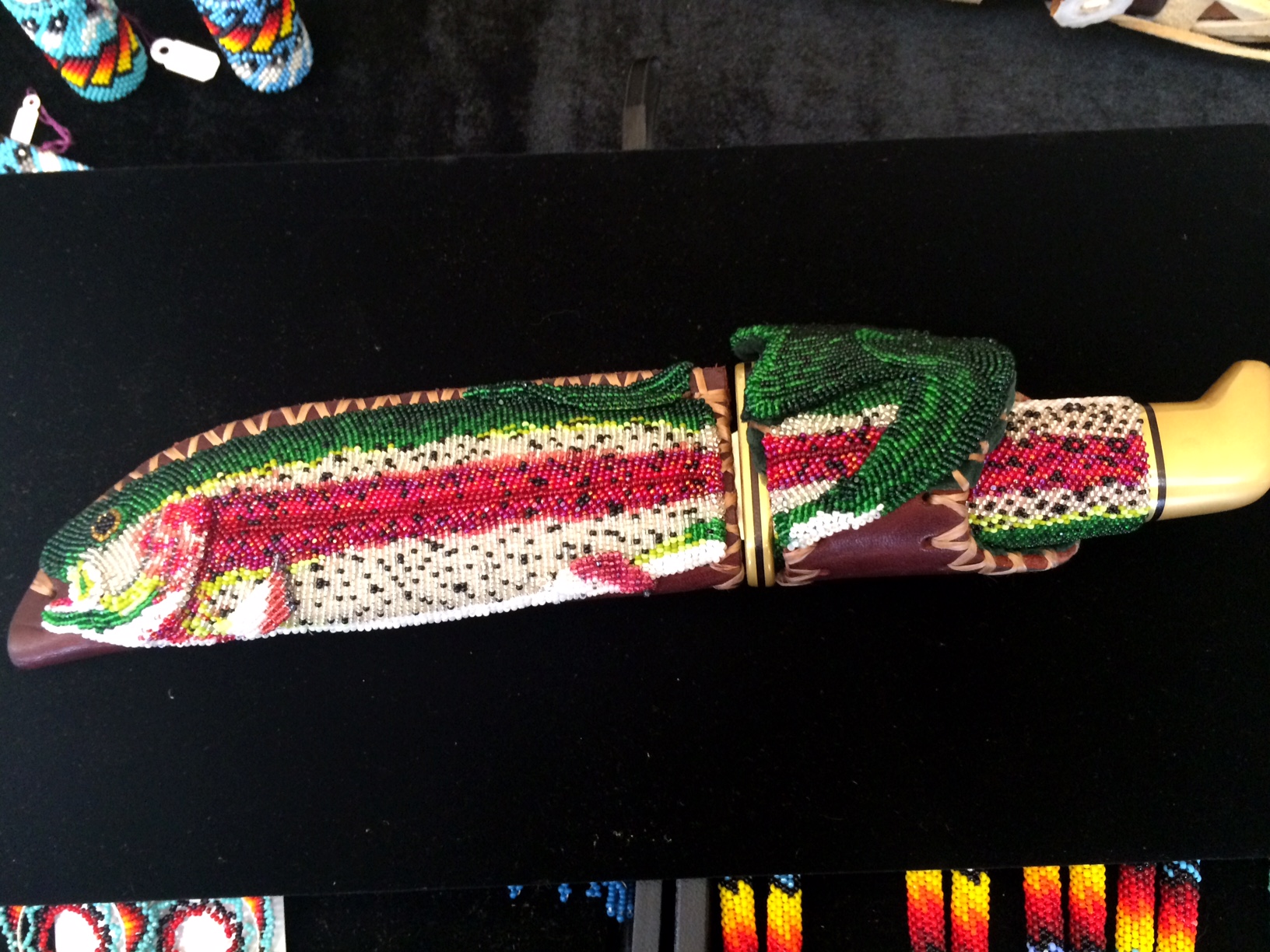
The beauty of this knife and sheath brings architect Louis Sullivan to mind. In an 1896 article, “The Tall Office Building Artistically Considered” (Lippincott’s Magazine, March 1896, 408), Sullivan wrote the following:
It is the pervading law of all things organic and inorganic, of all things physical and metaphysical, of all things human and all things superhuman, of all true manifestations of the head, of the heart, of the soul, that the life is recognizable in its expression, that form ever follows function. This is the law. (Sullivan’s emphasis).
To make Sullivan’s claim absolutely true, we would have to include our emotions as “functions,” since many contemporary expressions of art have no more purpose than to provoke feelings. Also, the Euro-American concept of “art” is not always applicable to traditional Indigenous crafts, of which Mr. Albert’s knife is an expression. But Sullivan was not really speaking of art, and his implication that there is beauty in functionality certainly apply here. They apply to hand made fly rods, artificial flies, and to many other things I love, as well.
Anyone interested in knowing more about Dion Albert’s crafts can reach him via email at memsicemboy@msn.com. Besides doing beadwork, Mr. Albert produces functional and beautiful items from buckskin, birch bark, and more. He is a member of the Confederated Salish, Kootenai, and Pend d’Oreille Tribes. Beneath the display board, upon which the knife is resting, you can glimpse beadwork done by another craftsperson. You can contact the “Native Artwork by Linda” at 406-531-5848.
Southern Appalachian Fly Fishing and the Eastern Band of Cherokee Indians
August 17, 2015
American Angler and Southern Appalachian Flies, including the Yellow Hammer.
The other day, I had a few spare minutes between meetings on the Colville Indian Reservation and picked up the latest issue of American Angler (July/August 2015) to pass the time. In the “Headwaters section,” I came across an article by Beau Beasley, noting the grand opening of the Fly Fishing Museum of the Southern Appalachians. The museum is located in Cherokee, North Carolina. Cherokee is on the “Quallah Boundary”–the land trust of the sovereign Eastern Band of Cherokee Indians. The Quallah Boundary functions much like the reservations of other federally recognized Native American nations.
Having lived in North Carolina, I know there is fantastic fly fishing in the Southern Appalachians. And I appreciate the rich history associated with Southern Appalachian fly fishing, though it is far less known than the history of fishing in Central Pennsylvania, much further up the Appalachian range. Many anglers have tasted just a hint of the former, in the writings of Harry Middleton. Middleton is the author of On the Spine of Time and several other beautiful books about fishing the Smokey Mountains (and Ozarks). Even though I am from Montana and have finally relocated to the West, I honestly miss some of the southeastern fishing.
Cherokee is an appropriate place for the Fly Fishing Museum. The tribe maintains their own hatchery and heavily stocks many local waters. Of course, there are wild trout in the area as well, which are far more appealing to people like myself. Scholar Heidi Altman, in her book Eastern Cherokee Fishing (2006) notes that fly fishing “exerts a strong influence in the area” and that it may be difficult to distinguish between environmental knowledge passed down traditionally and that which derives distinctly from fly fishing (79). Moreover, many Southern Appalachian fly fishers claim that the Yellow Hammer or Yaller Hammer fly was developed by Cherokee anglers. Historically, however, the Cherokee primarily used traps, weirs, and spears to harvest fish (it does seem, however, that some other Native American peoples developed fly fishing practices independently from those brought by Europeans).
I congratulate the town of Cherokee and the Eastern Band of Cherokee Indians for hosting this new museum, which is certainly a unique one in Indian Country. Congratulations to the founders of the museum, as well.
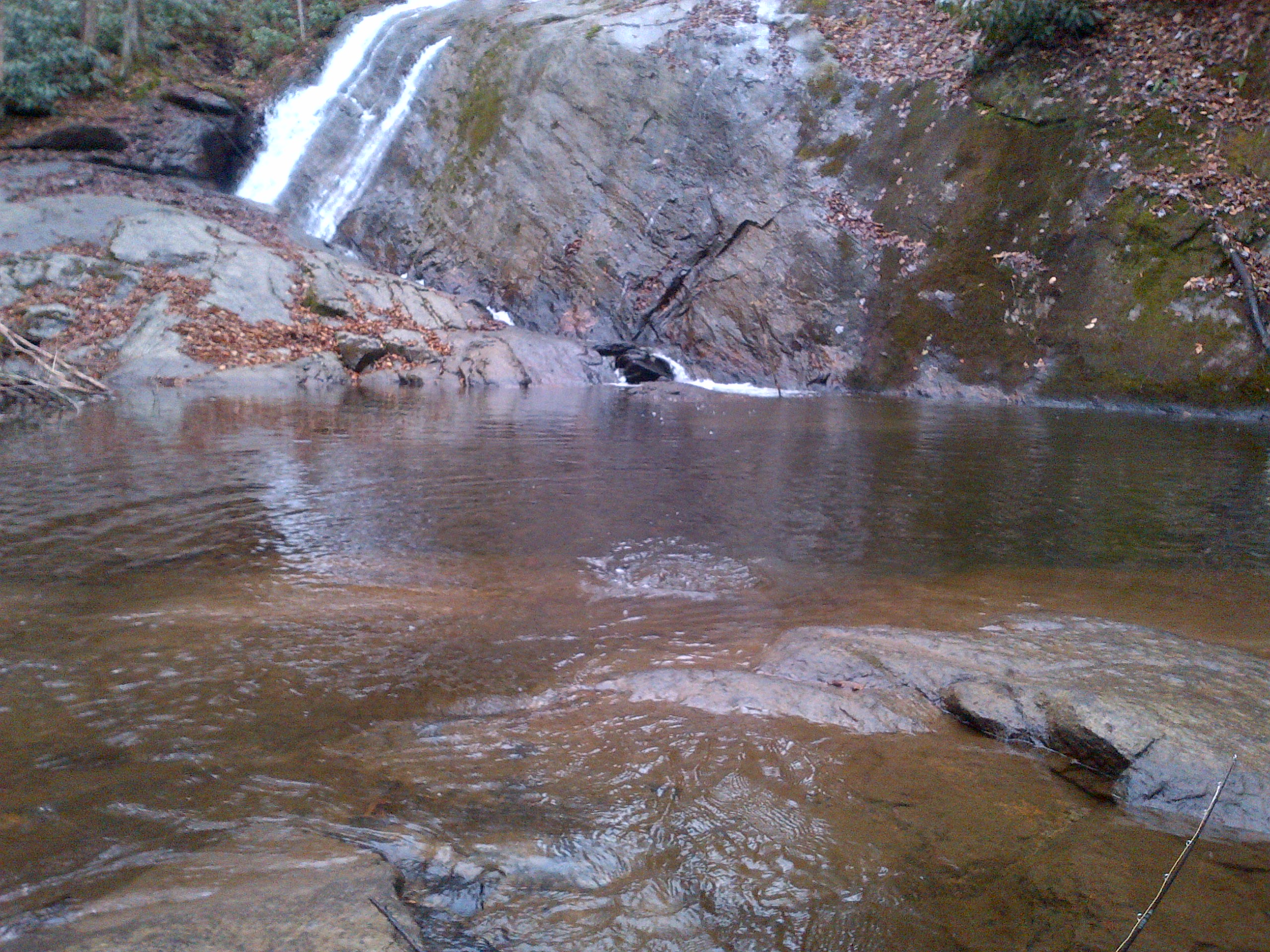
A favorite Southern Appalachian spot.
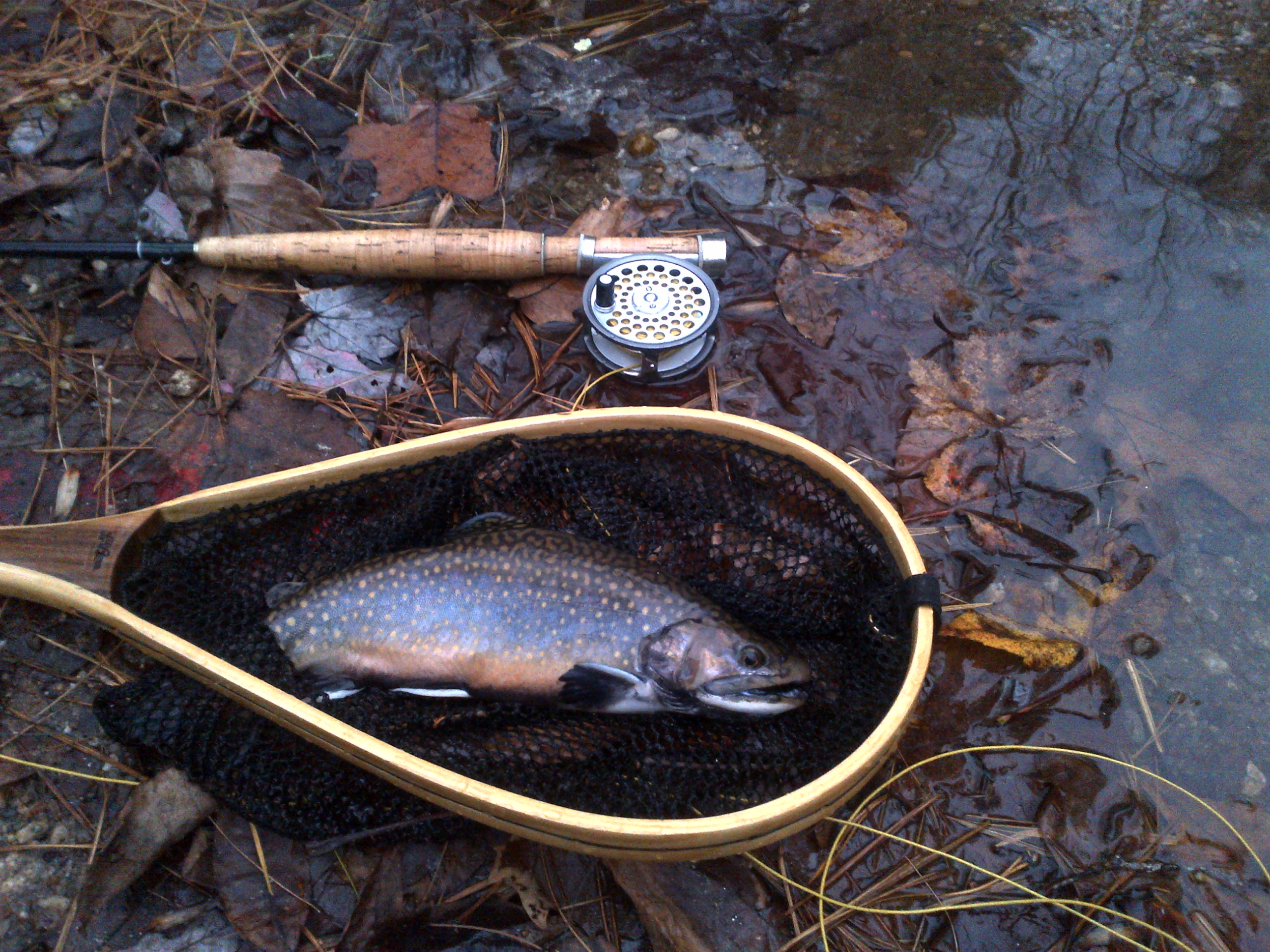
Speckled Trout (Brookie) or Unanvtsadv, in the Cherokee language.
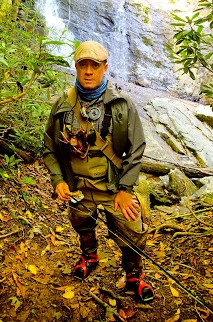
Photo by Mike Sepelak.


 The Literary Fly Fisher