Archive for the ‘Environmental Literature’ Category

“At the wintry fire.”

February 23, 2015
Stoddart

Thomas Tod Stoddart

For those dreaming of winter’s end, I post a poem by Thomas Tod Stoddart (1810-1880). I wrote previously about the lawyer from Kelso, Scotland, who was more angler than attorney. In this poem, “Musings,” Stoddart capture the longing that many of us, fly fishers or otherwise, feel for the warmer days of spring. The poem is taken from Angling Songs, published by Stoddart’s daughter Anna in 1989.

Musings

I.

Welcome, sweet southern showers!

Welcome, ye early flowers,

Woo’d by the bee!

Ever gentle and bland

To all wights of the wand

Welcome are ye!

II.

Oft at the wintry fire,

Nursing out hearts’ desire

Fondly we dream

Of joy in the breeze—

Singing birds in the trees—

Flowers by the stream.

III.

Often our fancy brings

Pictures of sunny things

Home to our hearth,

And we seem as we stray’d

Among sunshine and shade,

Music and mirth.

IV.

Then with unconscious hand

Grasp we the idle wand,

Full of the boy,

When to our sad surprise

Swiftly the vison flies,

Summer and joy!

Time

January 30, 2015

Not many writers of angling literature, or even of environmental literature, are as respected as conservationist and fly fisher Roderick Haig-Brown. His observations of the physical world provoke a depth of reflection that those of few other literary figures do. One of the reasons for this may be that his observations are almost always tied to the passage of time–the passage of a day, the turning of a season, or even the growth of his children. In  A River Never Sleeps, published in 1946, Haig-Brown ties his observations to the months. An excerpt from “January” follows.

IMG_1422

A River Never Sleeps, Easton edition, below my favorite art from Michael Simon.

It is easy to forget about the river in winter, particularly if you are a trout fisherman and live in town. Even when you live in the country, close beside it, a river seems to hold you off a little in winter, closing itself into the murky opacity of freshet or slipping past ice-fringed banks in shrunken, silent flow. The weather and the season have their effect on the observer too, closing him into himself, allowing him to glance only quickly with a careless, almost hostile, eye at the runs and pools that give summer delight. And probably his eyes are on the sky for flight of ducks or geese or turned landward on the work of his dogs. Unless he is a winter fisherman, he is not likely to feel the intimate, probing, summer concern with what is happening below the surface.

IMG_1415

Idaho’s Clearwater, in January

Edit/Further thoughts:

I realize now that “observations” is the wrong word for Haig-Brown’s writings. Rather, his essays are recordings of interactions with the physical world. For him, the landscape is a character (or a chorus of characters). This sounds trite, but I mean it in a literal sense: for Haig-Brown, the landscape is an acting subject, not a passive object. Thus, he does not simply observe it. Rather, he interacts with it. Of course, the subjecthood of the “natural” environment is not merely a literary invention on Haig-Brown’s part. Indeed, the landscape acts upon all of us, and all of us act upon it. Haig-Brown is simply one of the rare members of Euro-American society to recognize this fact. This is all the more reason for readers to admire the work of this great man, who passed decades ago.

A Book Buyer’s Resource

January 20, 2015

The Antiquarian Booksellers Association of America (ABAA) is a useful resource for avid readers of sporting and environmental literature, who prefer to purchase and read physical books. Before  joining ABAA, booksellers must be nominated. They must then go through a thorough vetting process. Ultimately, only booksellers with fine reputations are admitted. Indeed, part of ABAA’s mission is to “promote ethical standards and professionalism in the antiquarian book trade.” Therefore, at least in theory, one can be assured of fair treatment by booksellers belonging to ABAA.

abaa_220x220.pngFortunately, ABAA serves not only as a recommending body for reputable booksellers; it also allows individuals to purchase from those sellers directly through its website. And even better, it categorizes the available books. A category that may be of interest to this site’s visitors is “Travel, Voyages, and Exploration.” There you can find may of the classics identified and discussed in my previous post on “adventure books.” If you are looking for one of these titles, or if you simply want to browse the category, be sure to examine the ABAA website. And know that there are many books available at the website, besides those that might qualify as “antiquarian.” In other words, you need not be prepared to spend an “arm and a leg.” To the contrary, there are plenty of reasonably priced books for sale by ABAA’s members.

You can find ABAA members’ “Travel, Voyages, & Exploration” books here: ABAA Travel, Voyages, and Exploration Titles. You might also want to look at fly fishing titles in the “Leisure, Sport, & Entertainments” category.


Nature, Beauty, and Gunfire

January 5, 2015

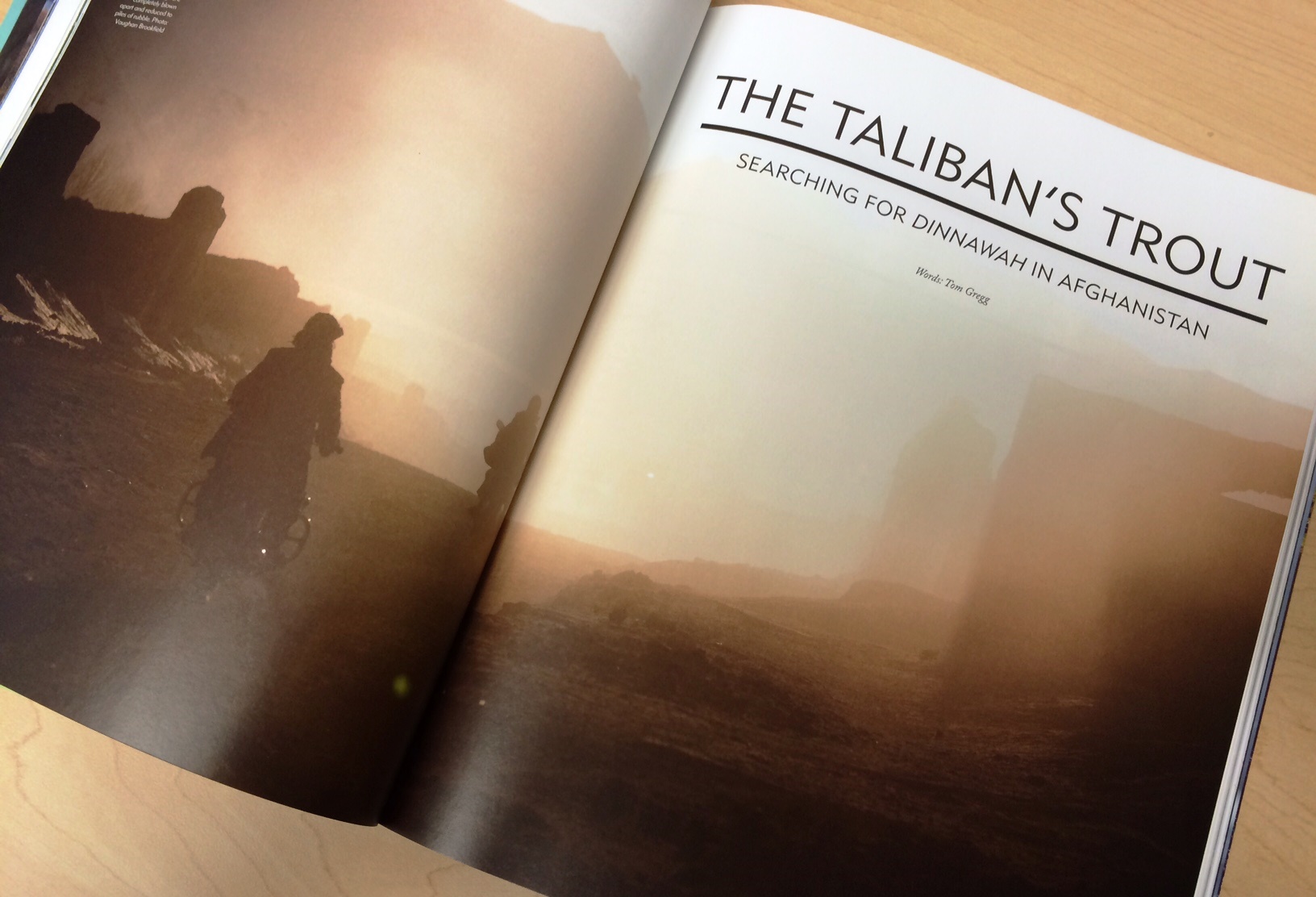
The latest issue of The Flyfish Journal (6:2) includes an article by Tom Gregg about fly fishing in Afghanistan. In “The Taliban’s Trout: Searching for Dinnawah,” Gregg relates his quest to assemble fishing tackle and locate trout, while he was a Political Affairs Officer for the United Nations in 2005.  Eventually, he was able to catch some snowtrout or Schizothorax progastus–the Dinnawah of the title. On the day that he did so, he was accompanied by an escort of five soldiers and his translator. During his first cast, he heard gunfire and assumed his small group was under attack by the Taliban. This turned out not to be the case. He writes, “The soldier’s commander told me one of the soldiers in my security detail had been overcome by the beauty of the morning. He had fired his gun out of happiness and three of his colleagues had returned fire in joy.”

Taliban

We all experience the beauty of the less-cultivated, physical world in different ways, and we express those feelings differently as well. Gregg makes clear that what he enjoys the most about fishing and “nature” is the silence that one sometimes finds on the stream.  He even invokes Izaak Walton, in describing his appreciation of “quiet.” This is apt, since Walton also fished during a time of turmoil–the English Civil Wars.

Still, in his article, Gregg does not fault his escorts for firing their guns. Perhaps, like Walton, Gregg understands that humans, as noisy as they can be, are a part of nature to be appreciated too. In my mind, it makes sense that observers of violent conflicts would feel this way, since they see such great losses of human life and the suffering such losses entail. Admittedly, however, I am imposing an awful lot of meaning upon an otherwise simple passage in Gregg’s essay.

For my own part, I first found the actions of the soldiers in the article odd, foreign, etc. Yet, upon reflection, I am now more interested in their appreciation of how beautiful that morning was, and less so in how they expressed that appreciation. I also find myself thinking that if we could all focus upon what we have in common, and what motivates us to act the ways that we do, then there might be a lot less conflict in every nation’s history. So, if I were to sit down and talk about “nature” with Gregg, I’d like to talk with the soldiers in his article, as well. After all, all three parties would have a starting point for our conversation.

Autumn

November 10, 2014

Fall fishing is a revival after the quieter times of summer. Cooler nights and the melt of early snowfall in the mountains bring falling water temperatures and rains freshen the streams. Shadows are longer, shielding the pools. The fish are more active and there is a touch of urgency about it all, a feeling that it cannot last very long so one had better get out and be doing. After all, there have been falls when the heavy rains came early and suddenly, the streams flooded and everything was over before it had started.

Roderick Haig-Brown, Fisherman’s Fall, 1964.

IMG_1286

IMG_1288

FullSizeRender

“The River of the Road to Buffaloe”

October 16, 2014

photo nfk

In 1806, Meriwether Lewis, William Clark, and other members of the “Corps of Discovery,” made their return from the West Coast of North America, over the Continental Divide, on their way back to Saint Louis. In approaching the Divide, they relied heavily upon the knowledge and physical guidance of the Nez Perce or Nimiipuu. On July 3, Lewis and Clark divided the Corps, in order to explore different areas. Lewis and his party travelled east along what we now know as the Big Blackfoot River. The Nez Perce guides told the party that the river was the Cokahlarishkit, as Lewis rendered it, or “the River of the Road to Buffaloe” (better transcribed as Qoq’áax ‘í skit and translated as “buffalo road”).

On July 6, 1806, Lewis notes that the party crossed the North Fork of the Big Blackfoot. He describes it as 45 yards wide, deep, rapid, and turbid. He notes the squirrels, goats, deer, curlews, woodpeckers, plovers, robins, doves, hawks, sparrows and duck in the area. He also remarks on the cottonwoods and pines.

He notes, too, that the Corps was wary of meeting parties of the Blackfoot tribes or their allies. The Blackfeet, or Niitsitapiiksi (“Real People”), reside on the eastern side of the Continental Divide. At the time of Lewis and Clark’s expedition, the Blackfeet largely controlled Nez Perce and other Plateau people’s access to the bison of the Plains

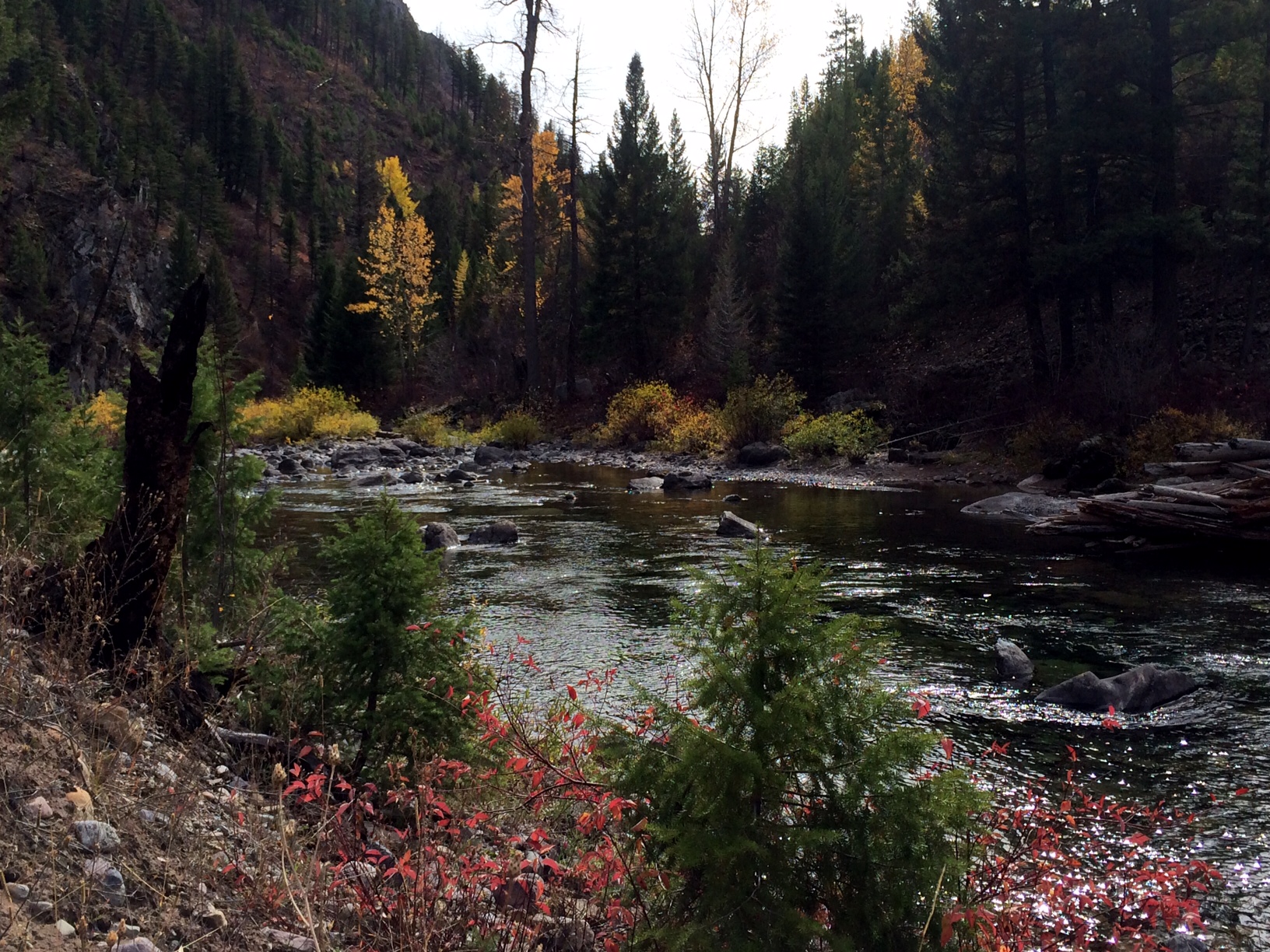
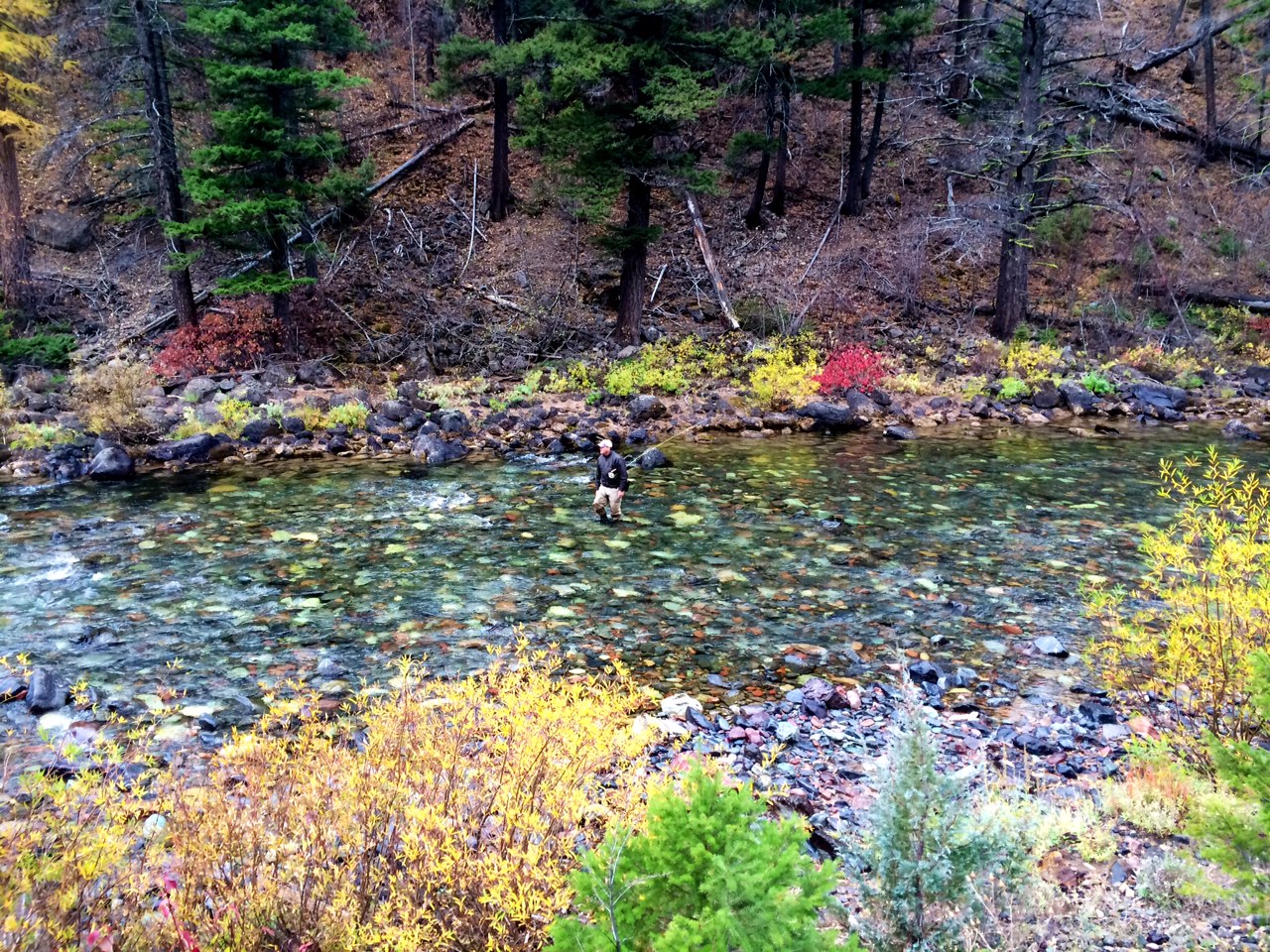
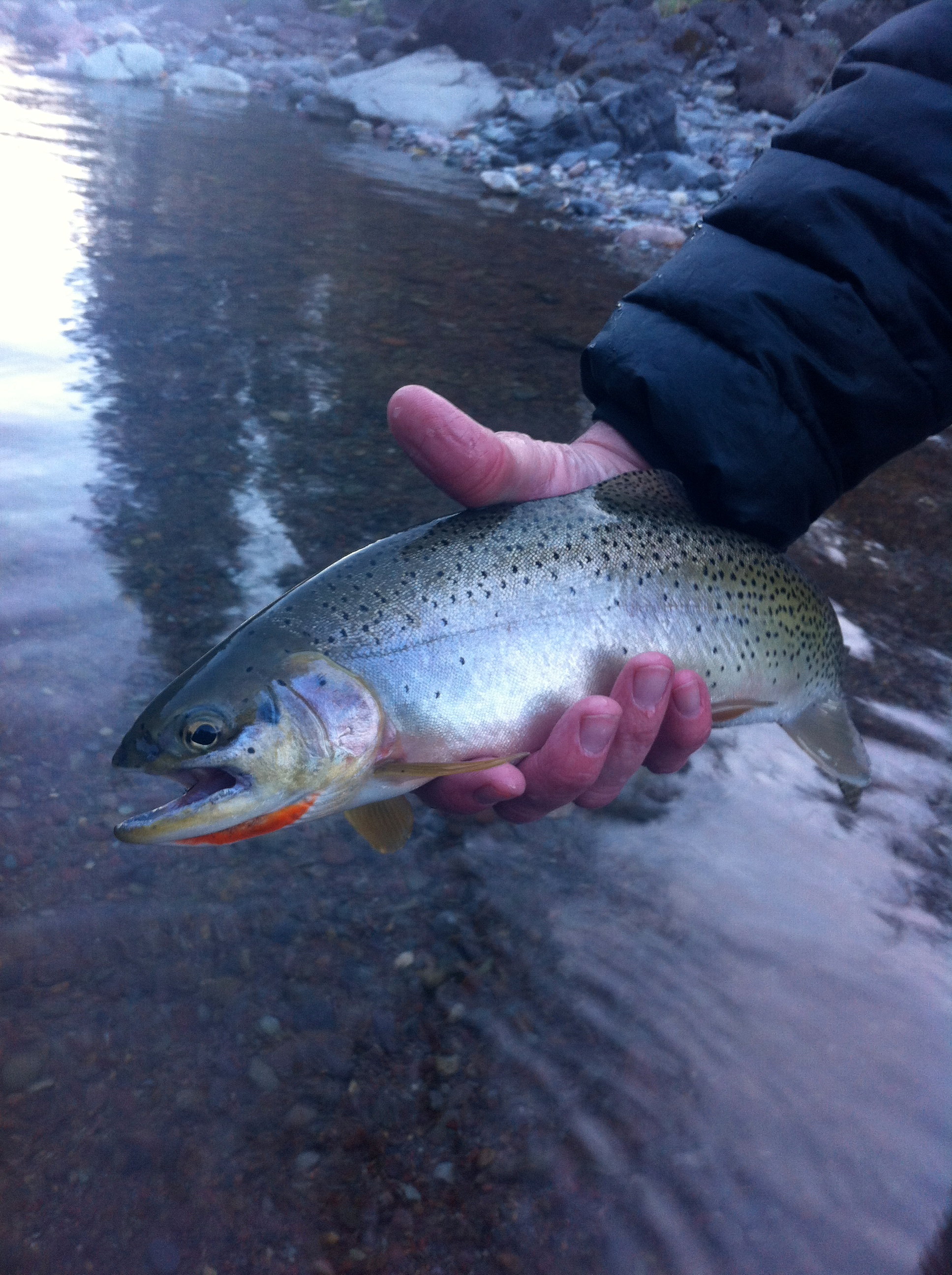
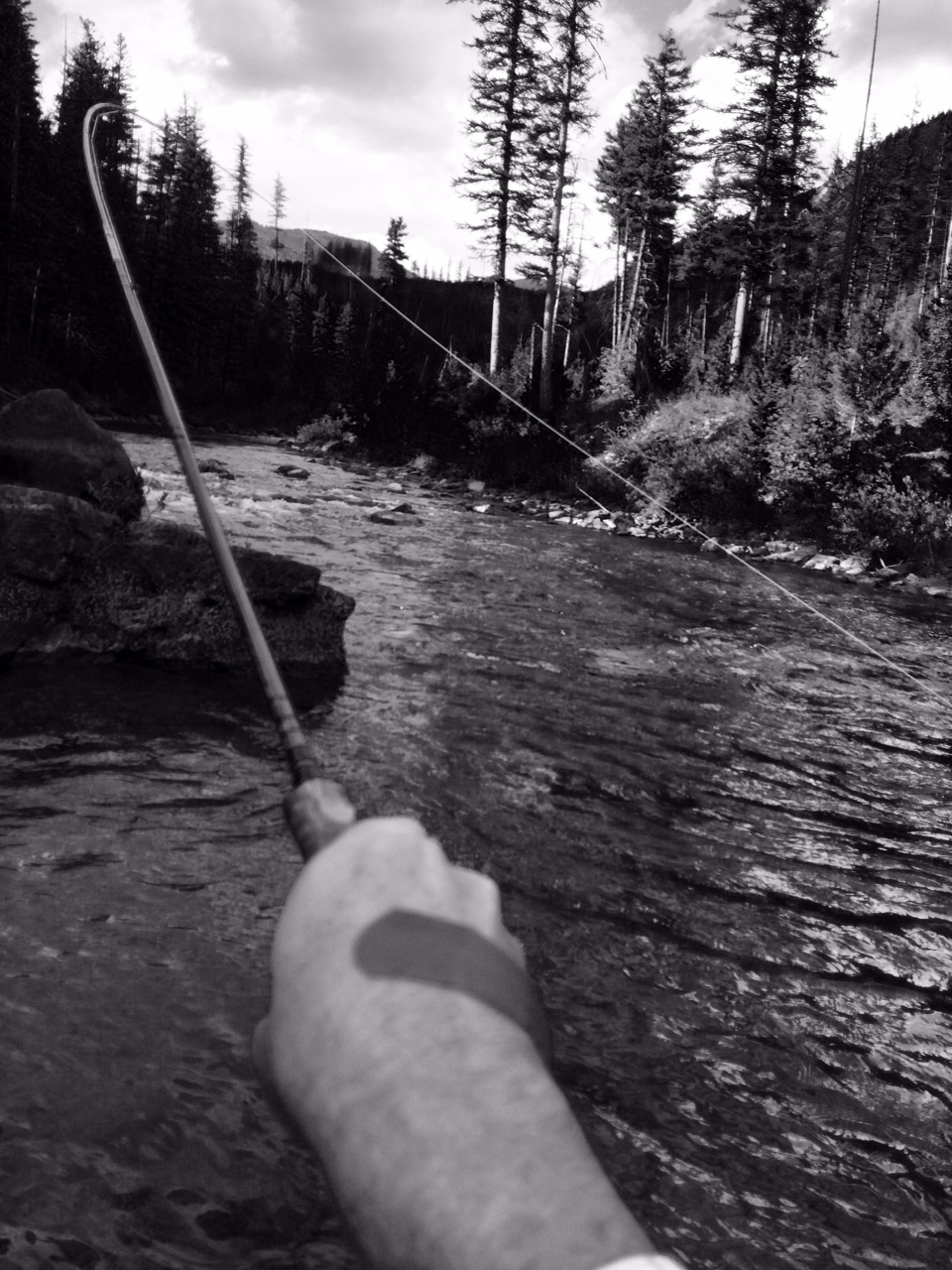
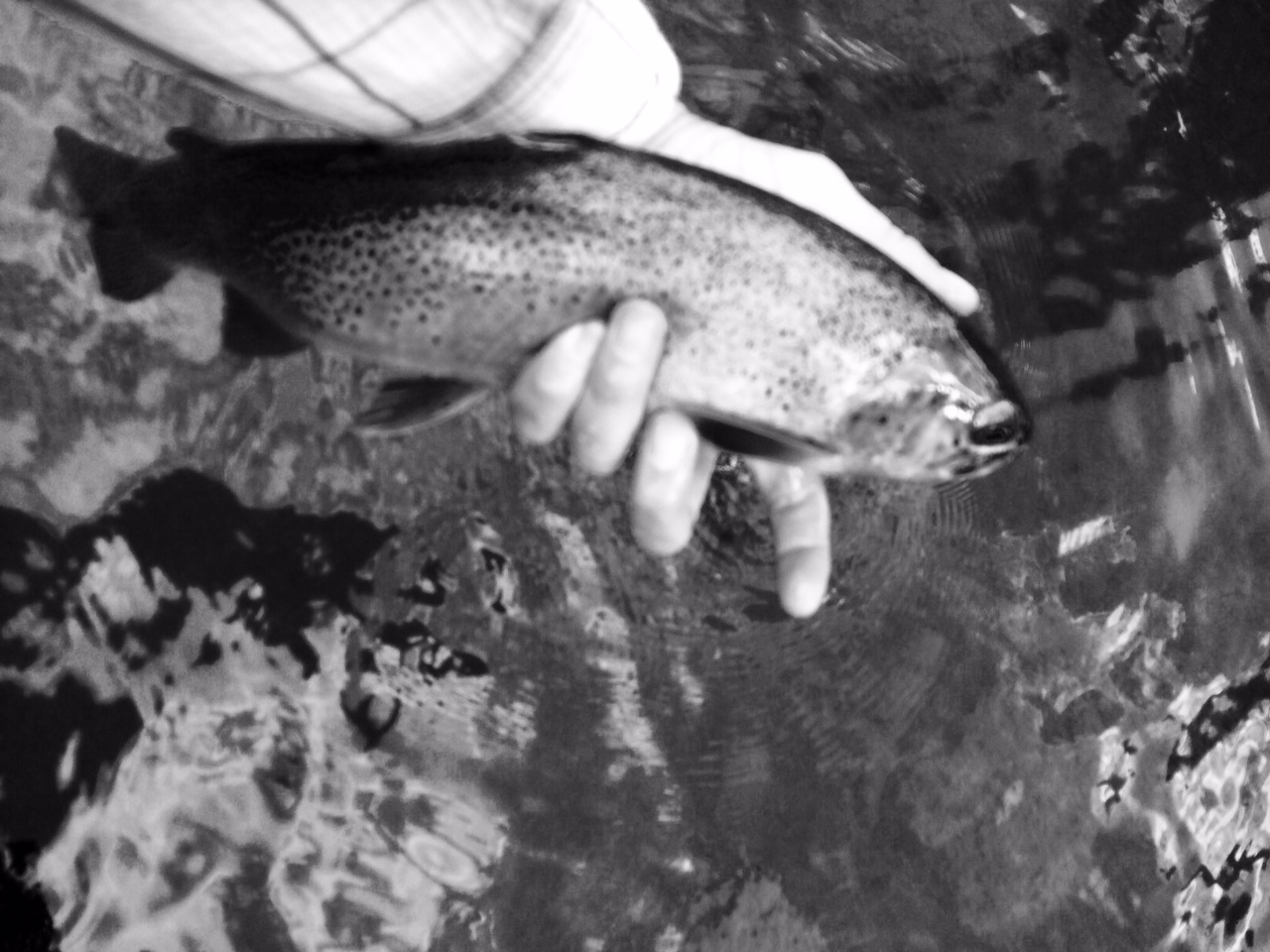
I spend a great deal of time near the North Fork of the Big Blackfoot, as our family cabin is in the area. And, indeed, I drive along the main river, via Highway 200, to visit friends on the Blackfeet Reservation or on the Canadian reserves. The North Fork remains the powerful river described by Lewis over two hundred years ago. And the drainage remains a lively place, populated by all of the flora and fauna recorded by Lewis and many other plants and animals as well (including trout). It is a particularly pretty place during the fall. For this reason, I share a few pictures taken during my latest visit (the trout picture was taken my by friend, Bill Gregory).

photo bill

trout

A Father’s Songs and a Daughter’s Memoir

September 27, 2014
Stoddart

Thomas Tod Stoddart, as pictured in Angling Songs.

In 1889, Anna M. Stoddart published a loving memoir of her father, Thomas Tod Stoddart (1810-1880),  along with a collection of verses written by him (some of which were previously published).  Most of these verses have to do with fishing.  Thomas Stoddart was licensed to practice law, but he seems to have spent most of his life writing and engaged in fishing and fishing related activities. He was particularly involved in conservation. Living in Kelso, Scotland, the Rivers Tweed and Teviot received most of his attention. Besides his writer daughter, he had two other children-both boys. To illustrate how seriously the senior Stoddart took his identity as an angler, daughter Anna writes:

My father called one day on Henry Glassford Bell, and the genial Sheriff hailed him with the very natural question, “Well, Tom, and what are you doing now?” With a moment’s resentment, my father brought his friend to his bearings. “Doing? Man, I’m an angler.”

Angling Songs, with a Memoir

Angling Songs, with a Memoir

I can relate to Thomas Stoddart, as he responds to Bell. If my own daughter were ever to write a memoir about me after my death, she might very well include a similar story, to illustrate just how passionate about fly fishing I was. She could not describe me as a poet, however; in that way I am different from Thomas Stoddart.  Thus, due in part to my own lack of talent, I include two of the “songs” written by Thomas and published by Anna in Angling Songs, with a Memoir.

THE FAIRY ANGLER

I.
‘Twas a bland summer’s eve, when the forest I trod;
The dew-gems were starring the flowers of the sod,
And “faire mistress moone,” as she rose from the sea,
Shed apart the green leaves of each shadowing tree.

II.
I passed by a brook, where her silvers lay flung,
Among knolls of wild fern it witchingly sung,
While a long fairy angler with glimmering hand
From the odorous banks waved her delicate wand.

III.
In silence I watched, as with eager intent
O’er the moon-silvered water she gracefully bent,
And plied with green rush-rod, new torn from its bed,
Her line of the thorn-spider’s mystical thread.

IV.
A pannier of moss-leaves her shoulder’s bedecked,
The nest of some bird, with the night winds had wrecked,
Slung round with a tendril of ivy so gay,
And a belt of stream flowers bound her woodland array.

V.
No snow-flake e’er dropped from its cloud on the brook
So gently impelled as her moth-plumaged hood;
The pearl-sided parlet and minnow obeyed
The magical beck of that wandering maid.

VI.
And aye as her rush-rod she waved o’er the rill,
Sweet words floated round her, I treasure them still,
Tho’ like a bright moon-cloud resolved in the air,
Passed from me, regretted, the vision so faire.

THE RIVER

I.
Through sun-bright lakes,
Round islets gay,
The river takes
Its western way,
And the water-chime
Soft  zephyrs time
Each gladsome summer day.

II.
The starry trout,
Fair to behold,
Roameth about
On fin of gold;
At root of tree
His haunt you may see,
Rude rock or crevice old.

III.
And  hither dart
The salmon grey,
From the deep heart
Of some sea bay;
And herling wild
Is beguiled
To hold autumnal play.

IV.
Oh! ’tis a stream
Most fair to see,
As in a dream
Flows pleasantly;
And our hearts are woo’d
To a kind of sweet mood
By its wondrous witchery.

University Course: “Salmon and People”

September 18, 2014

I am sharing the flyer for a course that a colleague in anthropology is teaching. She is an archaeologist, but she is offering a comprehensive look at the place of salmon in Pacific and Inland Northwest cultures, both Native and non-Native. She has worked closely with Nez Perce representatives to incorporate contemporary Native views. All in all, it’s an impressive course.  In fact, it would be nice to see more classes that focus upon such basic, yet essential topics. Academic theories are important devices through which to understand human perception of the world. But discussions should always start with the tangible things in life.Salmon

Thomas Salter and the Duchess

September 9, 2014

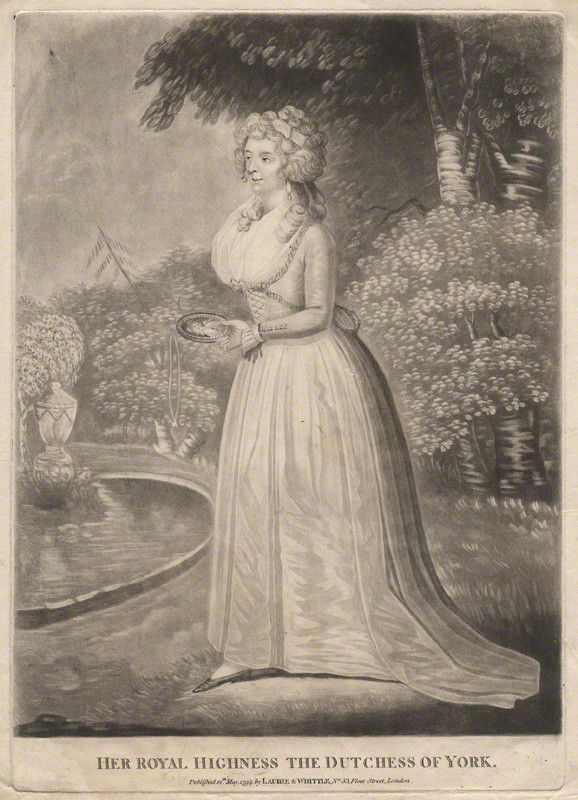
Thomas Frederic Salter was a London hatmaker. He fished as a child with his father and remained a devoted angler as an adult. Apparently, his health prevented him from fishing regularly in his later years. He therefore turned his attention toward writing several books having to do with fishing, each of which went through several editions. The first was The Angler’s Guide, or Complete London Angler in the Thames, Lea, and other Waters twenty miles round London, which was published in 1814.  Interestingly, he dedicated it to “Her Royal Highness the Duchess of York,” whom, he says, “occasionally enjoys the amusement of Angling” (vii). At the time, the duchess was the beloved Princess Frederica Charlotte of Prussia. An independent woman, she lived separately from her husband, apparently preferring the company of her many pets and other animals.

"Frederica Charlotte Ulrica Catherina, Duchess of York and Albany" published by Robert Laurie, published by  James Whittle

In his guide, Salter speaks highly of fly fishing, describing it as “gentlemanly and pleasant,” if also “difficult to learn” (82-83). In all, he dedicates five chapters of the book to the practice. Had I been Salter’s editor, I might have pointed it out that the sport must also be “ladylike” (or something to that effect), since the Duchess, so highly praised in Salter’s, dedication, was an angler.

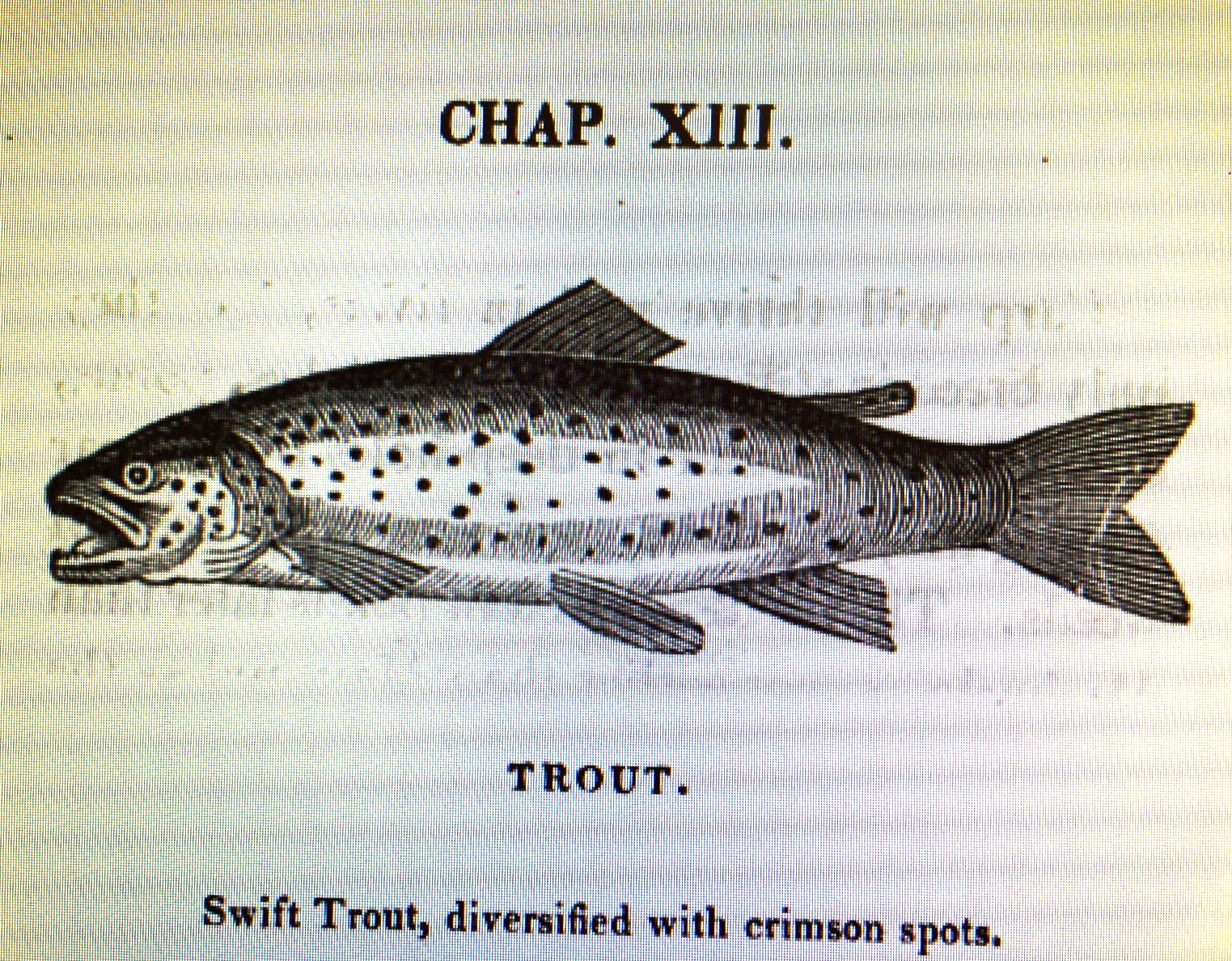
Salter Trout

Illustration of a trout, from page 95 of Salter’s Guide.

Interestingly, Salter also includes a poem by a “Mr. Cracknell,” entitled “The Female Angler” (103). Two stanzas follow.


From town I walk’d to take the air,

Shun smoke and noise of coaches;

I saw a lovely damsel fair,

Angling for Dace and Roaches.


Close by a brook, with line and hook,

Which curiously was baited,

Attentively the maid did look,

While for a bite she waited.


Looking back as readers, and not editors, we should commend Salter for acknowledging so clearly that field sports are not only or best practiced by men. While many authors of Salter’s time and before paid homage to the legendary Juliana Berners, O.S.B., supposed author of the 15th century Treatyse of fysshynge wyth an Angle , few of them seemed to consider that there may have been many other figures like her. Admittedly, there seems to be a hint of romance in the poem Slater includes in his book; there is an implication that the “female angler” shares in the simple purity of nature or the rural area free from “smoke and noise.”

Yet, Salter tells us that “The Female Angler” was inspired by a very real friend of Cracknell’s. Also, as its subtitle indicates, Salter’s book focuses upon fishing in urban and suburban London (in later editions, the subtitle changes).  Thus, he does not see to see the divide between nature and culture as being so bold as many others did and do. This makes him a rare figure in his time — one worth reading. While the Guide is mostly a technical manual and guidebook to certain fishing locations, there is, as I have indicated here, some material that truly stands out.

I leave you with a stanza from another poem, “The Angler’s Morning Walk,” apparently written by Salter himself (x).


From sweet repose I early rose

To fish, and take the air;

I look’d around, saw good abound,

Then why should Man despair.


Dream and Fable

September 3, 2014

“Standing on the shore, I once more cast my line into the stream, and found the dream to be real and the fable true.”

Henry David Thoreau, The Maine Woods, 1864.

photo 3


photo 2