Archive for the ‘Environmental Literature’ Category

Religion, Sport, and Water: Contemplation and Play in “Nature”

August 21, 2015

Posted below is the syllabus for the fly fishing themed course I’ll be teaching at my university this fall.

Religion, Sport, and Water: Contemplation and Play in “Nature”

Depiction of Juliana Berners. Lithograph by William Nicholson, 1898.

Depiction of Juliana Berners. Lithograph by William Nicholson, 1898.

HONORS 380.2, Fall 2015

Class Time: TU,TH 2:50-4:05

Class Location: AVER 8

Professor: Ken Lokensgard

Office: Plateau Center for Native American Programs, Cleveland 23A

Phone: 509-335-1055

E-mail: kenneth.lokensgard@wsu.edu

Office Hours: TU,TH 4:15-5:00 pm and by appointment.

DESCRIPTION AND GOALS OF COURSE 

This course is an introduction to the literary history, religious significance, and socio-cultural impact of fishing. Students will read historically and culturally important texts ranging from those written in Ancient Rome, Medieval Europe, and in contemporary North America. All of these texts emphasize a relationship between religious experience, fishing, and the environment. We will explore this relationship, considering the cultural settings of each text while also learning about the overlapping aesthetic, ritual, and ecological dimensions ascribed to fishing—particularly fly fishing—by some of the most notable writers and intellectuals in European and Euro-American history. For comparisons’ sake, we will briefly examine religion and fishing in cultures outside of the European and North American literary worlds, as well. In addition to fishing literature, students will read relevant theoretical texts on religious experience, conservation, ecology, “play,” and “nature.”

As a whole, this course will serve as a focused study of the role that the extra-human environment and religious practice play in European, North American, and other cultural contexts. Thus, the course will introduce students to literature and ways of thinking that can be applied to any implicitly or explicitly religious phenomena that are practiced in so-called “natural” places. Moreover, the course will introduce students to the often religious significance that conservation and other ecologically informed practices play in the lives of many contemporary people.

This course is both reading and writing intensive. Most of the readings, however, were originally written for a popular audience. Also, the writing assignments will allow the student to incorporate his or her own, carefully examined reactions to these readings in his or her papers and essays. Therefore, this class is intended to be entertaining and engaging. Yet, it is designed for the student who is willing to consider religion within its broadest contours, who can devote concerted time to readings, and who is willing to engage in regular and thoughtful writing. If you are not such a student, then, this course is not designed for you.

Please note that Washington State University is committed to maintaining a safe environment for its faculty, staff, and students. Safety is the responsibility of every member of the campus community and individuals should know the appropriate actions to take when an emergency arises. In support of our commitment to the safety of the campus community the University has developed a Campus Safety Plan, http://safetyplan.wsu.edu. It is highly recommended that you visit this web site as well as the University emergency management web site at http://oem.wsu.edu/ to become familiar with the information provided.

ASSIGNED READINGS and OTHER RESOURCES

Required Books:

Swearer, Donald. Ecology and the Environment: Perspectives from the Humanities (Cambridge: Harvard University Press, 2009).

Browning, Mark, Haunted by Waters: Fly Fishing in North American Literature (Athens: Ohio University Press, 1998).

Walton, Izaak and Charles Cotton, ed. Marjorie Swann, The Compleat Angler (New York: Oxford University Press, USA: World’s Classics, 2014).

Luce, A.A., Fishing and Thinking (Shrewsbury, UK: Swan Hill Press, 2002).

Maclean, Norman, A River Runs Through It and Other Stories, Twenty-fifth Anniversary Edition (Chicago: University of Chicago Press, 2001).

Duncan, David James, The River Why, Twentieth-Anniversary Edition (Sierra Club Books, 2002). NOTE: This book is not available through The Bookie.

Other readings are listed in the tentative schedule and will be accessible online, via the course’s Blackboard site.

Films, Guest Lectures, and other activities will serve as important resources. The films are listed in the tentative schedule, below. Informal guest lectures will be delivered by regional artists, authors, and anglers at dates to be announced. Each guest will address the aesthetic and “spiritual” dimensions of fly fishing, from his or her perspective as a craftsperson or author. We will also visit the Manuscripts, Archives, and Special Collections reading room to examine exceptionally rare editions of texts read or discussed in class, which are part of the Wildlife and Outdoor Recreation Collection. Among these texts are several first and other 17th c. editions of The Compleat Angler.

Please note this course is designed to help students develop their critical reading and writing skills. Specific methods of critical reading and writing will be discussed in class at opportune times. You are also strongly encouraged to make use of the instructor’s office hours and of the Undergraduate Writing Center in Smith CUE 303.

REQUIREMENTS AND GRADING

Four three-page critical reaction papers will be submitted throughout the semester. Papers should be written in a 12 point font with 1 inch margins. Each of these papers is worth 5 percent of your total grade (5 points each). There will be two exams, which will include short answer and essay questions. Each exam is worth 20 percent of the total course grade (20 points each). Toward the end of the semester, a twelve-page paper, analyzing the treatment of religion in at least three of the assigned readings, or in three texts dealing with other “outdoor” practices sometimes characterized as religious (I will provide a bibliography), must be submitted. This paper is worth 30 percent of your total grade (30 points). Ten points are reserved for attendance. Attendance will be taken randomly 10 times during the semester; an unexcused absence during any of these days will result in the loss of one point. See the tentative schedule, below, for due dates and exam dates.

An accumulated 93 or more total points for the course will result in a final “A” grade (“A+” and “D-“ letter grades are not awarded at WSU).

90-92pts = A-

87-89 pts = B+

83-86 pts = B

80-82 pts = B-

77-79 pts = C+

73-76 pts = C

70-72 pts = C-

67-69 pts = D+

60-66 pts = D

0-59 pts = F

Reasonable accommodations are available for students with a documented disability. If you have a disability and need accommodations to fully participate in this class, please either visit or call the Access Center (Washington Building 217; 509-335-3417) to schedule an appointment with an Access Advisor. All accommodations MUST be approved through the Access Center.

ACADEMIC INTEGRITY and EXPECTATIONS

Academic integrity is absolutely required in this course. Any student caught cheating, in any way, will fail the course and be reported to the Office of Student Standards and Accountability. Cheating is defined by Washington State Academic Code ((WAC 504-26-010 (3).) It is strongly suggested that you read and understand the definitions.

In this writing intensive course, you should be particularly mindful of avoiding plagiarism. Plagiarism is defined in WAC 504-26-010 (3i) as follows:

Plagiarism is presenting the information, ideas, or phrasing of another person as the student’s own work without proper acknowledgment of the source. This includes submitting a commercially prepared paper or research project or submitting for academic credit any work done by someone else. The term “plagiarism” includes, but is not limited to, the use, by paraphrase or direct quotation, of the published or unpublished work of another person without full and clear acknowledgment. It also includes the unacknowledged use of materials prepared by another person or agency engaged in the selling of term papers or other academic materials.

All written assignments must be submitted by 11:00 pm on the day they are due. To do this, upload your paper as a document file in the “assignments” section of the course’s Blackboard site. The title of your file should be “HONORS 380.2 Paper #–your first and last name” (e.g., HONORS 380.2 Paper 1–Juliana Berners). Please put your name on the first page of the document itself, as well. Late assignments will not be accepted unless prior arrangements are made or if a documentable emergency occurs.

Tentative Midterm Exam Date: Oct. 6.

Final Exam Date and Time: Tuesday, Dec. 15, 10:10 am – 12:10 pm.

TENTATIVE WEEKLY SCHEDULE

Week 1: August 25 and 27.

Academic Integrity, the Academic Study of Religion, and Religion as a Lived, Social Phenomenon.

Readings: Browning, ch’s 1 and 2, Haunted by Waters (skip “The Interludes”); Snyder, “New Streams of Religion (online); Primiano, “Vernacular Religion” (online).

Film: Prosek, The Complete Angler.

Week 2: September 1 and 3.

Water, Humanity, and Other-Than-Human Worlds.

Readings: Turner, “Liminality and Communitas,” (online); Jackson, “Cultural Readings of the ‘Natural World’” (online).

Week 3: September 8 and 10.

Ancient and Medieval European Fishing, Monasticism, Sustenance, and Leisure.

Readings: Hoffman, ed., Excerpt from Fernando Basurto’s Dialogo (online); Berners, “The Treatyse of Fysshynge with an Angle” (online); James, “Mysticism” (online).

Paper 1 Due

Week 4: September 15 and 17.

King Arthur’s Knights, Celtic and Anglo Saxon Fishing, and England.

Readings: Walton, The Compleat Angler (Part I, ch’s 1, 2, 4, 5, 6, 7, 16, 21).

Visit to MASC.

Week 5: September 22 and 24.

The Enlightenment, Play, and the Escape to Nature.

Readings: Cotton, The Compleat Angler (Part II, letters, “Retirement,” skim ch’s 5-12).

Week 6: September 29 and October 1.

The Americas, Natural Law, and Romanticism.

Readings: Worster “Nature, Liberty, and Equality,” in Ecology and Environment; Seecombe, “Business and Diversion” (online).

Paper 2 Due.

Week 7: October 6 and 8.

Midterm Exam (Oct. 6).

The Americas, Romanticism v. Reality.

Browning, ch’s 5 and 6 (skip “Interludes), Haunted by Waters.

Week 8: October 13 and 15.

The Americas, Romanticism v. Reality.

Hemingway, “Big Two-Hearted River” (online).

Week 9: October 20 and 22.

Fishing, Religion, and Relationship.

Readings: Browning, ch’s 9, Haunted by Waters; Luce, ch’s 1-6, Fishing and Thinking.

Paper 3 Due.

Week 10: October 27 and 29.

Fishing, Relationship, and Ethics.

Readings: Luce, ch’s 7-12, Fishing and Thinking.

Week 11: November 3 and 5.

Lived Religion, Map, and Territory.

Readings: Maclean, A River Runs Through It.

Week 12: November 10 and 12.

Lived Religion, Nature Mysticism, and Ecology.

Readings: Duncan, The River Why.

Paper 4 Due.

Week 13: November 17 and 19.

Lived Religion, Nature Mysticism,and Ecology.

Readings: Duncan, The River Why; Browning, ch’s 7 and 8, Haunted by Waters.

Week 14: November 19 and 21.

Native American and other Religious Views of Water, Fish, and Fishing.

Readings: Browning, ch 3, Haunted by Waters; Tucker, “Touching the Depths of Things,” in Ecology and the Environment; Lokensgard, “One-Horned Serpents, Underwater People, and Fly Fishers” (online).

Week 15: December 1 and 3.

Religion, “Nature,” and the Environment.

Readings: Taylor, “From the Ground Up,” in Ecology and the Environment; Browning, ch’s 10 and 11, Haunted by Waters.

Week 16: December 8 and 10.

Conclusion.

Readings: Ecology and the Environment, “Literature as Environmentalist Thought Experiment.”

Film: A River runs Through It.

Analytic Paper Due: December 10.

Final Exam Date and Time: Tuesday, Dec. 15, 10:10 am – 12:10 pm.

Copyright 2015 Kenneth H. Lokensgard
Hotel Reading

August 1, 2015


Other than fly fishing.

July 20, 2015

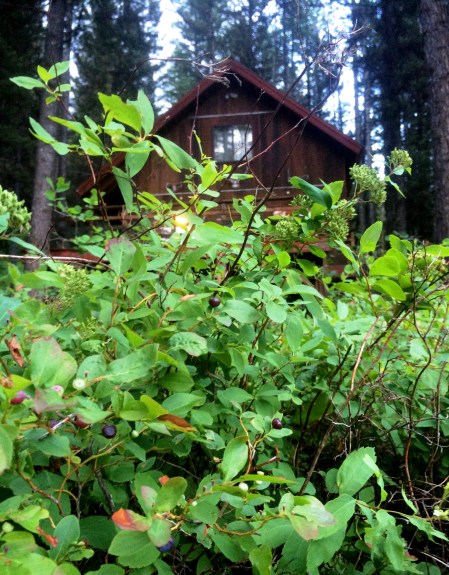
The heat in the Inland Northwest has been brutal this summer, and it has made fishing on my home waters pretty challenging. The reason I like fly fishing, however, is the fact that it requires one’s participation in the wider, non human world–the world that so many call “nature.” And, of course, there is much more to nature than rising fish. For instance, huckleberry bushes surround our cabin and run up the mountain behind it. In fact, the bush pictured below is right next to the spot where I beach the canoe, between the lake and cabin. So, while my mood could be better, after having my fly snubbed by the local cutthroats, turning from the beached canoe toward hundreds of ripe huckleberries is a great consolation.

IMG_1785

I describe fishing and berry picking at my cabin as a form of “participation” in the wider world because they both involve real, physical engagement with the living environment. This engagement blurs the lines between “nature” and myself, which is one of the reasons I try to avoid the former term. It is true that most Americans now live very anthrocentric lives, but, even in urban centers, distinguishing what is “natural” and what is not is a difficult task. Thinking similarly, the 19th century romantic, Henry David Thoreau, actually described huckleberry picking and eating as sort of socializing that takes place between humans and “nature” (see quote below).  Traditional Native American friends, seeing the non-human world as a much more personal place than most of us, leave offerings to or attend ceremonies honoring the plants from which they take berries or other items. All of this explains why, for me, finding those berries upon returning from a fishless paddle around the lake is more meaningful than you might guess. And it doesn’t hurt to get rid of those berries before the bears come looking for them.

Following, you can read Thoreau’s thoughts on huckleberries:

“What means this profusion of berries at this season only? Nature does her best to feed her children, and the broods of birds just matured find plenty to eat now. Every bush and vine does its part and offers a wholesome and palatable diet to the wayfarer. He need not go out of the road to get as many berries as he wants, of various kinds and qualities according as his road leads him over high or low, wooded or open ground: huckleberries of different colors and flavors almost everywhere, the second kind of low blueberry largest in the moist ground, high blueberries with their agreeable acid when his way lies through a swamp, and low blackberries of two or more varieties on almost every sand plan and bank and stone heap.

“Man at length stands in such a relation to Nature as the animals which pluck and eat as they go. The fields and hills are a table constantly spread. Diet drinks, cordials, and wines of all kinds and qualities are bottled up in the skins of countless berries for the refreshment of animals, and they quaff them at every turn. They seem offered to us not so much for food as for sociality, inviting us to a picnic with Nature. We pluck and eat in remembrance of her. It is a sort of sacrament, a communion—the not forbidden fruits, which no serpent tempts us to eat. Slight and innocent savors which relate us to Nature, make us her guests, and entitle us to her regard and protection.”

Henry David Thoreau, Wild Fruits: Thoreaus’s Rediscovered Last Manuscript, ed. Bradley P. Dean (WW Norton & Company, 2001), 52.

IMG_1765

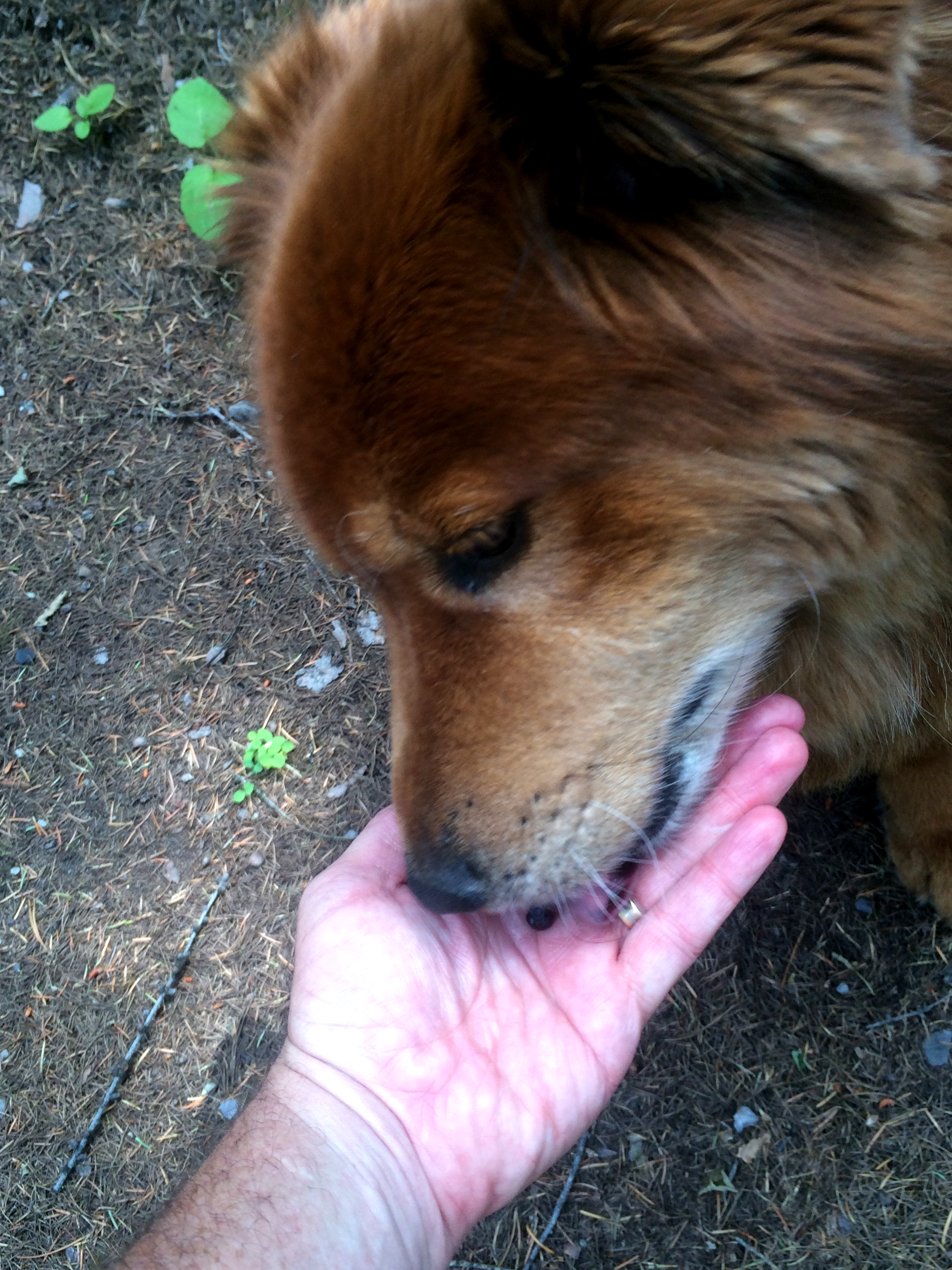
My dog is a big fan of huckleberries too.

Pete Dexter and Norman Maclean

July 8, 2015

A celebration of Norman Maclean’s writings, “In the Footsteps of Norman Maclean: a Literary Festival,” about which I have written previously, will take place this weekend in Seeley Lake, Montana. A few days ago, The Missoulian (Missoula, MT’s mainstream newspaper), interviewed Pete Dexter, who wrote a well-respected profile on Maclean for Esquire in June, 1981. Dexter is among the many speakers who will be featured at the festival this weekend. You can find The Missoulian article here: Novelist Pete Dexter: Maclean put everything on the line with ‘River’.

Call Us Ishmael

May 16, 2015

I write this post late at night, in a boat, at sea. The boat is my brother-in-law’s. He, his sister–my wife, and all their family are from Central Europe. A love of of large waters and all things maritime runs in her family. In her father’s house is proudly displayed an old, official document honoring her great grandfather, a sea captain, for rescuing an Imperial vessel in the Adriatic Sea. Her father, himself, built his own sailboat, after the collapse of Communism, and races it very successfully. And a few years ago, after deciding the Danube River was too small for him and/or his boat, her brother rented a slip in Croatia, and now captains his own boat on the Adriatic.

Transylvania

Transylvania

Romania

Transylvania

Personally, I prefer mountains and clear running streams to massive rivers, lakes that cannot be seen across, and oceans or seas. And in many other ways, we inhabit the world rather differently, aside from the fact that we all love my wife and young daughter immensely. In fact, when visiting Central Europe, I now sometimes leave the family to go fly fishing for trout in Transylvania with Romanian friends. Or, I fish more locally for trout or asp with Hungarian friends.

During our current visit, my wife, and daughter, and I have joined  my brother-in-law and his wife for a trip to Croatia and a few days on their boat. My in-laws, as usual, are kind and generous hosts, and it is amazing to see Dalmatia from the sea instead of from the road.

Zadar, Croatia

Zadar, Croatia

As it happens, I have been reading Herman Melville’s 1851 whaling epic Moby-Dick or, The Whale. I read the fist pages during my late-night train ride to Romania to fly fish, and I have continued to read the book after rejoining family. In those first pages, I came across a long passage of Melville’s that has led me to recognize that I have another love in common with my in-laws, besides that for my wife and daughter. We all love water. Whether that water is small or large, running or still, sweet or saline, we love water. Indeed, in Melville’s words, we see the “key to it all” in “rivers and oceans.” Following is that long passage containing those words.

Here is an artist. He desires to paint you the dreamiest, shadiest, quietest, most enchanting bit of romantic landscape in all the valley of the Saco. What is the chief element he employs? There stand his trees, each with a hollow trunk, as if a hermit and a crucifix were within; and here sleeps his meadow, and there sleep his cattle; and up from yonder cottage goes a sleepy smoke. Deep into distant woodlands winds a mazy way, reaching to overlapping spurs of mountains bathed in their hill- side blue. But though the picture lies thus tranced, and though this pine- tree shakes down its sighs like leaves upon this shepherd’s head, yet all were vain, unless the shepherd’s eye were fixed upon the magic stream before him. Go visit the Prairies in June, when for scores on scores of miles you wade knee- deep among Tiger- lilies— what is the one charm wanting?— Water there is not a drop of water there! Were Niagara but a cataract of sand, would you travel your thousand miles to see it? Why did the poor poet of Tennessee, upon suddenly receiving two handfuls of silver, deliberate whether to buy him a coat, which he sadly needed, or invest his money in a pedestrian trip to Rockaway Beach? Why is almost every robust healthy boy with a robust healthy soul in him, at some time or other crazy to go to sea? Why upon your first voyage as a passenger, did you yourself feel such a mystical vibration, when first told that you and your ship were now out of sight of land? Why did the old Persians hold the sea holy? Why did the Greeks give it a separate deity, and own brother of Jove? Surely all this is not without meaning. And still deeper the meaning of that story of Narcissus, who because he could not grasp the tormenting, mild image he saw in the fountain, plunged into it and was drowned. But that same image, we ourselves see in all rivers and oceans. It is the image of the ungraspable phantom of life; and this is the key to it all.

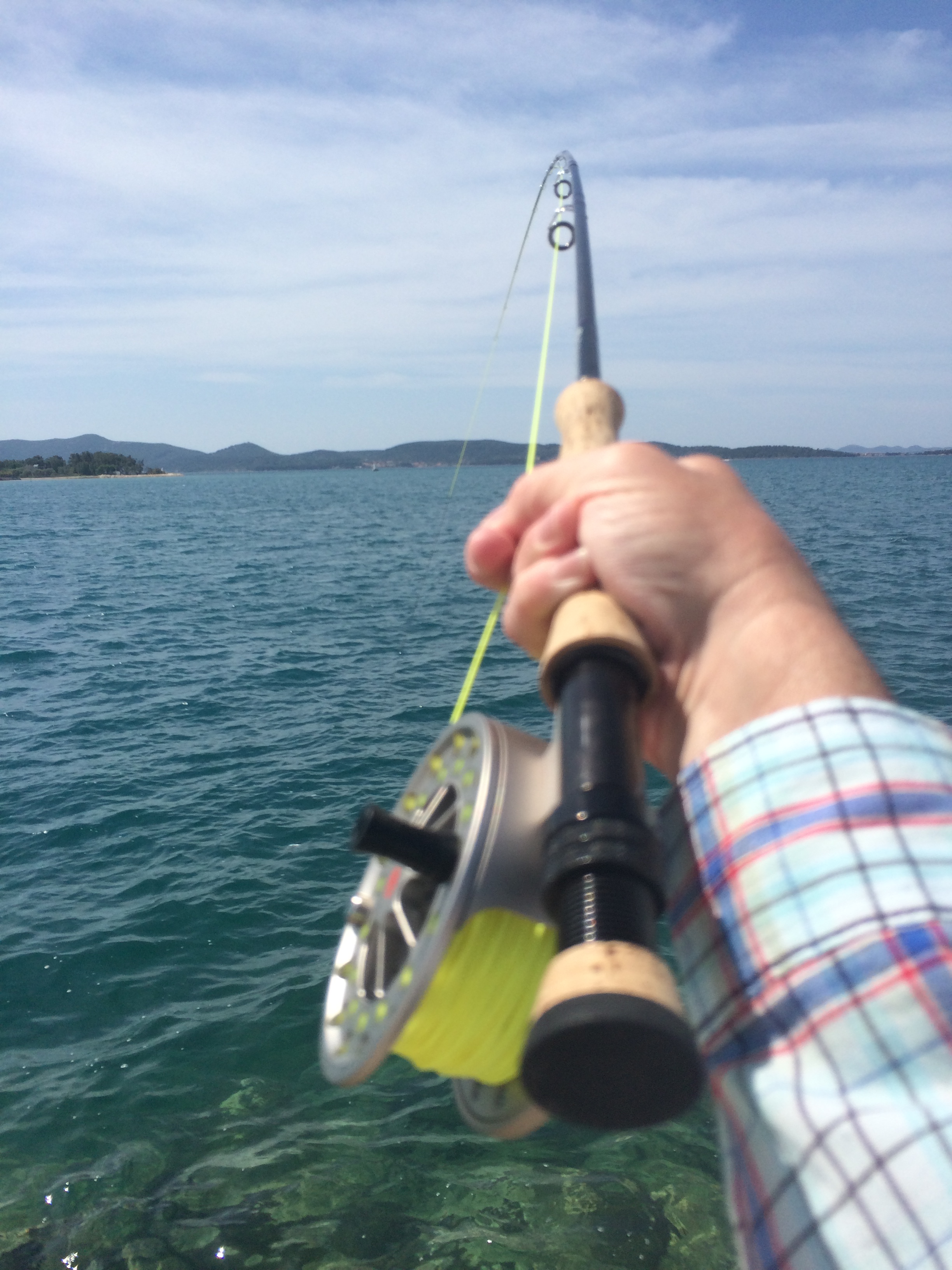
Fly fishing for Amberjacks in the Adriatic Sea

Fly fishing for Amberjacks in the Adriatic Sea

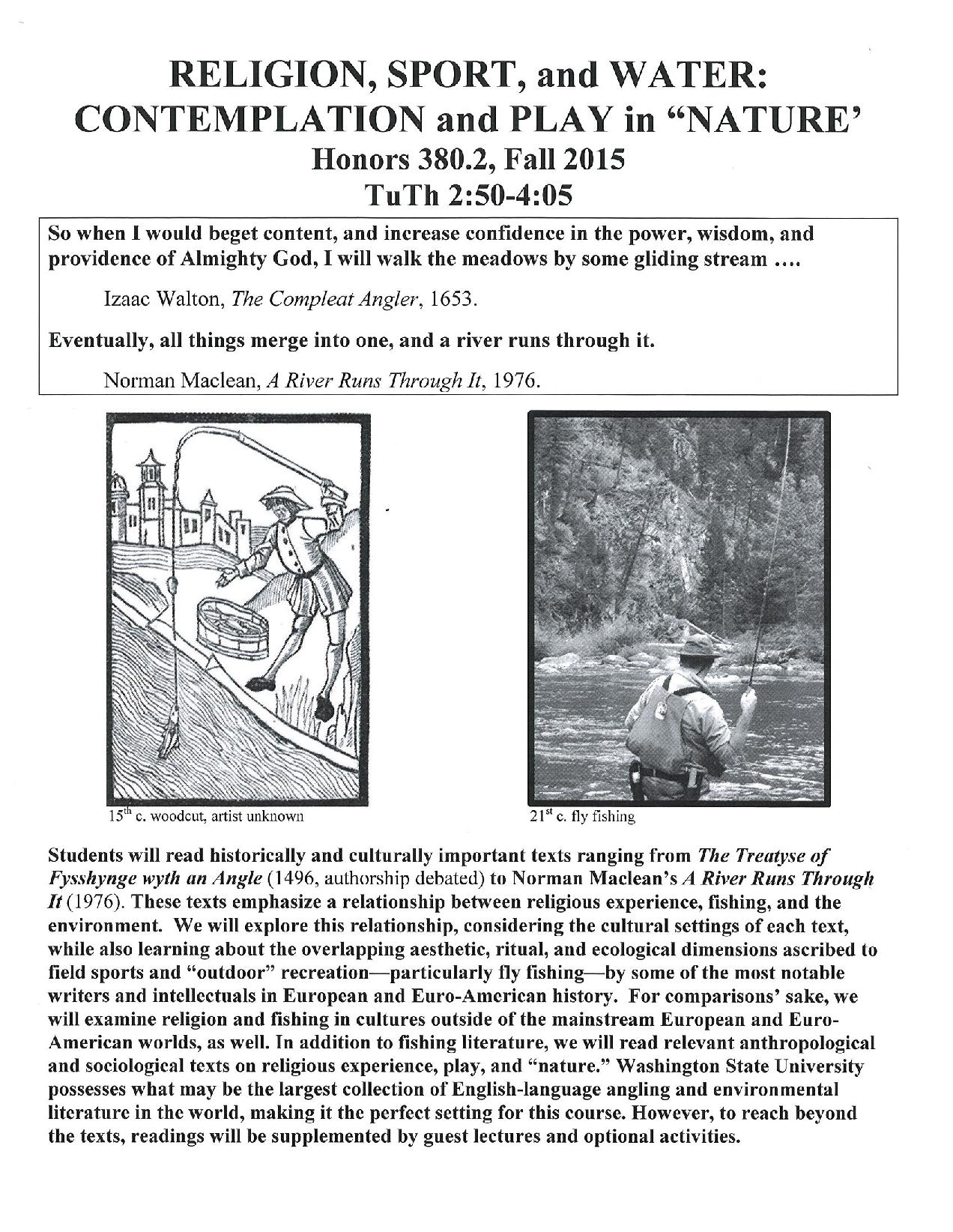
My Fall 2015 “Religion, Sport, and Water” University Course

April 13, 2015

0046_150413144540_001-page-001

“Fog Makes the Small River Smaller,” by Gary Metras

April 12, 2015
Fishing on Letort

Fly fishing the LeTort Spring Run, PA, 2006. Photo by John Bechtel III.

There is nothing quite like greeting the day from the bank of a river still covered in fog. Such a moment becomes essentially magical, when it occurs in a place that remains more the dominion of animals than of man. Massachusetts writer and angler Gary Metras captures this magic in his poem, “Fog Makes the Small River Smaller.” It is included in his collection titled Two Bloods: Fly Fishing Poems, published by Split Oak Press in 2010. I am glad to have been directed toward the book, and I strongly recommend it. While I use the term “magic” to describe the feeling captured in the following poem, it is a sort of magic that arises from the very real, but complex and hardly known physical world around us. If you can relate to this earthy magic, then Mr.Metras’ writings will appeal to you. And know that he has published many texts, besides the one cited here.

Fog makes the small river smaller.
Sunrise has little effect–
Strands of white weave

through the overwhelming gray.
A fly fisher stands in the flow
a few feet from shore.

He dresses his line with
the misty wall surrounding him.
A slight splash upstream. Another.

Deer, not bear. He smiles, thinking:
If the air were clear as the water,
this would be a postcard and a story.

Then he imagines his legs as delicate
as a deer’s testing unseen rocks
for the slip that means

breakage, that means breath of coyote
on the tensed neck hair. All that
for a few sips of the new morning.

Another splash. A twig cracks.
Then, silence except the soft spill of river.
He ties on something dark and woolly,

strips line from the reel, throws it
into the air, into the wall of fog,
a sliver of green line slicing the bloodless gray.

It fall out there, beyond sight,
with hardly a sound.
He strips more line, hauls it back

over his head, pauses without thought,
and casts arm and line and fly
into the unknown.

The “Hugh Glass” Fly

March 23, 2015

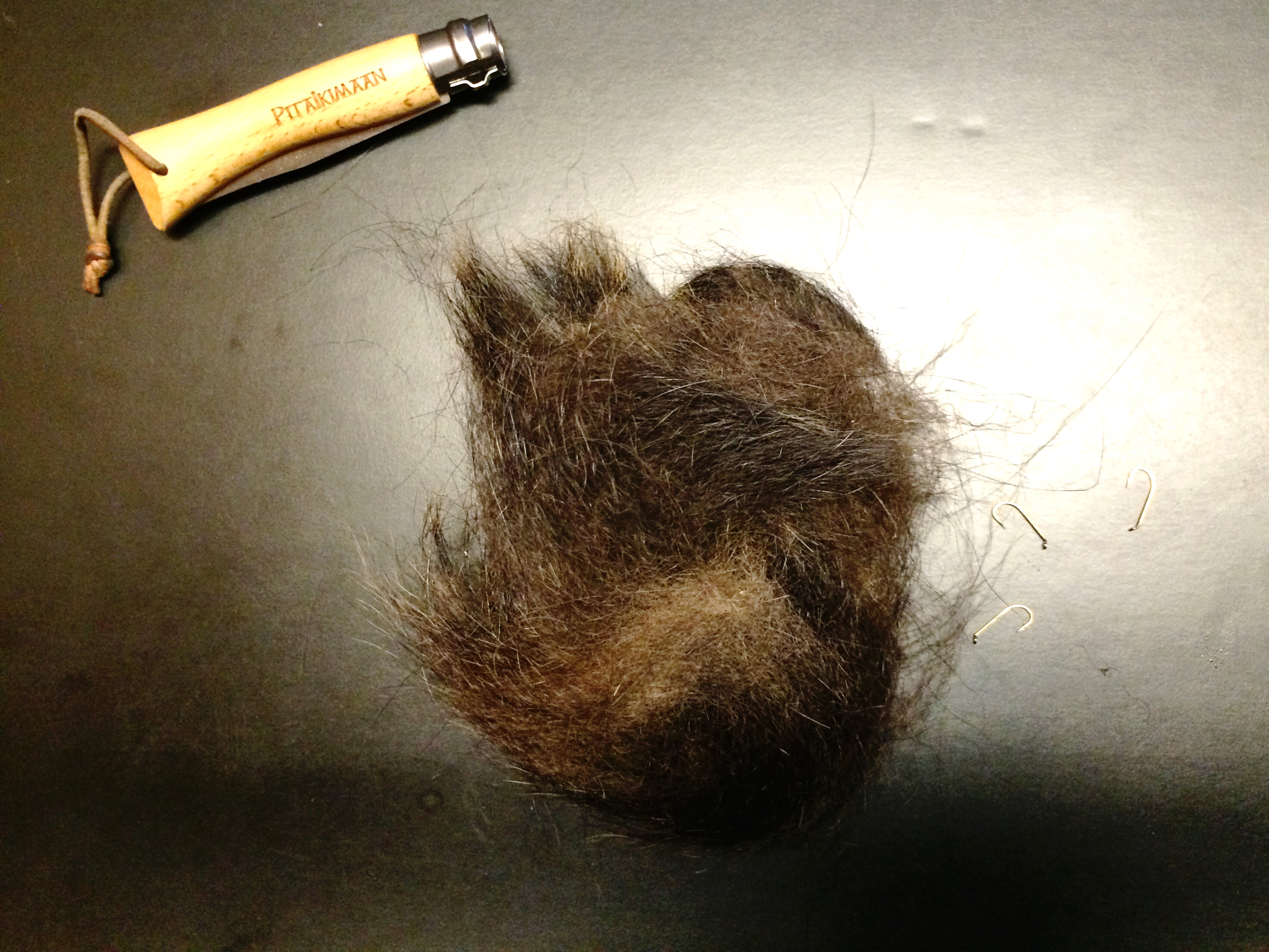
I have some grizzly bear (Ursus arctos horribilis) fur, and I’d like to tie a few nice flies for the person who gave it to me. I had thought about tying some Adams dry flies, using the lighter under fur for dubbing and the guard hairs for tails. Obviously, the grizzly hackle normally used on Adams flies would  fit the theme nicely. I would love to hear some other suggestions, however.

I might also tie a variation of the “black bear red but” salmon fly. I’ll call it the “Hugh Glass.” This name comes to mind because I am reading Missoula, Montana author and diplomat Michael Punke’s The Revenant: A Novel of Revenge. In the book, Punke describes the mauling of Glass by a grizzly on the Grand River, in present-day South Dakota, and the events that followed. Glass’s companions left him for dead after his encounter with the bear, and they took his prized rifle with them. The badly wounded Glass famously crawled approximately 100 miles to the Cheyenne River. He then floated downstream to Fort Kiowa, on the Missouri. After recovering physically, he set out after those who had abandoned him.

IMG_1461

New Discovery of Early Fishing Text by Monk

March 13, 2015

Word has been circulating of an early angling text discovered by Maggs Bros. Ltd. of London. The text takes the form of notes bound in the back of a prayer book belonging to a Benedictine monk in Austria. The notes possibly date to 1450’s or 1460’s. The purpose of the notes are not clear, but they contain information on artificial flies and fishing. If the attributed dates are correct, the notes predate “The Treatyse of Fysshynge wyth an Angle.”

As mentioned in the Game Fisher’s Diary episode below, the notes are similar to the text identified as Tegernseer Angel- und Fishbucklein, dating to approximately 1500. This latter text was probably created as a guide to fishers employed by Benedictine monks of Tegernsee Abbey, in Bavaria, to procure meat. You can learn more about the newly discovered text by watching linked video; it features a visit by Rae Borras to Maggs, where he discusses the text with Jonathan Reilly. The text, by the way, will cost you in the neighborhood of £125,000. (currently $184,264.22) to purchase.

“The Angler’s” Art

March 2, 2015

IMG_447045718

This picture accompanies Washington Irving’s “The Angler.” Drawn by California artist Julian Rix, best known for his landscape paintings, it is titled “To Haunt the Sides of Pastoral Streams, With Angle Rods in Hand.” I came across it in Volume One of the The Sketch Book of Geoffrey Crayon, Gent., Van Tassel Edition, published by Putnam in 1899 (the first, collected version of The Sketch Book appeared in 1820).

IMG_447046027

The illustration suits Irving’s story well. And it pays tribute to the values expressed by Walton in The Compleat Angler, which was Irving’s intention in writing “The Angler” (moreover, the drawing is well titled, since it was published in the same volume that included “The Legend of Sleepy Hallow”). If you have not browsed through a complete, two volume version of The Sketch Book, I recommend you look at this one, both for the writing and for the illustrations.