Author Archive

The Road

June 9, 2012


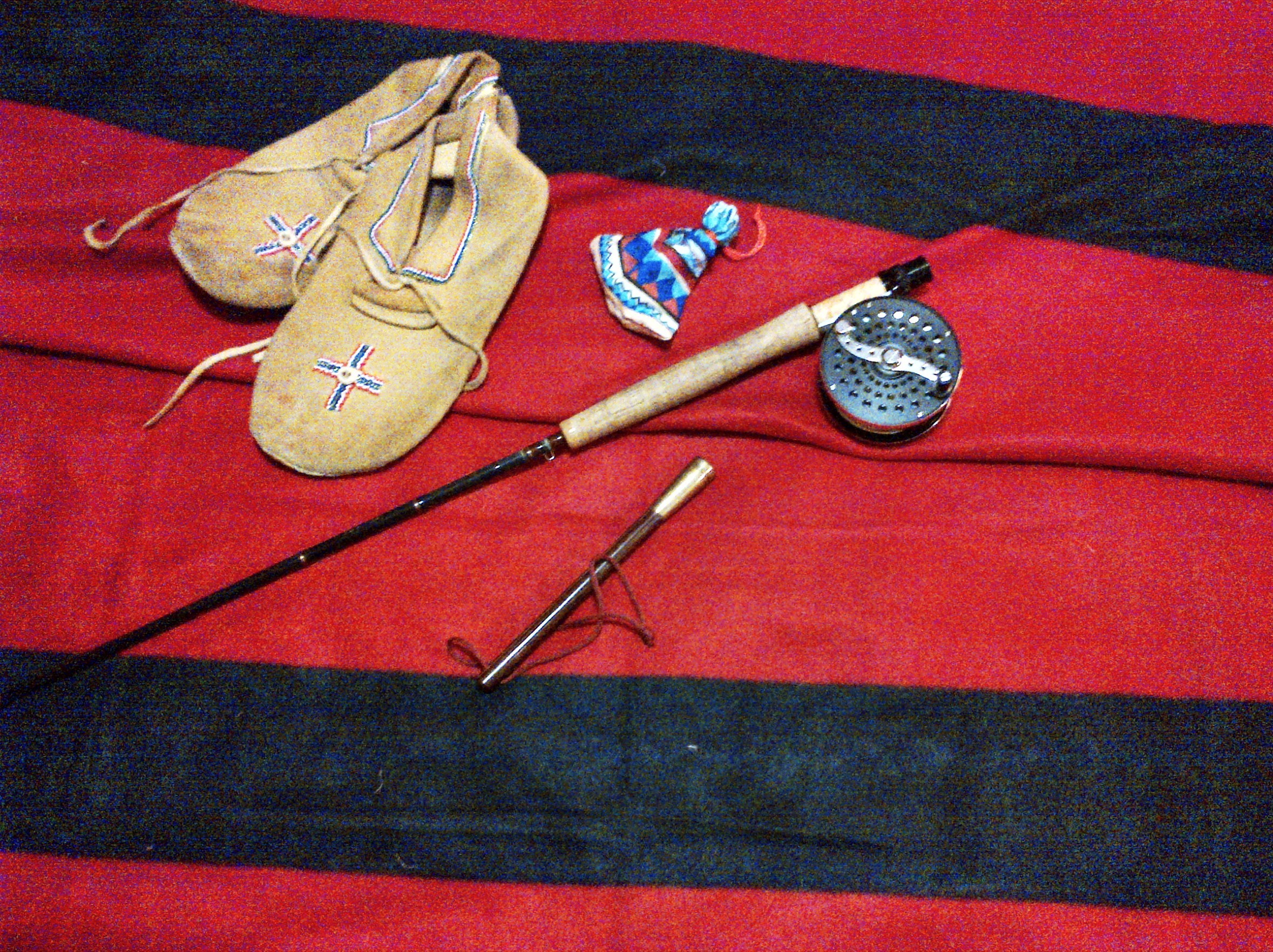
My life as a somewhat rogue academic and obsessed fly fisher is hard to describe.  In fact, some of it really can’t be described, as my academic work involves protected cultural knowledge.  This picture, however, sort of sums it all up.  It was taken in my favorite Canadian motel room, a few days ago.

The East and Montana: Norman Maclean’s Views … and Mine

May 24, 2012

 Those who know me and who are also familiar with author Norman Maclean understand that Maclean’s writings resonate strongly with me.  This is because my personal and professional lives parallel Maclean’s in a few small ways, the same part of Montana that was important to him is tremendously important to me, and some of my views of religion seem to echo his. 

Maclean never made his views of religion particularly clear.  An academic mentor of mine was a colleague of Maclean’s at the University of Chicago.  This mentor, a well-known scholar of religion, told me that when he was with Maclean, the latter never really discussed religion and certainly never spoke about fishing or nature in mystical terms.  Indeed, this mentor said that he and many other colleagues were surprised to discover that Maclean was so interested in such topics, after A River Runs through It and Other Stories was published in 1976.

A short 1986 interview by Nicholas O’Connell with Maclean, however, adds a bit definition to Maclean’s views of religion.  And, as vague as his statement is, it sums up my views as well.

I feel I have company about me when I’m alone in the woods.  I feel they’re beautiful.  They’re a kind of religion to me.  My dearest friends are also beautiful.  My wife was and infinitely beautiful thing.  I certainly feel there are men and women whom I have known and still know who are really above what one could think was humanly possible.  They and the mountains are for me “what passeth human understanding.”[1]

Like Maclean, I have followed an academic path—one that has taken me to some completely unforeseen places, geographically and otherwise.  With regard to my geographic landing points, I am often asked, upon telling people that I am originally from Montana, what I am doing in the East.  Drawing again from O’Connell’s interview, I find that Maclean provides a reasonably good answer to this question for me.  I should note, however, that there are many more options for the academician in Montana now than there were when Maclean left for Chicago in the 1920s.  On the other hand, today’s academic job market is much more competitive than it was in Maclean’s time.  Regardless, here are Maclean’s thoughts about having one foot in Montana and the other in the East:

Very, very early I formed this rough outline in my mind of this life I have led.  I love Montana with almost a passion, but I saw I couldn’t live here really if I was going to be a teacher;  I’d have to be degraded and submit to views that I couldn’t accept.  I felt that this was imposed upon us from the outside—that wasn’t our true nature.  I tried to figure out a way to continue this two-world thing that I had begun by going East.

And that’s probably the chief reason I quit teaching and then went back to it.  I figured teaching probably was the only way I could live in the two worlds.  I could teach in the East, and that would give me a chance to come back a fair number of summers and retain a permanent footing in a homeland that I knew so well.  I thought that out as I was doing it.  I just didn’t stumble on the life I have lived.[2]

Decades later, I’m in that spot where I too have quit teaching and am about to return to it.  My quitting allowed me to reduce my “worlds” from three to two, since my wife and I were actually working in different eastern states.  Now, we’re together, and we mostly inhabit one eastern world.  Happily, we also still spend time in Montana.  In fact, we’ll be heading there in a few days.  This, of course, is what brought Maclean to my mind in the first place.  Soon, I’ll be fly fishing my “home waters” in the Big Blackfoot River drainage.  This is where Maclean’s early home waters were too.


[1] Nicholas O’Connell, “Interview with Norman Maclean,” in The Norman Maclean Reader: Essays, Letters, and Other Writings by the Author of A River Runs through It, ed. O. Alan Weltzein, 180 (Chicago: The University of Chicago Press, 2008).

[2] Ibid., 176.

Salmonstock: 3 Days of Fish, Fun, and Music

May 19, 2012

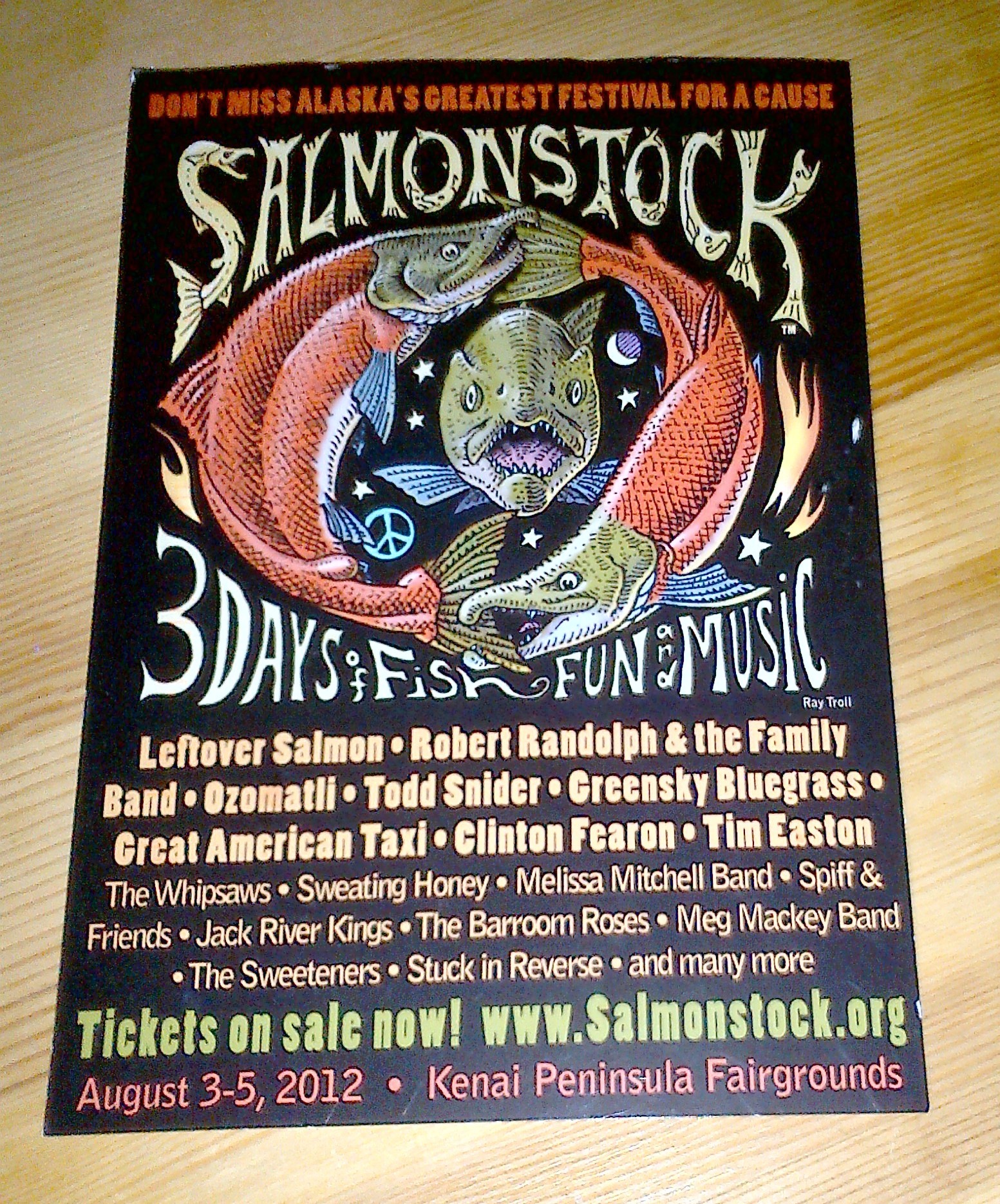
This event could be a lot of fun.  Held August 3-5, 2012, in Ninilchik, AK, Salmonstock is advertised as “a celebration of Wild Alaska Salmon and the people who depend upon them.”  Attendees can enjoy three days of fly fishing on the Kenai Peninsula and some great music (trust me), all while benefiting an important cause.  For more information, visit www.Salmonstock.org.

Fly Reel Music at Silver Creek Outfitters

May 17, 2012

Four classical musicians perform music, using spring and pawl fly reels from Hardy’s “Classic Line,” at Silver Creek Outfitters.  It looks like the instruments include a Lightweight and several Marquis reels.

Many a fly fisher has been seduced by the unmistakable sound of Hardy reels.  I am one of them.  Probably many more fly fishers have been angered to hear a Hardy reel up the stream from them, screaming each time some other guy catches a feisty fish.  What I know for certain is that my wife makes me disengage the pawl on my reel whenever I am cleaning or changing lines at home.  I guess she has a tin ear.


Hoagy B. Carmichael, Dr. George Parker Holden, and Fishing amidst “Riches and Poverty.”

April 23, 2012

Fresh or sweet water angling is one of the most ancient, cleanest, most engrossing, enduring, healthful, and accessible recreations available in this world of mingled riches and poverty, pleasure and pain . . . and it may be indulged in till one is well advanced toward decrepitude, and it forestalls decrepitude in many cases.

Dr. George Parker Holden, as quoted in Hoagy B. Carmichael, 8 by Carmichael (North Salem: Anesha Publishing, 2010), 39-40.

Image

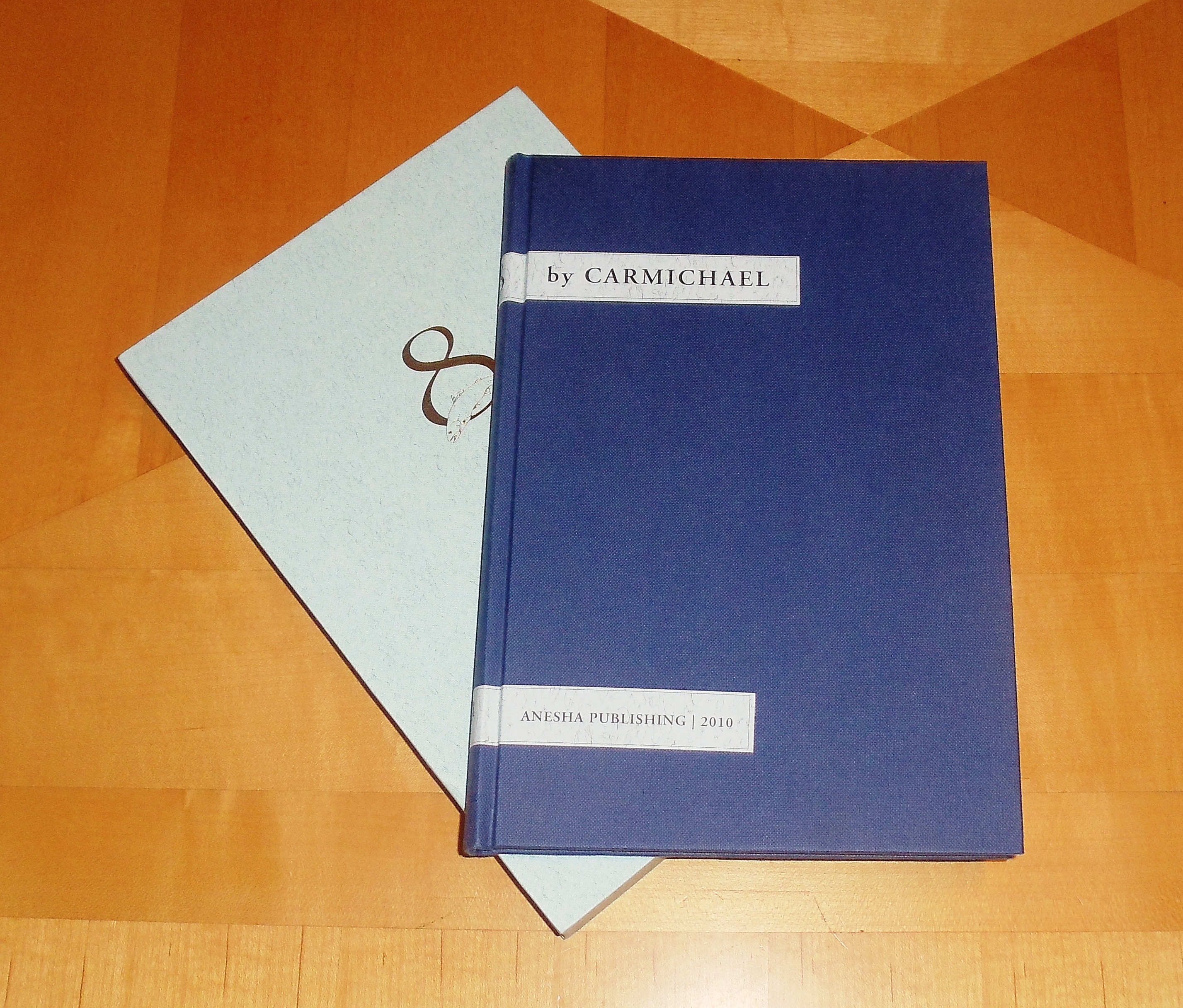
With a bit of unexpected down time today, I embraced the long-awaited opportunity to read Hoagy B. Carmichael’s 8 by Carmichael.  This 2010 book, published jointly by Anesha Publishing and The Whitefish Press, contains several pieces published previously by Carmichael.  I was particularly happy to find “Vince,” an essay about Carmichael’s friendship with Pennsylvania dry fly master and bamboo rod builder, Vincent Marinaro (who was not widely known for such friendly relationships).  This particular piece was published earlier as the introduction to Bill Harms’ and Tom Whittle’s Split and Glued by Vincent C. Marinaro.

Carmichael offers profiles of several other notable American fly fishing personalities, who played important roles in the development of the sport.  Some of the profiles draw from his personal relationships to these individuals; others draw from historical sources. The profile of Dr. George Parker Holden is particular interesting.  Holden authored The Idyl of the Split-Bamboo in 1920, which was perhaps the best known text dealing explicitly with bamboo rods before Carmichael published his own A Master’s guide to Building a Bamboo Fly Rod in 1977 with Everett Garrison.

The epigraph to this post is a quote from Holden, which I found in 8 by Carmichael.  What strikes me about the quote is Holden’s implication that fly fishing can be enjoyed regardless of one’s social station or even in spite of it.  This, I think, echoes the arguments made centuries ago by the author of A Treatyse of Fyshynge with an Angle (1496) and even by Isaac Walton in The Compleat Angler (1653).

In most cases, fishing requires us to visit those places away from the cultured or humanly “cultivated” world.  That is, we are required to visit “natural” places that are more-or-less protected or reclaimed from the most ecologically damaging aspects of human culture.  These visits also allow us to set aside the less physical, but equally damaging concerns associated with culture, such as the concerns for money, status, etc.  No doubt, relief from the stress that usually accompanies these concerns is one of the things that makes fly fishing the spiritually and physically healthy activity that so many authors, including Holden, suggest that it is.

In any case, 8 by Carmichael is most certainly worth a read.  It happens to be a beautifully bound book, as well.  I hope that you’ll be able to escape your everyday world just long enough to enjoy it sometime, if you haven’t already.

Oh, and you might just check out some of the music and acting of Hoagy Carmichael, Sr., the fly fishing author’s famous father.  To do so all at once, and to engage your inner fly fisher as well, watch the wonderful 1944 film To Have and Have Not, with Humphrey Bogart and Lauren Bacall (loosely based upon Ernest Hemingway’s novel and scripted in part by William Faulkner).  Bogart, in the role of a fishing guide, complaining about a client destroying his Hardy reel is a special moment in film history, for the fishing obsessed.  You can see all three actors here:

Norman Maclean and Rejection

April 16, 2012

I have to share this wonderful letter from Norman Maclean to Charles Elliot, of publishers Alfred A. Knopf, Inc.  Elliot wrote Maclean, after the massive success of A River Runs through It and Other Stories (University of Chicago Press, 1976), trying to solicit Maclean’s next manuscript.  Maclean’s scathing but humorous response to Elliot is influenced by the fact that  Alfred E. Knopf rejected the earlier book.

Maclean’s response: Letters of Note: The end of the world of books.

The letter was posted by Shaun Usher at his website, Letters of Note:  Correspondence deserving of a Wider Audience.  Thanks to Erin Block, of Mysteries Internal for pointing it out.

Music, Memoirs, and Fly Fishing: Clapton

April 14, 2012

Many fans of legendary guitarist and songwriter Eric Clapton know that he is a fly fisher as well.  On a recent drive to Pennsylvania, to attend the 64th Annual Flyfishers’ Club of Harrisburg Dinner, I listened to his autobiography through my iPod.  The book is titled simply, Clapton: The Autobiography (Broadway, 2007), and according to a review in the The New York Times it was written by Clapton himself.  In the book, Clapton describes his life, from childhood, through his tenures with the Yardbirds, Cream, and other bands, and into his years as a solo musician and family man.

Despite his huge and very early success as a musician, Clapton’s personal life was a shambles for many years; it was filled with more obstacles and tragedies than most of us have or will experience.  Clapton writes, for instance, with great candour about his abuse of heroin and, later, alcohol.  He details the many ways in which he failed himself and others during his years of abuse.  Of course, he also discusses his recovery from drug and alcohol addiction and his present, ongoing dedication to helping others toward recovery.

Clapton explains that coarse fishing was the one thing, besides playing guitar, that he felt he was good at, prior to his years of sobriety.  Therefore, he writes, it was after he fell, drunk, on top of some cherished coarse fishing poles, that he realized he must finally achieve and truly maintain sobriety.

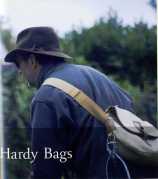
In the book, Clapton mentions the great passion he eventually found for fly fishing.  He notes that he was introduced to the sport by fellow musician and founder of Procol Harum, Gary Brooker.  Outside of his book, Clapton’s passion for fly fishing is evidenced by his uncredited appearances in Hardy catalogues.  The picture below is taken from the 2007 UK/international edition (click on the picture to go to the Hardy web page featuring their fishing bags).

Clapton has made other public appearances as a fisherman as well.  For instance, you can see him fishing the River Test, on the UK television program, Botham on the fly.  The video is made available by the Discovery Channel International .

While Clapton does not write extensively about fishing in his autobiography, the book is still worth the read (or listen, if you’re stuck in a car as I was) for any fan of his music.  No doubt, if you have ever witnessed drug or alcohol abuse, the book will resonate with you.  Moreover, if you’re like me, it may force you to think about the relationship that may exist between your obsession with all things fly fishing and more traditionally recognized addictions.

Click the image of Clapton’s book to be taken to his publisher’s site.  And, below, watch a great rendition of Clapton’s “Layla,” performed by him and Mark Knopfler.

The Web, Images, and Copyright Protection: The View of a Fly Fishing Publisher

April 5, 2012

Dr. Todd Larson, history professor and founder of Whitefish Press (publisher of numerous fly fishing titles) addresses the controversy surrounding Pinterest in his latest blog post. Visit his blog, Fishing for History: The History of Fishing and Fishing Tackle and read his thoughts and the results of his informal research concerning Pinterest in the 4/5/12 post, “A Pinterest-ing Problem: Pinterest, Copyright, and Your Fishing and Tackle Photos.”  As many of us interested in classic tackle spend a lot of time looking at or taking photos of rare items, the issue of copyright is an important one.  Of course, it’s an important issue in all dimensions of the “web.”   You’ll notice, by the way, that I simply provide a link to Larson’s post, rather than reblogging the post itself.

Fly Fishing Literature, as enjoyed by Parents and Child

March 24, 2012


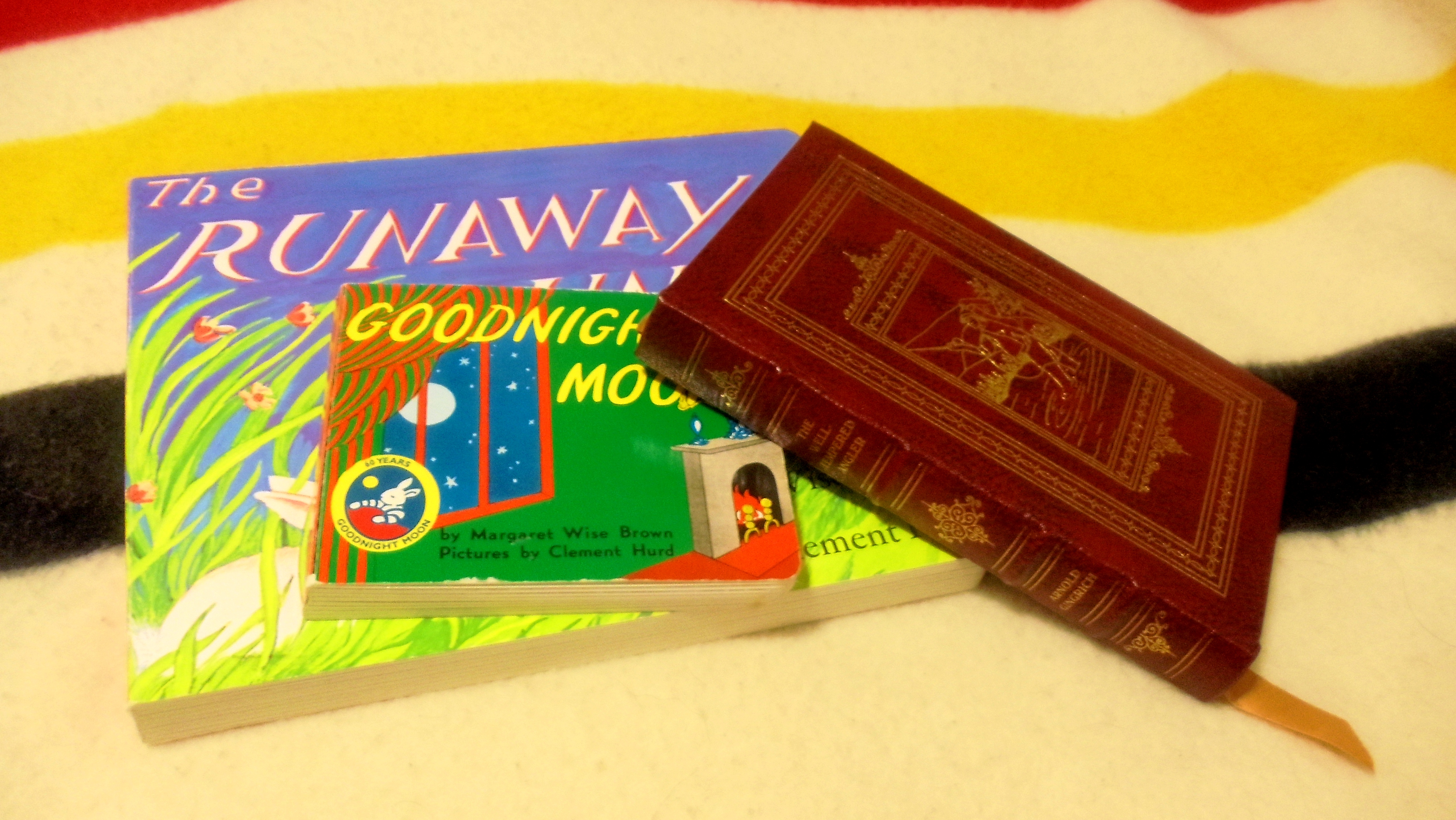
The Runaway Bunny, Goodnight Moon, and The Easton edition of The Well-Tempered Angler.

Each night, my wife and I enjoy reading books, telling stories, and singing songs to our daughter before she goes to sleep.  Later on, we often read to each other, too.

Our daughter tends to favor “big” books.  That is, books that will take a long time to read and allow her to stay up just a little bit longer.  Fortunately, she has a pretty great selection of books.  One of her “big” books is The Runaway Bunny, authored by Margaret Wise Brown and illustrated by Clement Hurd and first published in 1940 (and continually in print since).  Wise Brown and Hurd also collaborated on a later, better known book, Goodnight Moon (1947).   In this second book, there are some interesting pictorial allusions to The Runaway Bunny.

I am always happy when our daughter wants us to read The Runaway Bunny.  It is a touching story about a “little bunny,” who wants to run away from his mother.  His mother insists that she will follow him everywhere, always bringing him back to her.  “Little bunny finally says to his mother, “Shucks, …  I might just as well stay where I am and be your little bunny.”  It is a sweet story, and it certainly has greater depth than the average story written for children today.

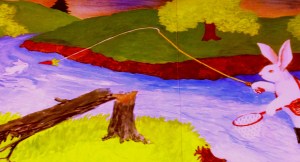
What interests me most about The Runaway Bunny, however, is that little bunny, in the course of the short narrative, decides that he will “become a fish in a trout stream” and swim away from his mother (which, perhaps, displays some influence from Celtic mythology).  To this, his mother responds, “I will become a fisherman and I will fish for you.”  Below, you can see the illustration of little bunny swimming with the trout.  Following this page and the next, there is a full-color picture of his mother fly fishing for him with a carrot “fly.”  Great stuff.

After my daughter falls asleep, and after my wife and I go to bed and finish reading to each other, I often pull out another book.  Often, it is a fly fishing book.  As much as I love Runaway Bunny, though, I always turn toward something more adult.  Not infrequently, I reread Arnold Gingrich’s The Well-Tempered Angler (1965).  Gingrich was the founding editor of Esquire.  In his magazine’s pages, Gingrich published pieces by authors who would eventually be considered among America’s greatest.  Ernest Hemingway is just one example.  I point this out simply to indicate that  Gingrich understood great writing, and he was a pretty darn good writer himself.  I might add, too, that his book, The Fishing in Print: A Guided Tour through Five Centuries of Angling Literature (1974), is by far the most extensive, annotated bibliography of fishing literature ever published.

If you have a young child, be sure to share The Runaway Bunny with her or him.  And, if you love fishing literature yourself, Gingrich’s The Well-Tempered Angler is a must read.  He wrote amusing, compelling essays about fly fishing long before the likes of John Gierach put pen to paper (or finger to key).  Finally, if you happen to be a parent and a fly fisher, well, you might consider both books.
Like Father, like Daughter

March 13, 2012

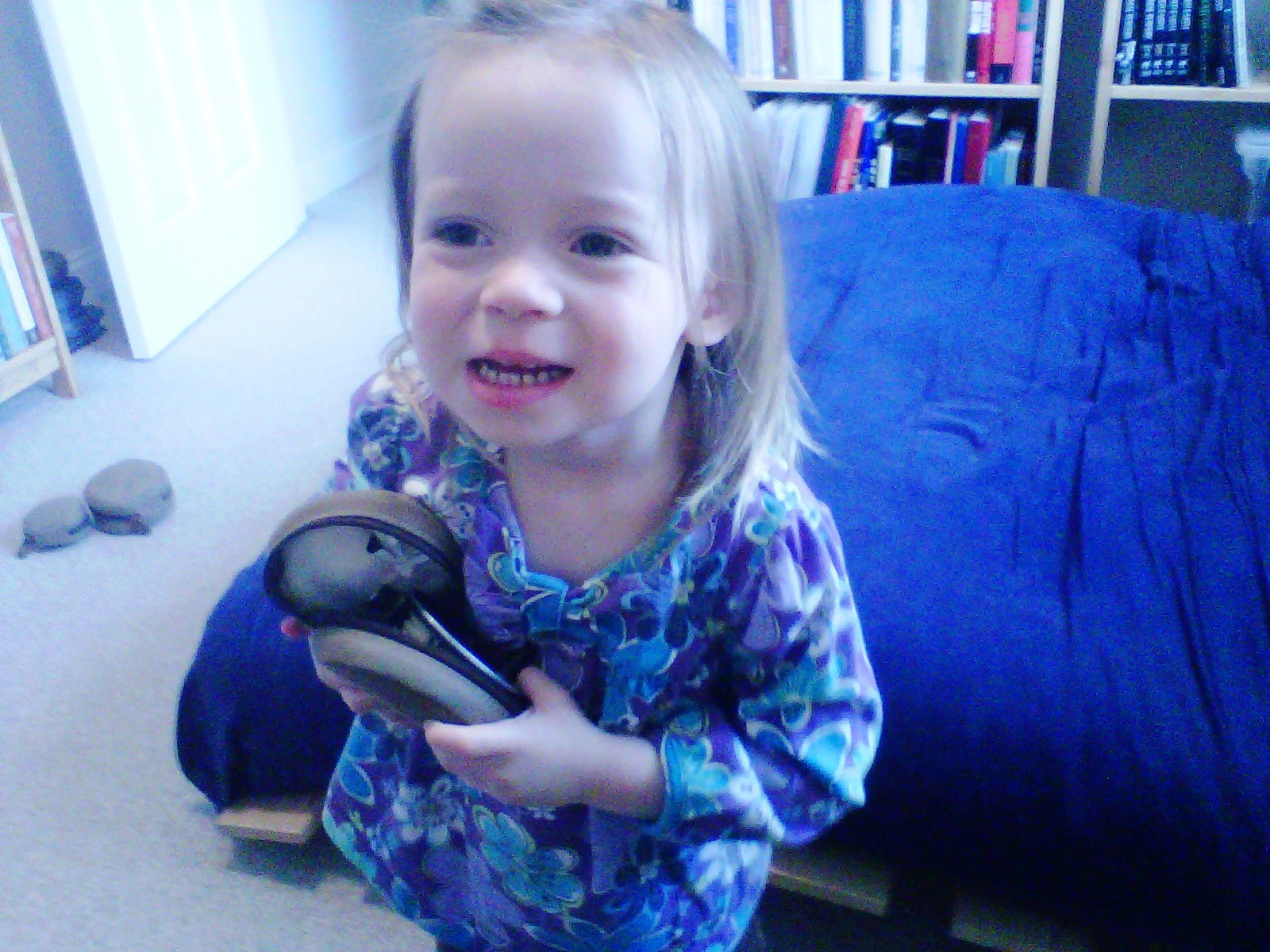
My daughter loves classic fly reels almost as much as I do.  Whenever she’s let loose in my office, she grabs a few (notice them strewn on the floor). I can’t wait until she is ready to cast a fly.