Archive for the ‘Uncategorized’ Category

Hardy’s Diamond Jubilee Perfect Fly Reel

February 8, 2012


Hardy’s “Perfect” is a legendary fly reel.  Brass versions were being marketed by 1890 (Jess Miller, The Dunkeld Collection, 6), and several versions are still being produced today in Hardy’s Alnwick, England factory.  The plate-wind reel with internal ball bearings has given birth to several other Hardy reels, and it has inspired the production of reels from many other manufacturers as well.  It is one of the reels approved of by Frederick M. Halford (b 1844, d 1914), the famous “dry-fly purist,”  who was notoriously rigid in his recommendations of fishing tackle and technique.  In his preface to 1919’s The Dry Fly Man’s Handbook, he offers descriptions of the reel provided by Mr. J.J. Hardy (then managing director of Hardy Brothers, Ltd.), in “whose judgement and bona-fides” he has “full confidence.” (1).  Halford quotes J.J. Hardy as saying, “Those who have once used Hardy’s ‘Perfect’ reels with ball-bearings, regulating check and line guards, which can be dismounted in a minute without the use of any tools, would hardy be satisfied to go back to the older form, or indeed any reel which requires a tool chest and some knowledge of mechanics, before it can be dismounted” (26).  Apparently, J.J. Hardy was right, since the Perfect remains in production.

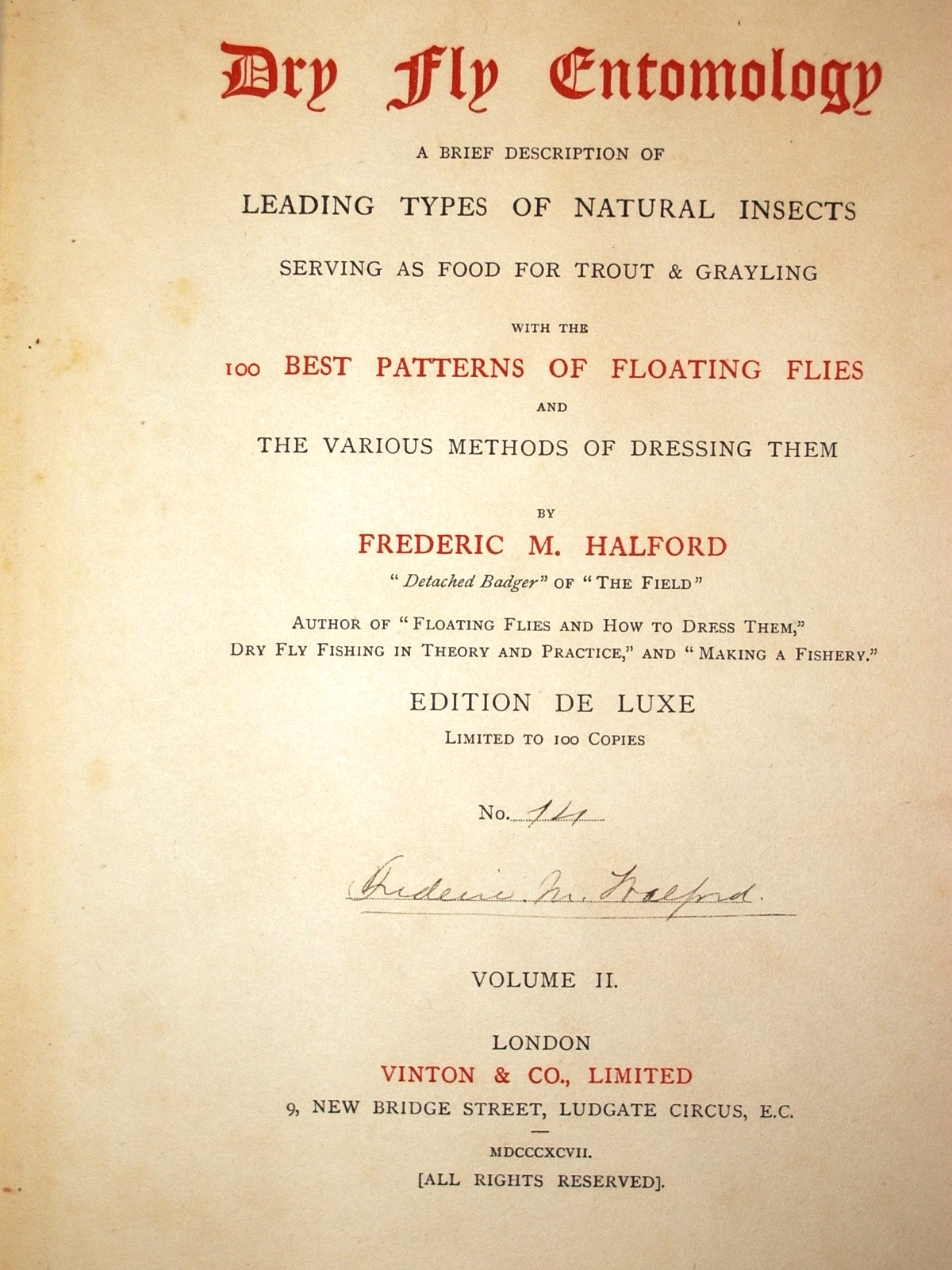
The first edition of Halford’s Dry Fly Entomology.
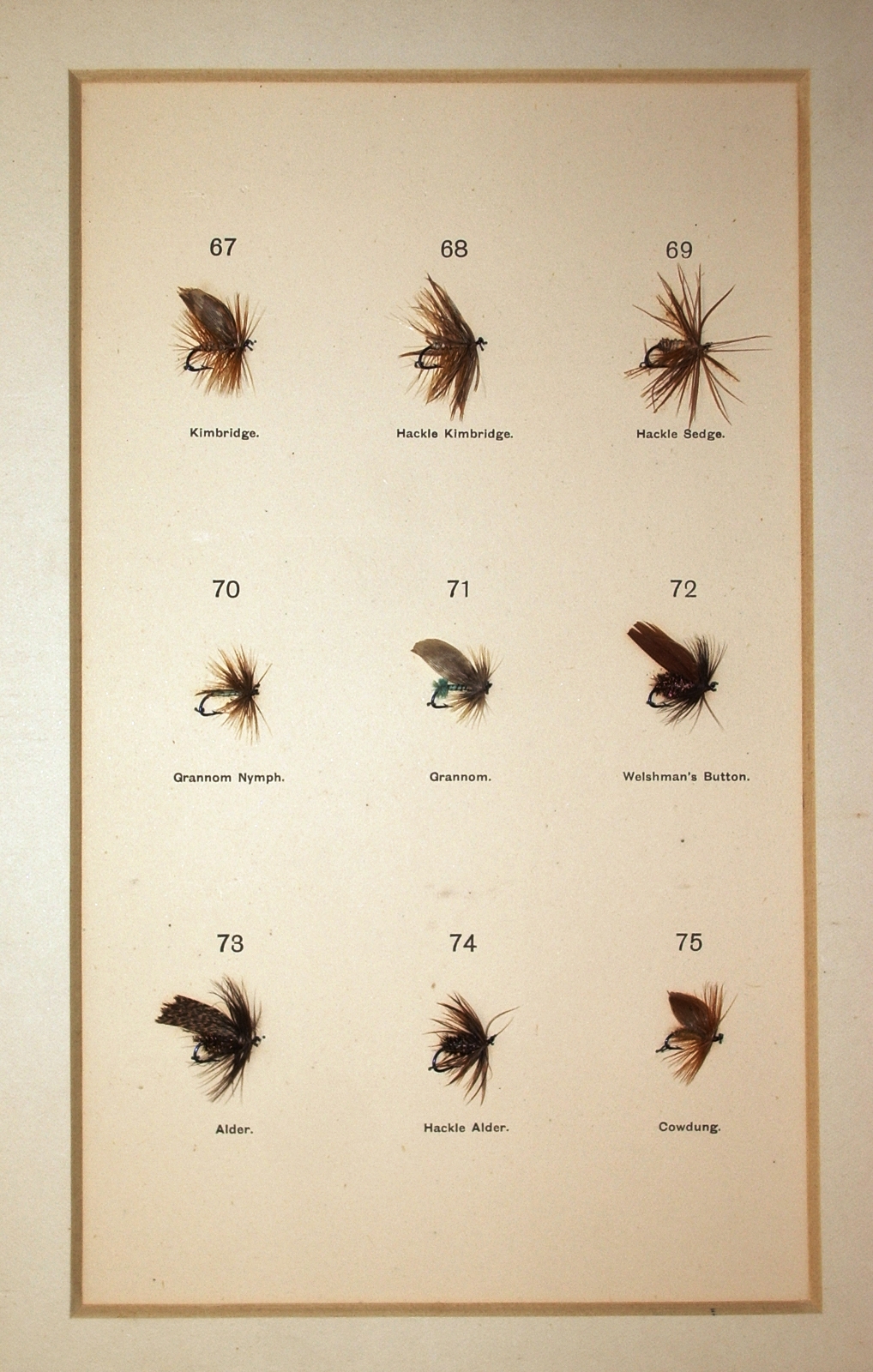
A plate of actual flies, included in the Dry Fly Entomology
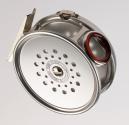
The latest version of the Perfect to be released by Hardy is the Diamond Jubilee Reel, made to celebrate Queen Elizabeth II’s 60th year on the throne.  On Hardy’s website, the reel is described as, “One of a Limited Edition of 250 reels commemorating the Queen’s Diamond Jubilee, the 140th anniversary of Hardy Bros., and marking 100 years since the introduction of the ‘1912 pattern check’.”  Hardy USA President Jim Murphy tells me the reel will retail for $2,400.00.  All 250 reels, however, have already been claimed.
 
In the above pictures, notice the strapped tensioner and famous rod-in-hand logo.  According to Hardy’s 2011 Fly Fishing Catalogue, the latter is being reintroduced to the made-in-England “Hardy Bros” range (formerly the “Heritage” range).  You can read more about the Diamond Jubilee Reel here, on Hardy’s website. 
 

Me, in front of a display at Hardy's Alnwick, England headquarters.

Best Book Subtitle Ever

January 30, 2012

While compiling a research bibliography of early works on fly fishing, I came across this book: The Whole Art of Fishing: Being a Collection and Improvement of All that has been Written upon this Subject. London: Edmund Crull, 1714.

Surely, this book has the best subtitle ever conceived.  Perhaps my next book will be something like The Academic Study of Religion: Being a Collection and Improvement of All that has been Written upon this Subject. Or maybe Fly Fishing: Being a Collection and Improvement of All that has been Written upon this Subject.  Or even Life: Being a Collection and Improvement of All that has been Written upon this Subject. We’ll see.

Inspector Foyle, G.E.M Skues, and Hell

January 20, 2012

This evening, my wife and I were watching an old episode of Foyle’s War. The British mystery series, set during the Second World War and focusing upon the crime-solving exploits of Detective Chief Inspector Foyle of the Hastings Police Department, first aired in England in 2002. In the United States, it airs on PBS as part of Masterpiece Mystery.

In the program, Foyle is depicted as a rather serious man and dedicated detective. On occasion, however, he takes a bit of time from his daily duties to fly fish. In the episode my wife and I watched last night (Season 2, Episode 3) he fished a bit with a friend. When that friend tells Foyle he is using a “medium olive nymph,” Foyle asks him if he has been reading Skues.

It was a remarkable thing, not only to see fly fishing in a long running television program, but also to hear mention of George Edward MacKenzie Skues.

George Edward MacKenzie Skues (1858-1949) was an English lawyer, writer, and renowned fly fisher. In fact, some called him the greatest fly fisherman who ever lived. He is also credited as popularizing nymph fishing. This latter accomplishment accounts for the question posed by Foyle.

Skues wrote numerous books about fly fishing. Much of his writing deals with the technical aspects of the sport. Yet he also wrote some entertaining, non-technical pieces. The mention of him on Foyle’s War reminded me of one such piece, entitled “Some Letter.” It was first published for the public in Side-Lines, Side-Lights & Reflection: Fugitive Papers of a Chalk-stream Angler (1932, 347-350). The short piece follows below. I trust you will enjoy it as much as I have. Know that my next post will deal with Frederick Halford, the dry fly purist who took issue with Skues’ promotion of nymphing, and the new “Diamond Jubilee” Perfect fly reel from Hardy (new info. included).

“Some Letter”

Mr. Theodore Castwell, having devoted a long, strenuous and not unenjoyable life to hunting to their doom innumerable salmon trout and grayling in many quarters of the globe, and having gained much credit among his fellows for his many ingenious improvements in rods, flies and tackle employed for that end, in the fullness of time died and was taken to his own place.

* * * * *

St. Peter looked up from a draft balance sheet at the entry of the attendant angel.

“A gentleman giving the name of Castwell. Says he is a fisherman, your Holiness, and has ‘Fly-Fishers’ Club, London’ on his card.”

“Hm-hm,” said St. Peter. “Fetch me the ledger with his account.”

St. Peter perused it.

“Hm-hm,” said St. Peter. “Show him in.”

Mr. Castwell entered cheerfully and offered a cordial right hand to St. Peter.

“As a brother of the angle—” he began.

“Hm-hm,” said St. Peter.”

“I am sure I shall not appeal to you in vain for special consideration in connection with the quarters to be assigned to me here.”

“Hm-hm,” said St. Peter. “I have been looking at your account from below.”

“Nothing wrong with it, I hope,” said Mr. Castwell.

“Hm-hm,” said St. Peter. “I have seen worse. What sort of quarters would you like?”

“Well, said Mr. Castwell. “Do you think you could manage something in the way of a country cottage of the Test Valley type, with modern conveniences and say three quarters of a mile of one of those pleasant chalk streams, clear as crystal, which proceed from out the throne, attached?”

“Why, yes,” said St. Peter. “I think we can manage that for you. Then what about your gear? You must have left your fly rods and tackle down below. I see you prefer a light split cane of nine foot or so, with appropriate fittings. I will indent upon the Works Department for what you require, including a supply of flies. I think you will approve of our dresser’s productions. Then you will want a keeper to attend you.”

“Thanks awfully, your Holiness,” said Mr. Castwell. “That will be first-rate. To tell you the truth, from the Revelations I read, I was inclined to fear that I might be just a teeny-weeny bit bored in heaven.”

“In H— hm-hm,” said St. Peter, checking himself.

* * * * *

It was not long before Mr. Castwell found himself alongside an enchantingly beautiful clear chalk stream, some fifteen yards wide, swarming with fine trout feeding greedily; and presently the attendant angel assigned to him had handed him the daintiest, most exquisite, light split cane rod conceivable— perfectly balanced with the reel and line—with a beautifully damped tapered cast of incredible fineness and strength—and a box of flies of such marvelous tying, as to be almost mistakable for the natural insects they were to simulate.

Mr. Castwell scooped up a natural fly from the water, matched it perfectly from the fly-box, and knelt down to cast to a riser putting up just under a tussock ten yards or so above him. The fly lit like gossamer, six inches above the last ring, floated a moment and went under in the next ring; and next moment the rod was making the curve of beauty. Presently, after an exciting battle, the keeper netted out a beauty of about two-and-a-half pounds.

“Heavens,” cried Mr. Castwell. “This is something like.”

“I am sure his Holiness will be pleased to hear it,” said the keeper.

Mr. Castwell prepared to move upstream to the next riser when he noticed that another trout had taken up the position of that which he had just landed, and was rising. “Just look at that,” he said, dropping instantaneously to his knee and drawing off some line. A moment later an accurate fly fell just above the neb of the fish, and instantly Mr. Castwell engaged in battle with another lusty fish. All went well, and presently the landing net received its two-and-a-half pounds.

“A very pretty brace,” said Mr. Castwell, preparing to move on to the next string of busy nebs which he had observed putting up around the bend. As he approached the tussock, however, he became aware that the place from which he had just extracted so satisfactory a brace was already occupied by another busy feeder.

“Well, I’m damned!” said Mr. Castwell. “Do you see that?”

“Yes, sir,” said the keeper.

The chance of extracting three successive trout from the same spot was too attractive to be forgone, and once more Mr. Castwell knelt down and delivered a perfect cast to the spot. Instantly it was accepted and battle was joined. All held, and presently a third gleaming trout joined his brethren in the creel.

Mr. Castwell turned joyfully to approach the next riser round the bend. Judge, however, his surprise to find that once more the pit beneath the tussock was occupied by a rising trout, apparently of much the same size as the others.

“Heavens,” exclaimed Mr. Castwell. “Was there ever anything like it?”

“No, sir,” said the keeper.

“Look here,” said he to the keeper, “I think I really must give this chap a miss and pass on to the next.”

“Sorry! It can’t be done, sir. His Holiness would not like it.”

“Well, if that’s really so,” said Mr. Castwell, and knelt rather reluctantly to his task.

* * * * *

Several hours later he was still casting to the same tussock.

“How long is this confounded rise going to last?” enquired Mr. Castwell. “I suppose it will stop soon?”

“No, sir,” said the keeper.

“What, isn’t there a slack hour in the afternoon?”

“No afternoon, sir.”

“What? Then what about the evening rise?”

“No evening rise, sir,” said the keeper.

“Well, I shall knock off, now. I must have had about thirty brace from that corner.”

“Beg pardon, sir, but his Holiness would not like that.”

“What?” said Mr. Castwell. “Mayn’t I even stop at night?”

“No night here, sir,” said the keeper.

“Then do you mean that I have got to go on catching these damned two-and-a-half pounders at this corner forever and ever?”

The keeper nodded.

“Hell!” said Mr. Castwell.

“Yes,” said his keeper.
Arnold Gingrich, Jewels, and The Spey Company Fly Reels

January 17, 2012

Founding editor of Esquire and avid fly fisher Arnold Gingrich compared his “fine reels for trout and salmon” to jewels (1966, 277).  In his book, The Well-Tempered Angler, he wrote: “You’ll find yourself acquiring reels first because you need them, second because you enjoy them enough, as objects interesting in themselves, to start fooling and fussing with them, oiling them and greasing them, and wiping them with gun cloths, and indulging in a certain amount of fondling them, and almost without realizing it you wake up to the fact that you’re collecting them, and that you have, indeed, quite a collection.” (Gingrich 1966, 277). 

For good or ill, probably the latter, I have to admit that I feel much as Gingrich does.  I am not a major reel collector, but I do have more than I need.  One of my favorites is my “Single Spey” reel, made by Tim Pantzlaff of The Spey Company.

Tim has released a short video of his reels in action.  His benchmade reels are of very high quality, and the prices he asks for them are very reasonable.  Tim offers one reel–the Single Spey–in a 3 inch trout size and several in Spey fishing sizes.  He also offers rods and materials for tying tube flies. 

You can check out the reel that Tim made for me, and which he custom ported, on the Single Spey page of his website.  Having fished this reel a fair amount, I can strongly recommend Tim’s work.  Moreover, he simply a nice guy. So, if you’re in the market for a high quality, plate-wind reel, be sure to check out Tim’s video.  You’ll find that his reels really are jewels. 

And speaking of reels and jewels, wait until you see the Perfect that Hardy has made to commemorate the Queen’s Diamond Jubilee….

Russell Chatham: Painter, Writer, and Fly Fisher

January 14, 2012

Russell Chatham is a well-known figure –perhaps a legendary one–in the worlds of fly fishing and fine art.  He is a highly respected landscape painter, whose works are in great demand.  If you happen to find yourself in Livingston, Montana, Chatham’s gallery is a must see (though the artist has relocated to his native California).  Having grown up in Montana, I’ve admired his paintings for many years.

Less known is the fact that Chatham is a wonderful writer.  Among my favorite books is Dark Waters: Essays, Stories, and Articles by Russell Chatham (1988). This book was given to me nearly twenty years ago by a dear cousin, Patrick Foley, who also happens to be an artist and fly fisher.

In the preface to Dark Waters, Chatham writes:

With the exception of painting, nothing in this life has held my interest as much as fishing.  Fishing with a fly, a bait, a handline; I don’t much care.  Fishing, in my estimation, is not a hobby, a diversion, a pastime, a sport, an interest, a challenge, or an escape.  Like painting, it is a necessary passion.  Yvon Chouinard told me this is what climbing is for him.  We agreed that to be anything less than passionate about these very personal enterprises is unacceptable.  He is as impatient with the modern, cool climbers as I am with the thousands of yuppies who have made fly fishing one of their many activities.

So, while my favorite things–aside from the love of family and a certain fondness for food–are sitting outside painting and fishing, my least favorites are visiting art galleries (and reading art magazines), and visiting tackle stores (and reading fishing magazines).  It’s no wonder I’m so often confused. (1988, xiv).

MidCurrent recently posted links to two of several video interviews with Chatham (they also offer a short biography).  These interviews were conducted and produced by AJ Scaff.  Take a few minutes to look at them.  Then look at Chatham’s paintings and, if you’re still interested (I’m sure you will be), hunt down one of his books.  It will be worth your while.

I think few people these days have the “necessary passions”  about which Chatham writes.  Some of you might suggest that political ideologues are obvious examples of those who do.  I disagree.  Political ideologues are better compared to robots or prisoners than they are to artists and admirers of “nature” such as Chatham and Chouinard (best known as founder of Patagonia).  So, follow my advice and listen to, gaze upon, and read Chatham’s passion.

Part one of the Chatham interview:

Part two of the Chatham interview:

Grizzlies, Wild Places, and Fly Fishing

January 11, 2012

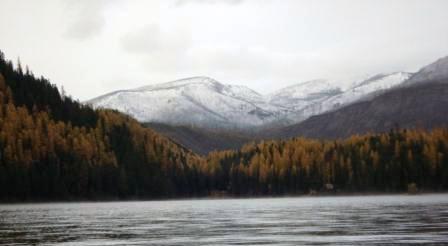
Looking into the Scapegoat Wilderness and the grizzly corridor, from the lake in front of our family cabin.

Copyright 2012, Kenneth H. Lokensgard

The latest newsletter from MidCurrent alerted me to an article published last week in the Billings Gazette, titled  “Yellowstone says it may need to import grizzlies to improve genetics.” In the article, staff journalist Brett French discusses Yellowstone National Park’s draft progress report to the UNESCO (The United Nations Educational, Scientific and Cultural Organization) World Heritage Committee.  He notes that the Park plans to increase efforts to eradicate non-native Lake Trout.  Of course, this is of interest to any angler. But French’s revelation that the Park may import grizzly bears from other regions, to increase the gene pool of its somewhat isolated grizzly population, is of equal interest to this fly fisher.

I grew up in grizzly country.  My extended family shares a property in Glacier National Park, and my immediate family shares a cabin on the southern edge of the Scapegoat Wilderness complex in Montana.  Both areas are teeming with black and grizzly bears.  This was not so much the case, when I was a kid.  I remember playing with other young cousins in the woods above Glacier’s Lake MacDonald, near our property.  Neither us, nor our parents gave much thought to the potential danger of bears at the time.  At our place bordering the Scapegoat, my sisters and I did not play very far from the cabin, but we certainly spent more time alone in the woods (it only takes a short walk to be out-of-sight of anyone at the cabin) than I would ever allow my child to spend today.

There are many reasons for the increase in bear populations.  There are many reasons, too, that these bears range a bit more widely than they did when I was a kid (one of these reasons is the obvious fact that the greater number of bears means a greater need for them to range for food, and grizzlies, in particular, are capable of ranging very, very far).   In mentioning the isolation of the Yellowstone grizzlies in the Gazette article, French alludes to the fact that the other, large grizzly population in the lower 48 states inhabits a wilderness corridor that runs from the Scapegoat Wilderness, through the Bob Marshall and Great Bear wilderness areas, through Glacier National Park and the Blackfeet Reservation, and finally into Waterton Lakes National Park in Alberta, Canada.  With national forests and other areas of little human habitation bordering this corridor, the bears can range even further.

All of this means that I fish my home waters near Glacier and near my family cabin with great care these days.  While I wold hope that most do the same in the Yellowstone National Park area, I suppose it may be even more important for them to do so in the future, if the Park brings in more bears.  The is not a bad thing, however.  As one naturalist pointed out (just who this was, I’ve forgotten), creatures such as grizzlies are what make the wilderness truly wild.  Personally, I’d much rather fish in a place that is wild, where the trout I seek are part of a healthy ecosystem, than in a more tame place.  Tame places often mean tame fish — not fish that are easy to catch, mind you, but fish that have seen many humans, many flies, and who have been hooked and released far too many times.

For the reader interested in the grizzlies of Yellowstone and especially the Glacier National Park/Bob Marshall Wilderness Complex corridor, I recommend Doug Peacock’s The Grizzly Years: In Search of the American Wilderness (1990).  The Vietnam-era Army Special Forces medic writes with tremendous feeling about wild places, conservation, and the place of grizzlies in our world (click here for an interview with Peacock, from National Geographic Adventure).  Not surprisingly, since this is a fishing blog, Peacock happens to write about fly fishing as well. I leave you with a passage from the book:

Before I had time to retrieve the brown nymph, I was hit again by an even larger fish.  I forgot about the cold, and I played the pound-and-a-half fish for a few minutes before I let it go.  This had been the best trout fishing I had yet seen up here.  This high basin must have been loaded with game, I thought. In addition to the black bear, I had seen signs of lots of deer and elk on the way up.  But that was for another day: I was cold and it was sleeting.  I wanted to drop down out of this cold and build a fire. My fingers were no longer functioning (Peacock 1990, 65).

President Hoover, Fly Fishing, and Rejuvenation

January 8, 2012

Copyright 2012, Kenneth H. Lokensgard

Herbert Clark Hoover was the thirty-first President of the United States.  He held the office from 1929-1933.  Prior to his presidency, he was Secretary of Commerce.  Hoover was raised a Quaker, and he was often involved with major humanitarian causes during his adult life.  However, he is primarily remembered as the president who failed to bring the United States out of the Great Depression.

In office and out, Hoover led a rich private life, which included writing and fly fishing.  In his later years, just shortly before his passing in 1964, he wrote Fishing for Fun, and to Wash your Soul.  His Quaker background shows in many of the book’s passages.  Also, consciously or not, he echoes the ideas penned by Isaac Walton and Juliana Berners (or whoever authored The Treatyse on Fysshing with an Angle) centuries before about the potential spiritual value of fishing:

Strong primary instincts–and they are useful instincts–get rejuvenation by a thrust into a simpler life.  For instance, we do not catch fish in the presence of, or by methods of, our vast complex of industrialism, nor in the luxury of summer hotels, nor through higher thought, for that matter.  In our outdoor life we get repose from the troubles of the soul that this vast complex of civilization imposes upon us in our working hours and our restless nights.  Association with the placid ripples of waves and the quiet chortle of the streams is soothing to our “het-up” anxieties.[1]

Certainly, I agree with Hoover that fly fishing can soothe one’s anxieties.  I appreciate, too, his emphasis upon the technological simplicity of the pastime.  I just returned from an enjoyable few days in the mountains with my wife, daughter, dog, and fly fishing tackle.  The trip was soothing indeed.  I fished with a Scott F703/3 and a Hardy Flyweight.  This fiberglass rod and this spring-and-pawl reel are my favorite outfit.  No doubt, Hoover would approve, if he were around to do so.


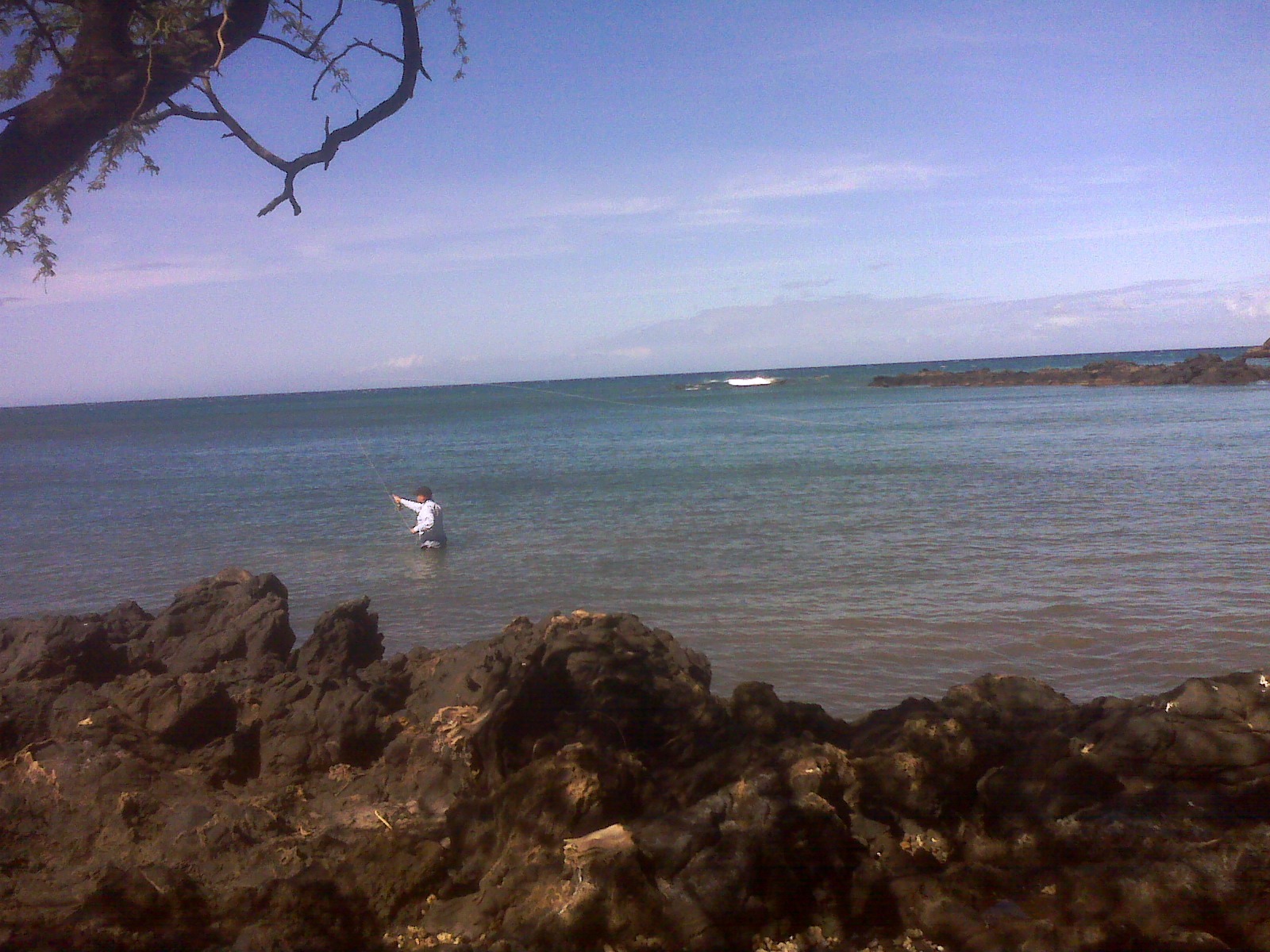
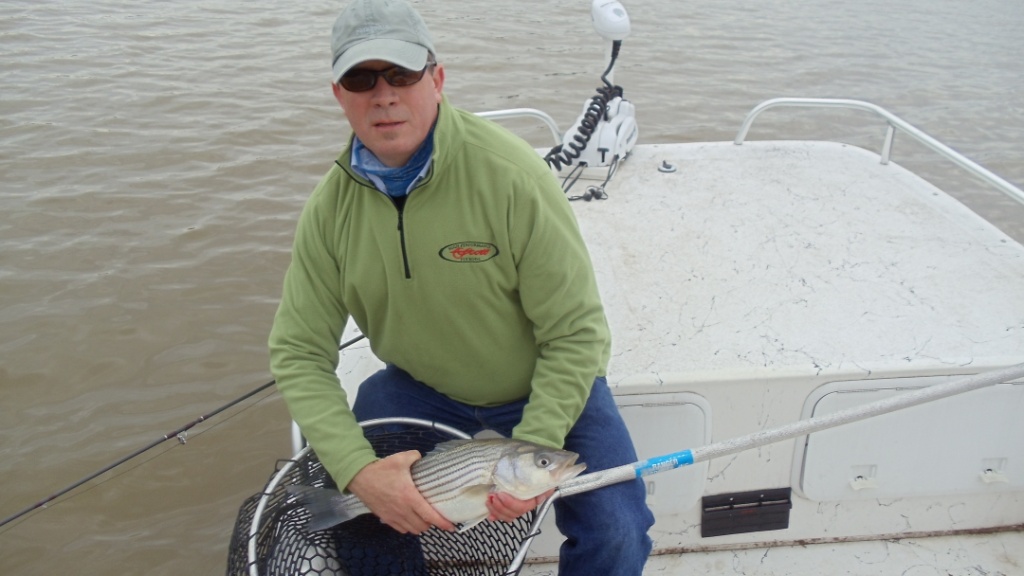
I would be misleading the reader, however, if I implied that fly fishing trips for me are only  occasional escapes from the “vast complex of civilization.”  I have to admit, as well, that I sometimes rely upon pieces tackle that some people might consider to be products of the “complex of industrialism.”  A few weeks ago, I spent a week fishing for trevallies and jacks in Hawaii.  Shortly after that, I did a bit of inland striper fishing in North Carolina.  In both cases, I used a Scott graphite rod and a new large-arbor reel.  These almost end-to-end trips, though, were every bit as meaningful to me as my latest foray in the mountains.  Thus, I’m fairly certain that Hoover would begrudge neither the frequency of my fishing, nor my occasional choice of less traditional tackle.


My own fly fishing aside, I find it fascinating that even men like Herbert Hoover – men who were or are the very shapers of “civilization,” find spiritual value in simple pursuits such as fly fishing. Ultimately, however, Hoover and the other fly fishing presidents (most famously, Jimmy Carter) are hardly representative of the world’s elite.  Perhaps if more of them sought “repose from the troubles of the soul,” civilization would be in better shape.  Then again, I might be over-romanticizing my beloved sport; fly fishing didn’t seem to help Hoover’s presidency much.


[1] Herbert Hoover, Fishing for Fun, and to Wash your Soul (New York: Random House, 1963), 20.

The LFF mentioned in Midcurrent

January 1, 2012

The Literary Fly Fisher received a nice little mention in the online magazine, Midcurrent: Fly Fishing at its Best.  My November 11, 2011 post on the late, renowned author Harry Middleton was referenced in the “Book News” section.  As I did before, I urge my readers to pick up a Middleton book.  I also urge them to check out Midcurrent sometime.  In my opinion, it’s one of the best online resources for the avid fly fisher.  And be sure to look in the Midcurrent’s “Fly Fishing Books” section for announcements and reviews of new and classic fly fishing literature.

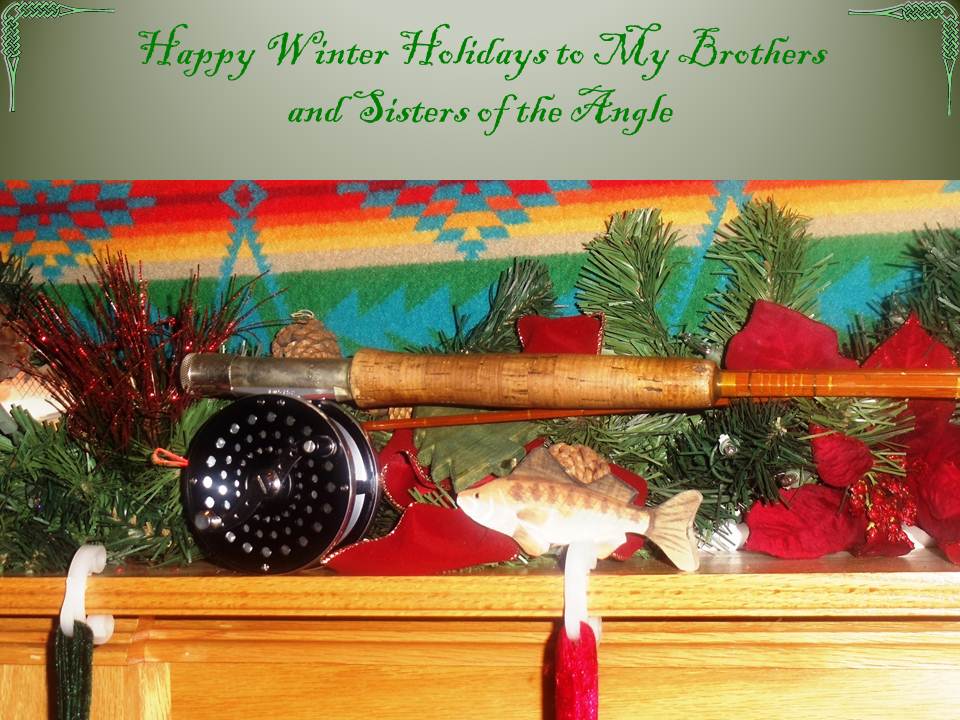
Happy Holidays to my “Brothers and Sisters of the Angle.”

December 26, 2011

New Movie: Salmon Fishing in the Yemen

December 20, 2011

Arriving in theaters in 2012 is a new fly fishing-themed movie, entitled Salmon Fishing in the Yemen.  It is directed by Lasse Hallström, who has directed such great movies as My Life as a Dog (an absolute favorite of mine) and The Shipping News.  His new film stars Ewan McGregor, Emily Blunt, Amr Waked, and Kristin Scott Thomas.  The screenplay is based upon a prize-winning book by the same name, authored by British writer Paul Torday.  The film looks like a winner to me.  Decide for yourself, by watching the trailer below.