Archive for the ‘Fly Fishing’ Category
“A River Runs through It” moves to the Stage
February 12, 2026Early Summer 2025
July 11, 2025


Trickles
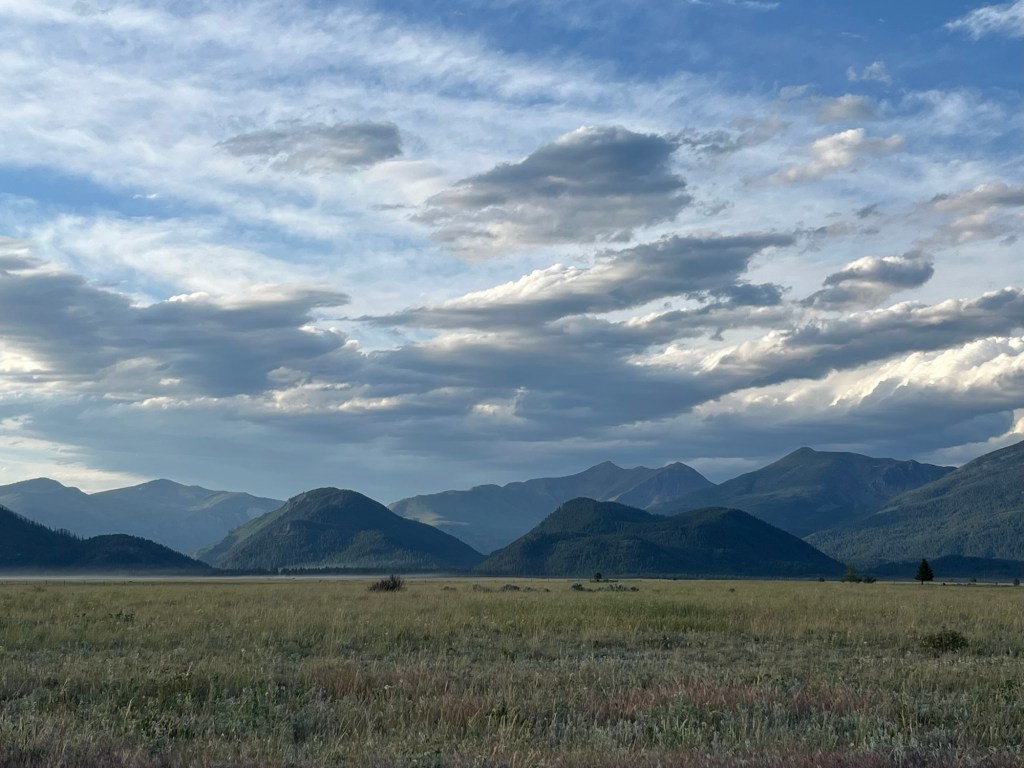
September 3, 2024National Public Radio just released a story on the low waters and high temperatures in Western Montana right now. I can attest that many of my favorite rivers are mere trickles. I am not comfortable fishing them right now, knowing how stressed the trout are.
The article notes that many Montana outfitters are increasingly moving their guided fly fishing trips to the Missouri River and similar waters, where flows and temperatures are partly regulated by releases from reservoirs. Sadly, this means the Missouri is experiencing an immense amount angling pressure, which also stresses the fish. I have family members with riverfront property on the Missouri, and I know this to be true.
Just as we need to reevaluate how much water is diverted to irrigation and think about the may ways in which polluted or heavily sedimented runoff impacts the remaining water, we need to look critically at the impact the profit-driven guiding industry has upon the rivers and its piscine denizens. A guide quoted in the NPR story says, “For me, unless I have to do it for my job, I don’t feel good about coming out and targeting already stressed fish.” Personally, I’m not sure why she feels better about doing it for money. Indeed, if she were to fly fish only for her own pleasure, then she would be free the demands of wealthy clients who insist upon easy float trips and trophy catches from the famous rivers. This means she could visit colder, more remote streams and alpine lakes, where the fish are less stressed.
I’m sure they guide quoted by NPR is a wonderful person in many ways (according to one of her social media profiles, she is engaged in conservation work). However, her priorities are wrong, at least as she states them in the article. I’m sure this is the case for many of her industry angling peers as well. The fish should come before profit. I realize this might mean vocational changes for many outfitters and guides. However, guiding in Montana is already a seasonal activity, and few guides expect their work to be a life-time source of money anyway. In a sane world, of course, there would be all sorts of new jobs tied to the mitigation of climate change, which guides and others whose employment is impacted negatively by rising temperatures could fill. Perhaps outfitters themselves should start creating these jobs.
Read the NPR Article here: Nathan Rott, “Why some anglers are rethinking their approach to fly fishing,” August 31, 2024.
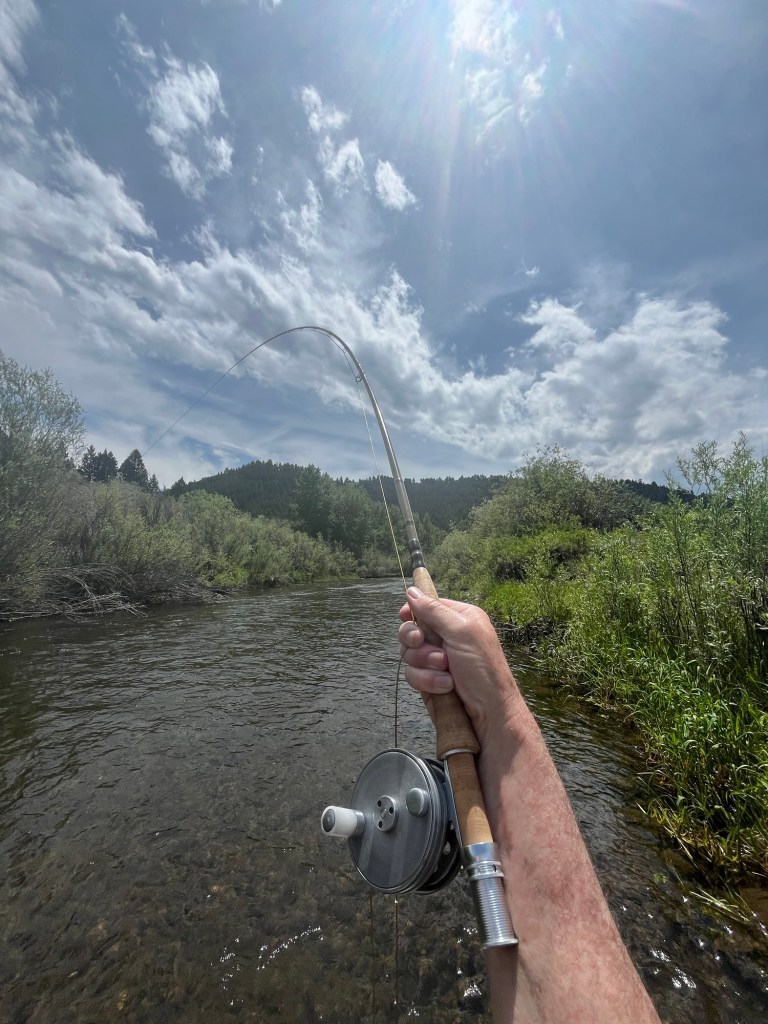
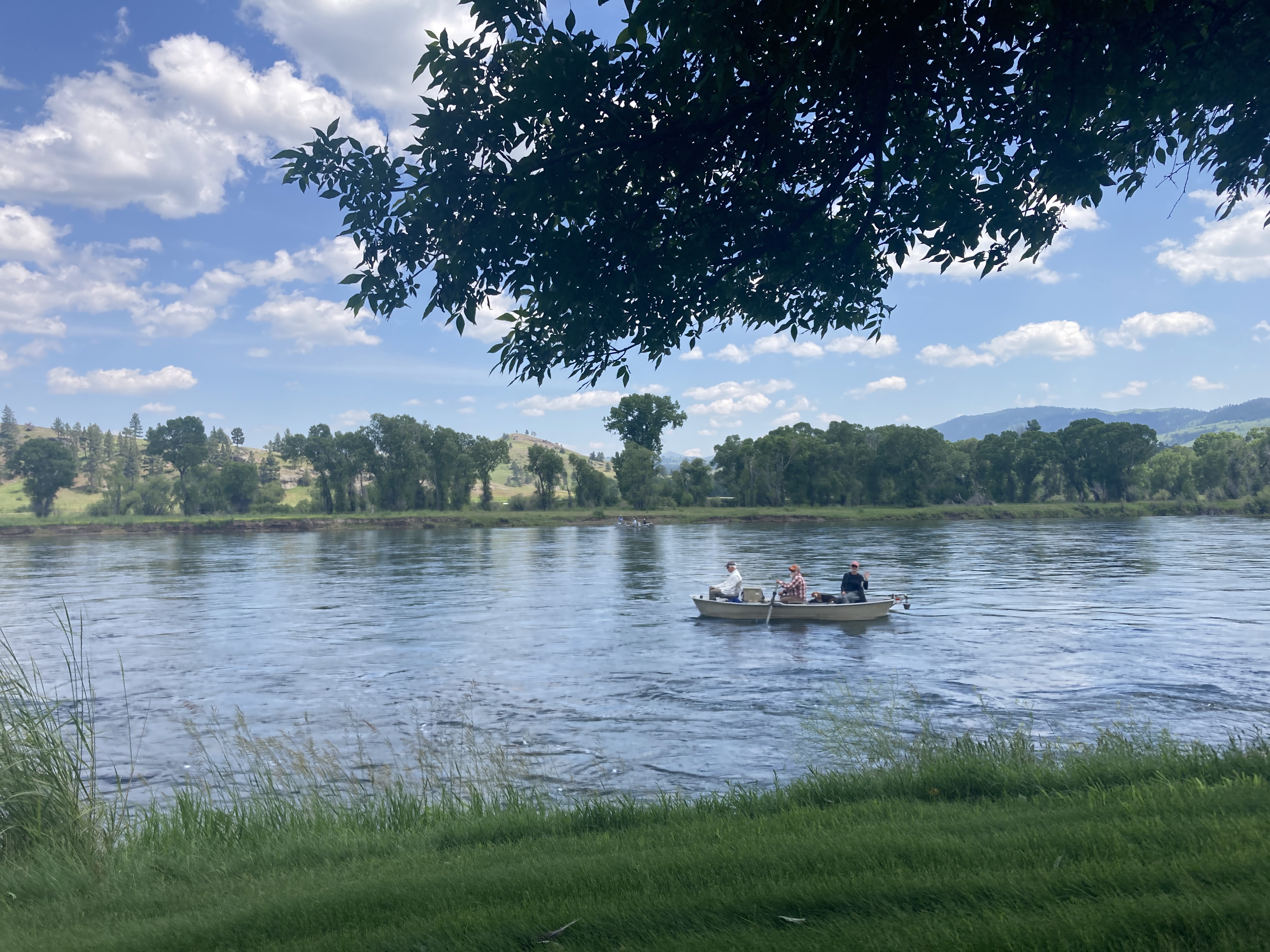
Below: A big Missouri brown on a bamboo rod (left). One of many drift boats slides by a relative’s Missouri River property (right).

A Review of Marjorie Swann’s Environment, Society, & The Compleat Angler
April 17, 2024
In 2023, scholar Marjorie Swann published her impressive book Environment, Society, & The Compleat Angler. Swann provides some rich social context to Izaac Walton’s famous text, The Compleat Angler, or The Contemplative Mans’ Recreation (she addresses numerous editions, including the first 1653 printing). In light on this context, Swann also offers a new analysis of what she calls “one of the most innovative and influential environmental texts ever written” (Swann, 8). Ultimately, she argues, Walton offers, through his book, “an audacious model of a new king of community in which man’s love of the natural world–not fealty to the church, the state, or the family–becomes the foundation of both individual identity and social order.” As a fan of Walton’s book and as someone whose identity is tied to his fly fishing and time spent outdoors, I must agree with Swann.
The Journal for the Study of Religion, Nature and Culture asked me to review Environment, Society, & The Compleat Angler for Volume 18, 2024 of their periodical. You can read the open access review on the Journal’s website here for my more thorough appraisal of Swann’s book. And you can purchase the book itself at the Penn State University Press website. At this time, you can purchase a hardback (ISBN: 978-0-271-09519-6) or electronic version. No doubt many libraries have the book on their shelves as well.
The Holiday Season
December 30, 2023
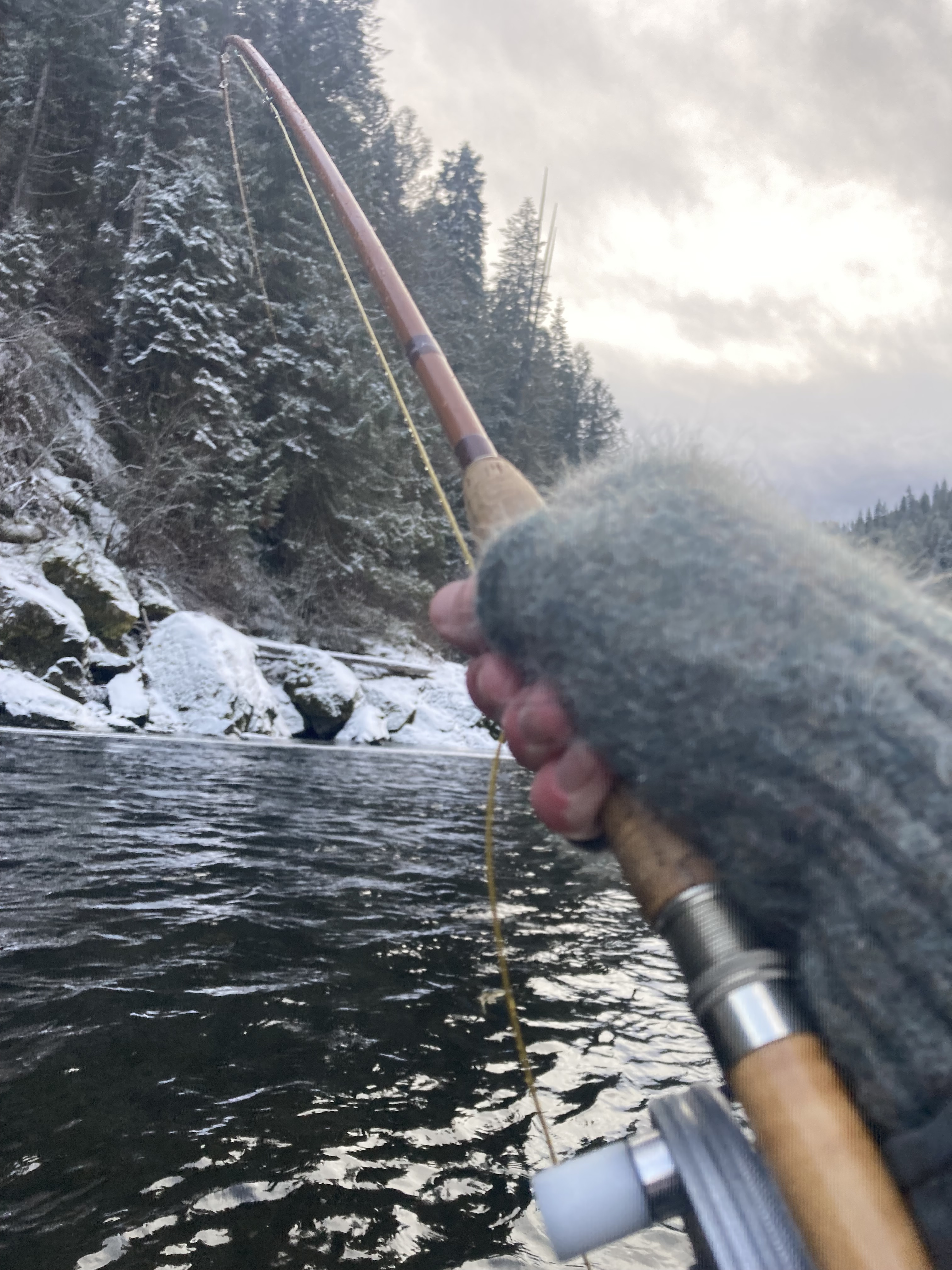
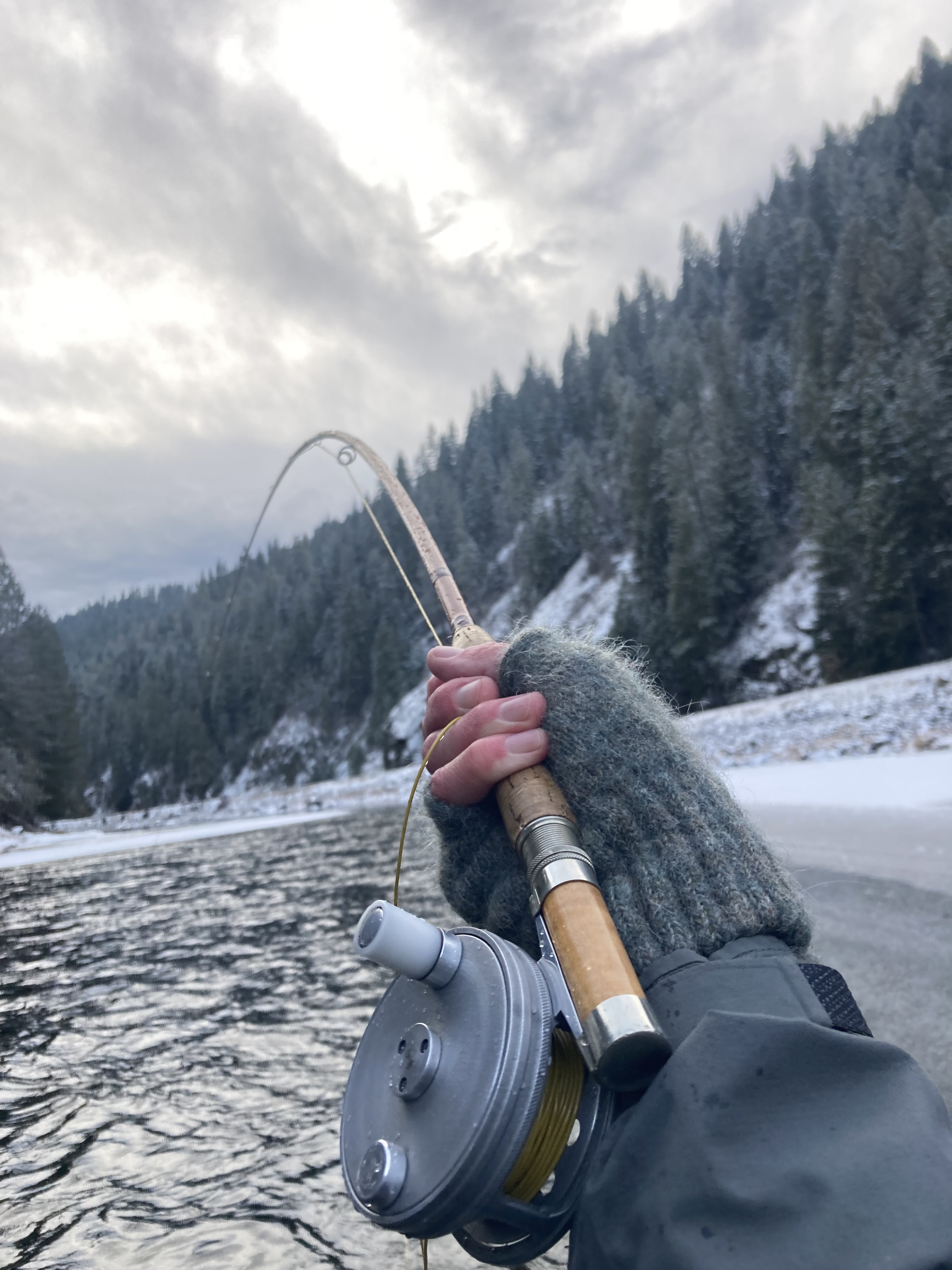

Evening at the Cabin
September 26, 2023
Rare Angling Texts
August 3, 2023We are fortunate to have a massive collection of angling literature at Washington State University, where I work. There are housed in the Manuscripts and Special Collections. Following, is a brief is a brief description of the “Wildlife and Outdoor Recreation Collection” that contains most of this literature.
The Wildlife and Outdoor Recreation Collection includes the donations stof three fishing and angling collections including that of Roy Hansberry, a WSU graduate (Class of 1931), which contains some of the significant editions in the history of angling including Frederic Halford’s Dry Fly Entomology (1897), Alfred Ronalds’ The Fly Fisher’s Entomology (1913). James Quick gave his collection of 1200 volumes devoted to fly fishing for trout and steelhead in the Pacific Northwest and in 2008, Joan and Vernon Gallup donated a magnificent collection of 506 editions of Izaak Walton’s The Complete Angler, including all 17th century
https://libraries.wsu.edu/masc/rare-books/
Recently, I was asked to participate in a video about one part of the above collection–that donated by Jan and Vernon Gallup. Also in the recording is Dr. Trevor Bond, the Associate Dean of Digital of Digital Initiatives and Special Collections. I am sharing the video here. Take a look, and consider visiting these amazing texts in person someday.
Winter
March 28, 2023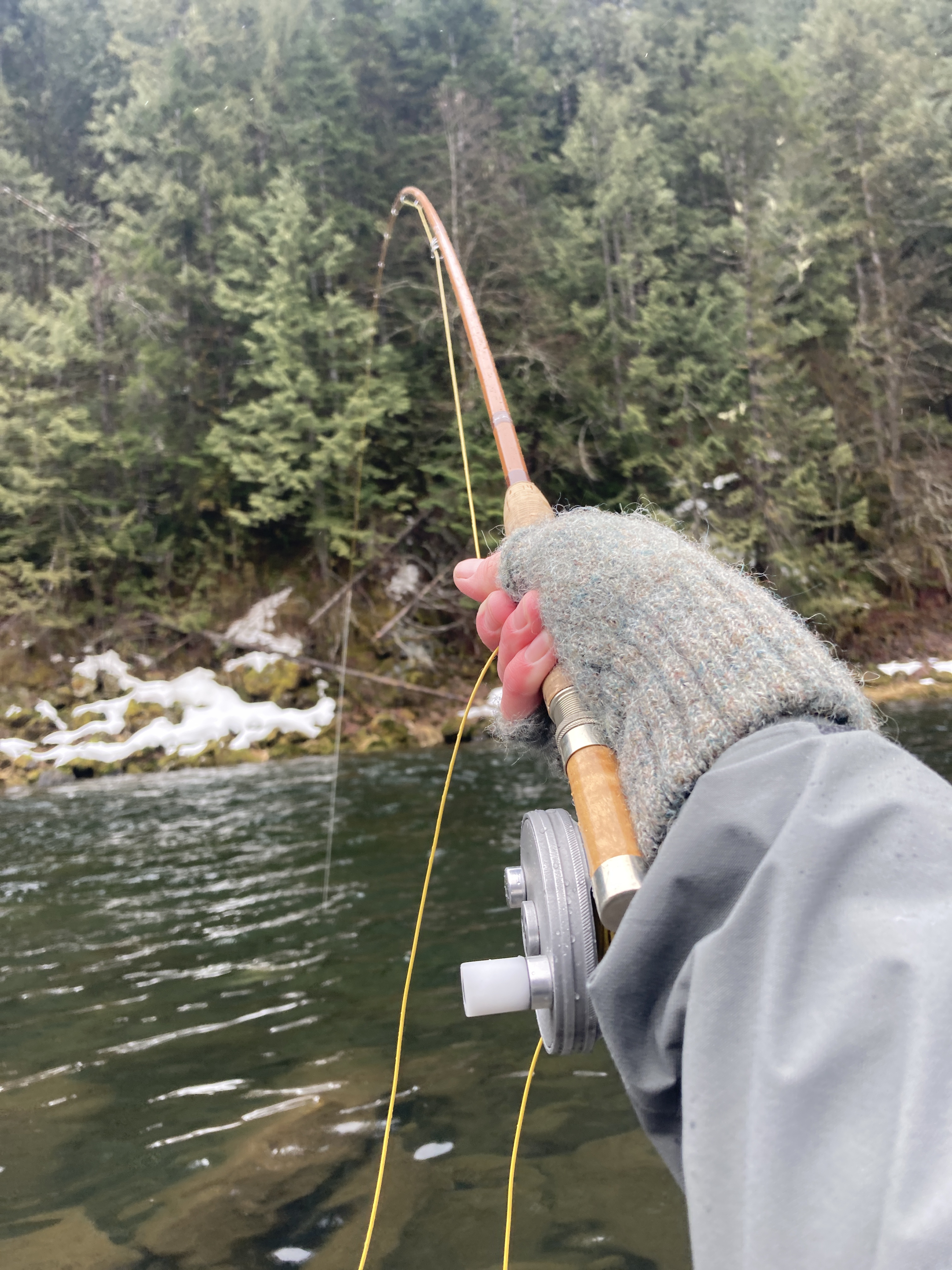


Typical Afternoon near Home
September 19, 2022


Runoff and Wind
May 30, 2022June is the midsummer month, yet in the temperate latitude of southern England and the British Columbia coast it is not full summer; growth is still fresh and young, and the rivers still have the flow of stored-up winter snow or rain.
Roderick Haig Brown, A River Never Sleeps (Easton Press, 1996), 151-52 (First published in1946 by Lyons and Burford).

Above, Roderick Haig Brown writes of the water conditions near the Pacific Coast in the 1940s. It is much the same this year in the Inland Northwest. While it is only May 30, the forecast tells me our stormy weather will continue on into June and the foreseeable future. Normally during runoff, I am happy to stillwater fish from a canoe, but there seems to be high winds every time I consider it.
In this age of regular northwestern grass and forest fires, it is frankly crazy to complain about wet weather. Still, I am getting pretty stir-crazy, and I’m rapidly running out of excuses to work on house projects. This may explain why I’ve finally take a few minutes to write here, as I haven’t for so long. Do know that I plan to write more frequently, even after the weather settles and start a new list of home improvement projects.

 The Literary Fly Fisher